 NeoBit Daily

Introduction to Quantum-Resistant Retail VR
Retailers adopting VR shopping experiences face evolving security risks as quantum computing advances. By 2026, quantum computers threaten traditional encryption methods used in VR data flows, making blockchain integration essential for long-term protection. This playbook provides actionable frameworks for retailers and developers to implement quantum-resistant solutions using blockchain ledgers. Quantum threats target public-key cryptography that secures user authentication, payment processing, and virtual asset ownership in immersive environments. Retail VR platforms process high volumes of real-time data including avatar movements, purchase histories, and personalized recommendations, all of which become vulnerable once large-scale quantum machines emerge. Early preparation through post-quantum cryptography combined with blockchain creates resilient architectures that maintain trust and operational continuity.
Threat Modeling for VR Retail Data Flows
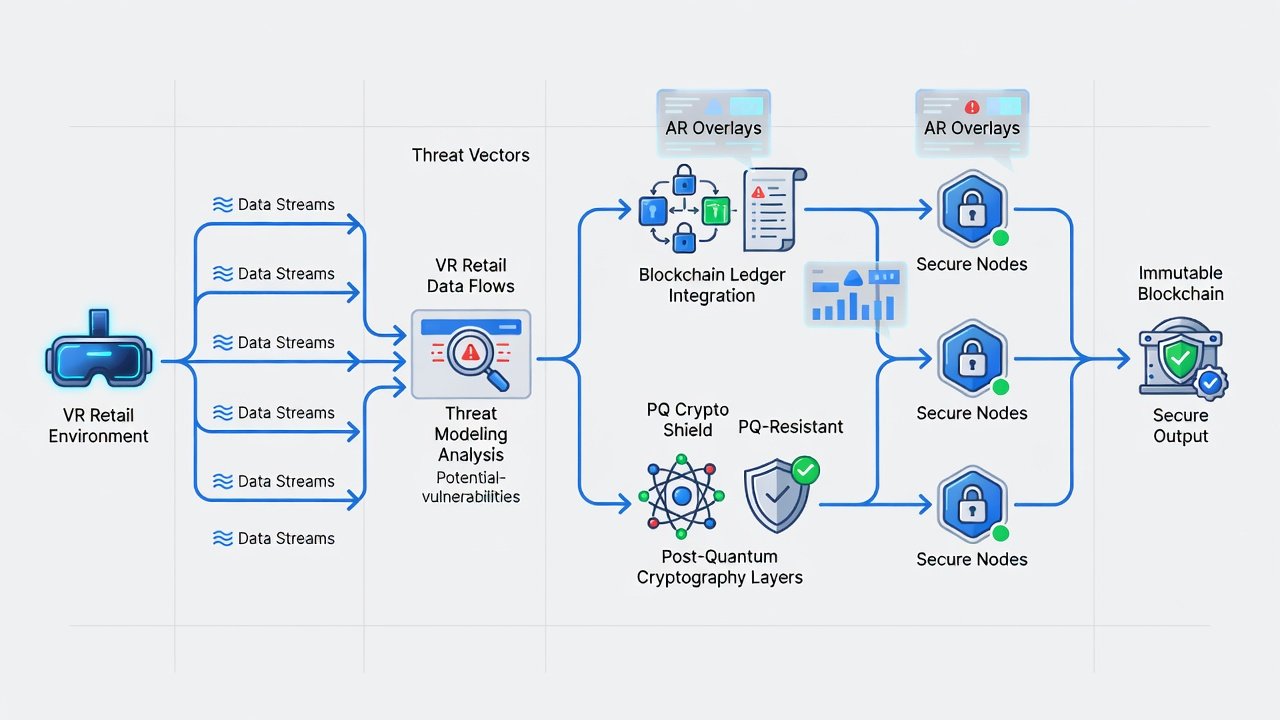
Understanding data vulnerabilities starts with mapping VR retail interactions. Customer avatars, payment details, and AR product overlays generate sensitive streams that quantum algorithms could compromise. Key threats include interception of session keys and tampering with blockchain transaction records. Effective modeling identifies entry points such as headset APIs and cloud-based rendering servers. Retailers should prioritize data classification based on sensitivity levels. For example, biometric eye-tracking data requires higher protection than generic product views. This structured approach ensures resources focus on high-impact areas before blockchain deployment. Consider a typical customer journey: entering a virtual store triggers avatar rendering, product interaction logs AR overlay requests, and checkout initiates encrypted payment flows. Quantum attackers could exploit Shor's algorithm to break RSA or ECC signatures, allowing unauthorized modifications to ledger entries or replay attacks on session tokens. Mitigation begins with asset inventories that tag every data packet with quantum-risk ratings and dependency graphs showing how VR engines connect to backend databases.
Practical examples include modeling a fashion retail VR experience where users try on digital clothing. Eye-gaze data and body measurements flow through multiple hops, creating opportunities for quantum-enabled eavesdropping. Developers map these paths using tools like data flow diagrams and simulate quantum attacks to prioritize encryption upgrades.
Step-by-Step Implementation of Post-Quantum Cryptography with Blockchain Ledgers
Begin by selecting NIST-approved post-quantum algorithms like CRYSTALS-Kyber for key encapsulation. Integrate these into existing VR platforms by updating cryptographic libraries in headset firmware. Next, anchor transactions to a permissioned blockchain such as Hyperledger Fabric to create immutable audit trails resistant to quantum attacks. Follow these phases: audit current encryption, pilot hybrid classical-quantum schemes, migrate ledgers, and validate with penetration testing. Developers can leverage open standards from NIST to ensure compliance. Testing in simulated environments confirms that VR session data remains secure even under quantum simulation attacks. Expand the process with detailed actions. First conduct a full cryptographic inventory across all VR components including Unity or Unreal Engine plugins. Replace vulnerable modules with hybrid implementations that combine Kyber with existing AES for symmetric operations. Deploy smart contracts on the blockchain to handle key exchanges and transaction validations automatically. For instance, a smart contract can enforce that every AR overlay update carries a post-quantum signature before committing to the ledger. Monitor performance metrics during pilots to ensure latency stays below 50 milliseconds for seamless shopping. Integrate monitoring dashboards that alert teams to any signature verification failures. Reference implementation guides from Hyperledger for configuring permissioned networks tailored to retail use cases.
Integration Checklists for AR Overlays
AR overlays in VR retail add layers of interactive elements that must sync securely with blockchain. Use this checklist: verify overlay rendering engines support post-quantum signatures; encrypt overlay metadata with lattice-based cryptography; and log all overlay interactions on distributed ledgers for traceability. Expand the checklist into operational categories. Security checklist items cover algorithm selection, key management rotation every 24 hours, and zero-trust verification for every overlay request. Performance checklist focuses on minimizing computational overhead by batching signature operations and using hardware acceleration where available. Compliance checklist ensures alignment with data residency rules and audit logging requirements. Additional items include mapping AR asset sources to prevent injection attacks, implementing real-time consensus checks for overlay updates, testing cross-device compatibility with quantum-safe protocols, and documenting fallback procedures for ledger synchronization failures. Retailers can customize these lists for specific platforms like Oculus or HTC Vive integrations.
Real-World Case Studies from Early Adopters
Leading retailers like those piloting Meta Horizon Worlds integrations have combined blockchain with post-quantum crypto to protect virtual try-on data. One European fashion chain reported seamless scaling after migrating to hybrid ledgers, maintaining customer trust during high-traffic sales events. Another case involved a US-based electronics retailer using IBM quantum-safe tools to secure AR product demonstrations, resulting in reduced breach incidents. A third example comes from an Asian grocery chain that implemented blockchain-anchored VR shopping carts. Their system logs every item selection on a distributed ledger protected by post-quantum signatures, enabling instant dispute resolution for virtual purchases. These adopters demonstrate measurable improvements in security posture while preserving immersive user experiences. Lessons learned emphasize starting with limited store pilots before full rollout and involving cross-functional teams from security, development, and legal departments.
ROI Comparisons Versus Traditional Security
Quantum-resistant blockchain setups deliver superior long-term value by eliminating frequent re-encryption cycles required in legacy systems. Early metrics indicate faster incident response times and higher customer retention due to enhanced privacy assurances. Retailers benefit from streamlined compliance reporting through immutable ledgers. Scenario analysis shows traditional security may require multiple upgrades over five years, whereas quantum-resistant designs provide forward compatibility. Qualitative benefits include stronger brand positioning as a secure innovator and reduced risk of regulatory fines from data exposure events.
Common Pitfalls and Mitigation Tactics
Avoid underestimating migration timelines by conducting phased rollouts. Pitfall one involves incompatible legacy VR hardware—mitigate with modular API wrappers. Another common issue is overlooking key rotation policies; address this through automated smart contracts on the blockchain. Always simulate quantum threats during QA to uncover hidden vulnerabilities. Additional pitfalls include insufficient staff training on new algorithms and neglecting third-party vendor assessments. Mitigation involves creating detailed playbooks, running quarterly tabletop exercises, and establishing vendor scorecards that evaluate quantum readiness. Developers should also watch for performance bottlenecks by profiling signature operations in real VR sessions and optimizing accordingly.
FAQs on Compliance and Scaling for 2026 Enterprise Use
How does this align with emerging regulations? Integration supports upcoming quantum-safe mandates by aligning with frameworks from international standards bodies.
What scaling considerations apply for large enterprises? Start with pilot stores before expanding ledgers across regions, ensuring consistent algorithm updates.
Can existing VR platforms be retrofitted? Yes, through hybrid cryptography layers that preserve performance while adding quantum resistance.
Which tools accelerate implementation? Open-source libraries from NIST and enterprise platforms like those from IBM provide ready components for rapid integration.
How do teams measure success post-deployment? Track metrics such as signature verification success rates, ledger synchronization times, and customer satisfaction scores related to perceived security.


No comments yet. Be the first!