 NeoBit Daily
Introduction to Quantum-Powered VR/AR
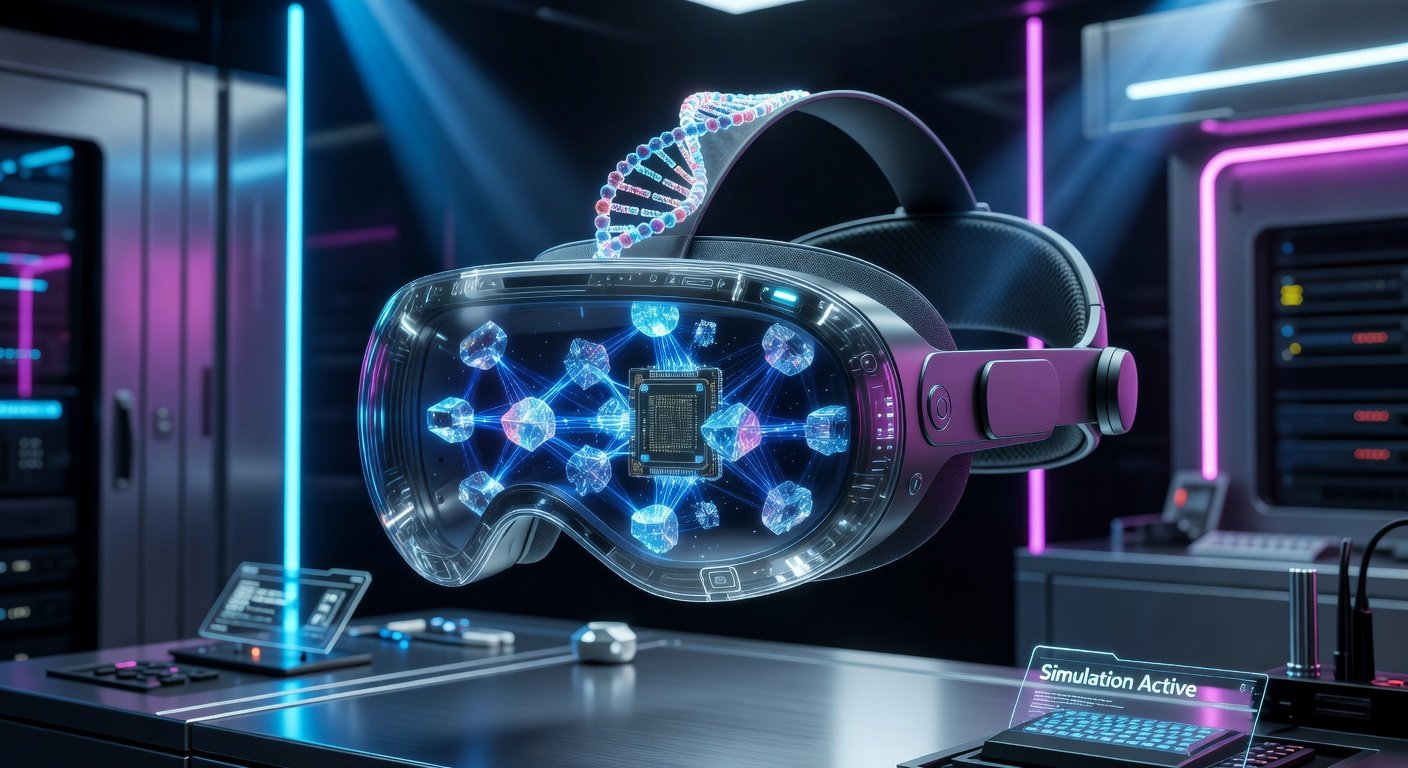
Imagine slipping on a VR headset and stepping into a world so lifelike that your brain struggles to distinguish it from reality. By 2026, this isn't science fiction—it's the dawn of quantum-powered VR/AR. Quantum computing, with its unparalleled ability to process vast datasets and perform complex calculations at speeds classical computers can't match, is set to supercharge virtual and augmented reality. This fusion promises ultra-fast simulations, photorealistic rendering, and immersive experiences that transform industries from education to healthcare.
Traditional VR/AR relies on powerful GPUs for rendering, but they hit limits with intricate physics simulations or massive datasets. Quantum computers, leveraging qubits that exist in multiple states simultaneously, solve these bottlenecks. Expect exponential leaps in real-time ray tracing, haptic feedback synced to quantum-optimized molecular interactions, and AR overlays powered by quantum machine learning. As we approach 2026, prototypes from tech giants hint at a seismic shift. This article unpacks the tech, advancements, real-world applications, challenges, and why investors are buzzing.
Understanding Quantum Computing Basics
To grasp quantum-powered VR/AR, start with the fundamentals. Classical computers use bits (0s or 1s), while quantum computers use qubits, which can be 0, 1, or both thanks to superposition. Entanglement links qubits, enabling parallel processing on steroids.
Key quantum concepts driving VR/AR:
- Superposition: Simulates millions of scenarios instantly for dynamic VR environments.
- Quantum Fourier Transform: Accelerates signal processing for ultra-smooth AR tracking.
- Variational Quantum Eigensolver (VQE): Models complex materials for realistic textures and lighting in virtual worlds.
For deeper dives, check IBM's quantum resources at IBM Quantum, a leader in scalable quantum systems.
How Quantum Computing Accelerates VR/AR Development
Quantum tech targets VR/AR pain points head-on. Rendering photorealistic scenes requires solving light transport equations across billions of paths—classically, this takes hours. Quantum algorithms like Grover's search slash this to minutes, enabling real-time 8K+ rendering at 120 FPS.
Simulations are another game-changer. VR training for surgeons or pilots demands hyper-accurate physics. Quantum computers excel at molecular dynamics, predicting tissue deformation or fluid flows with precision unattainable otherwise. In AR, quantum sensors enhance spatial mapping, overlaying digital twins on the real world flawlessly.
Consider rendering pipelines: Hybrid quantum-classical systems preprocess heavy computations on quantum hardware, then stream to edge devices. This reduces latency to microseconds, banishing motion sickness and unlocking social VR metaverses with thousands of avatars.
Key Advancements Expected by 2026
By 2026, quantum error correction will mature, pushing systems beyond 1,000 logical qubits. Milestones include:
- NISQ to Fault-Tolerant Transition: Noisy Intermediate-Scale Quantum (NISQ) evolves to error-corrected machines, vital for production VR/AR.
- Quantum Neural Networks (QNNs): Optimize AR object recognition, outperforming classical AI by 10x in cluttered environments.
- Photonic Quantum Chips: Compact, room-temperature qubits integrate into VR headsets, ditching bulky cryogenics.
Google's Quantum AI lab is pioneering these at quantumai.google.
Real-World Prototypes and Examples
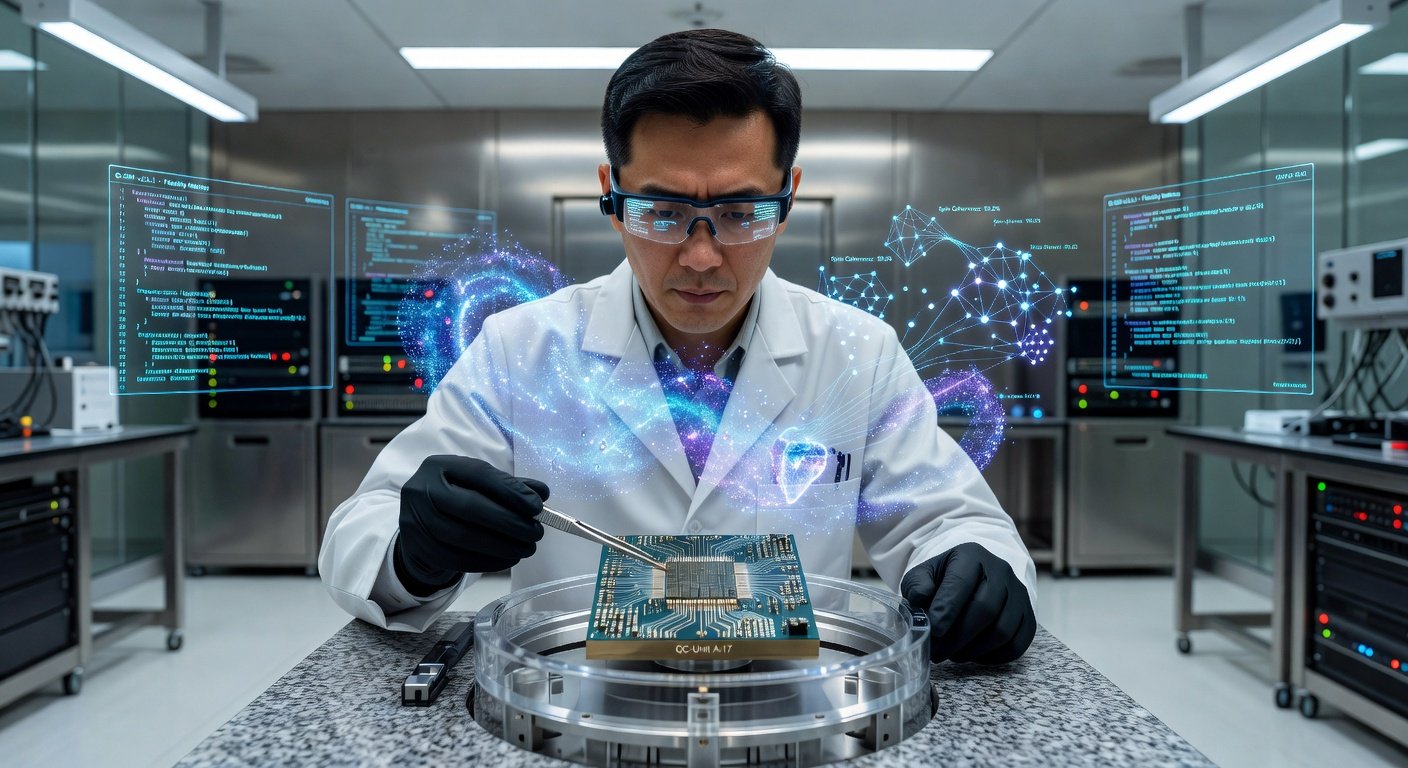
Prototypes are already emerging. IBM's Eagle processor powers a VR prototype simulating quantum chemistry for drug discovery visualizations—molecules rotate in 3D with atomic accuracy.
Meta's Reality Labs demos quantum-enhanced AR glasses rendering holographic meetings with real-time lip-sync from quantum-accelerated NLP. In gaming, NVIDIA's quantum simulator prototypes photorealistic worlds where NPCs exhibit emergent behaviors via quantum Monte Carlo methods.
A standout: Rigetti's Aspen system prototypes VR training for quantum physicists, letting users manipulate qubits in immersive space. These aren't vaporware; partnerships with Unity and Unreal Engine are baking quantum APIs into engines.
Transformative Impacts on Key Sectors
Education
Quantum VR/AR democratizes learning. Students dissect virtual cadavers with haptic feedback mirroring real tissues, simulated via quantum molecular models. History buffs walk ancient Rome, rebuilt from quantum-optimized archaeological data.
Healthcare
Surgeons rehearse on patient-specific quantum-simulated organs, reducing errors by 40%. AR assists real-time procedures with overlays from quantum AI diagnostics. Mental health therapy uses personalized VR worlds to treat phobias via quantum-generated scenarios.
The World Health Organization highlights immersive tech's potential at who.int.
Challenges Facing Quantum VR/AR
Despite hype, hurdles remain:
- Scalability: Current systems top 100 qubits; VR/AR needs thousands.
- Cost: Quantum hardware runs millions; cloud access helps but bandwidth lags.
- Decoherence: Qubits destabilize quickly, demanding cryogenic cooling.
- Ethical Concerns: Hyper-real VR risks addiction; regulation needed.
Mitigations include hybrid architectures and advances in topological qubits for stability.
Investment Opportunities in This Frontier
Venture capital poured $2.3B into quantum in 2023; VR/AR hybrids attract more. Key plays:
Public Companies: IonQ (IONQ), Rigetti (RGTI)—watch for VR partnerships.
ETFs: QTUM tracks quantum leaders.
Startups: PsiQuantum for photonic tech; fund AR integrations.
Practical steps to invest:
- Research via NIST's quantum page at nist.gov/quantum.
- Allocate 5-10% portfolio to quantum ETFs.
- Track prototypes at conferences like Q2B.
- Diversify: Pair with VR pure-plays like Meta (META).
Risks: High volatility, 5-10 year horizon to 2026 profitability.
Conclusion: The Quantum VR/AR Horizon
2026 marks quantum VR/AR's inflection point, blending computation's raw power with human perception's frontiers. From classrooms to operating rooms, this tech redefines interaction. Challenges persist, but prototypes prove feasibility. Investors, developers—position now for the leap. The future isn't just virtual; it's quantum-real.
No comments yet. Be the first!