 NeoBit Daily
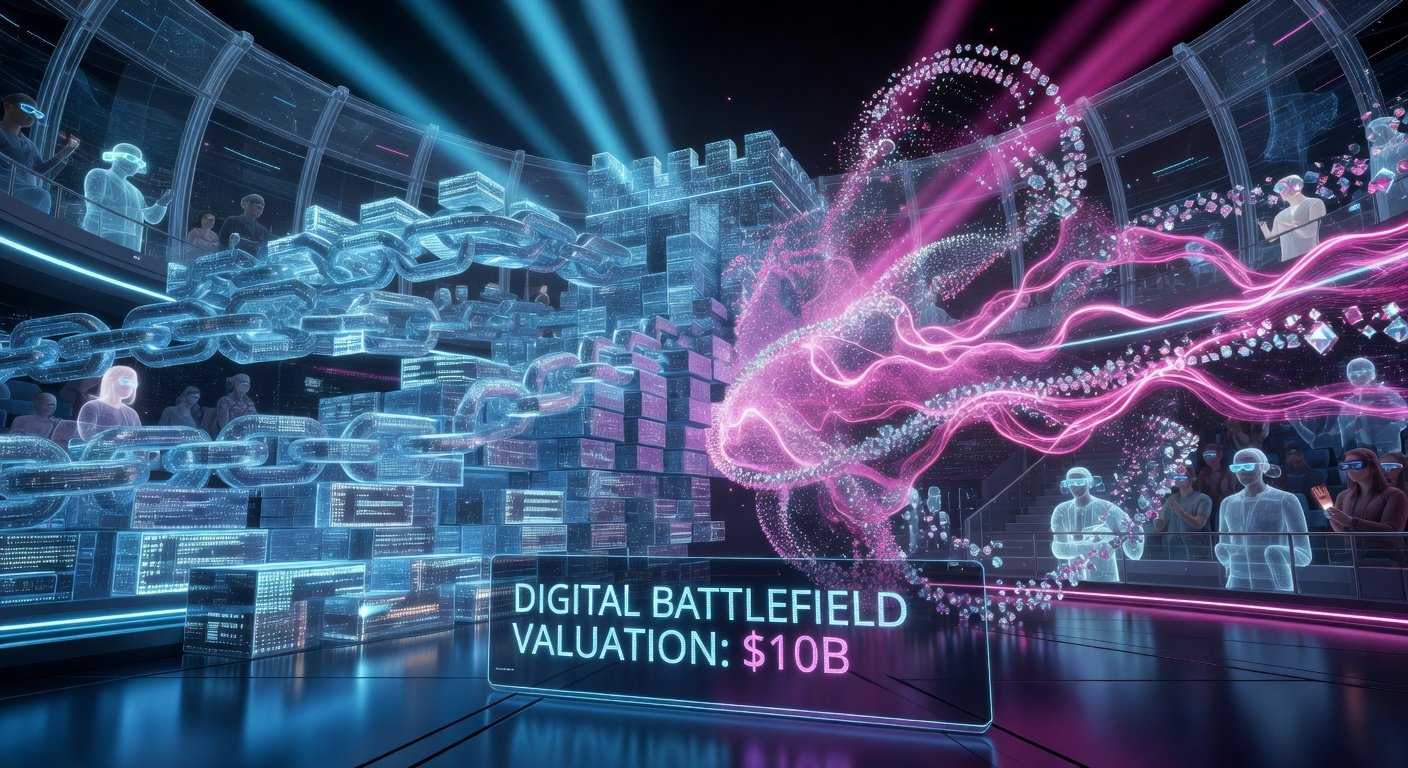
Introduction to the Blockchain vs Quantum Computing Showdown
In the fast-evolving landscape of emerging technologies, 2026 marks a pivotal year for two titans: blockchain and quantum computing. Blockchain, the decentralized ledger powering cryptocurrencies like Bitcoin and Ethereum, has revolutionized trustless transactions and data integrity. Meanwhile, quantum computing harnesses the weird world of quantum mechanics—superposition, entanglement, and qubits—to solve problems that classical computers can't touch.
This clash isn't just theoretical. As quantum processors scale up, they threaten blockchain's cryptographic foundations while opening doors to unprecedented hybrid innovations, especially in VR/AR ecosystems. Tech enthusiasts, developers, and investors are watching closely: will blockchain adapt, or will quantum supremacy rewrite the rules? This article breaks down core differences, security battles, scalability hurdles, VR/AR synergies, real-world examples, benchmarks, and future predictions.
Core Differences: Decentralization vs Superposition
At their hearts, blockchain and quantum computing embody opposing paradigms.
- Blockchain's Decentralization: Relies on distributed networks of nodes validating transactions via consensus mechanisms like Proof-of-Work (PoW) or Proof-of-Stake (PoS). No single point of failure; immutability comes from cryptographic hashing (e.g., SHA-256).
- Quantum's Superposition: Qubits exist in multiple states simultaneously, enabling parallel computations. A 300-qubit system could simulate all possible outcomes of complex problems, dwarfing classical bits' binary 0s and 1s.
Decentralization ensures resilience against censorship but scales linearly with network size. Superposition promises exponential speedups for optimization, simulation, and machine learning but requires cryogenic cooling and error correction.
Security Showdown: Post-Quantum Threats to Blockchain
Quantum computing's biggest threat to blockchain is Shor's algorithm, which could crack RSA and ECC encryption—blockchain's backbone—in polynomial time. A sufficiently powerful quantum computer (estimated 1-10 million qubits) might derive private keys from public ones, unraveling wallets and smart contracts.
Enter post-quantum cryptography (PQC). Algorithms like lattice-based CRYSTALS-Kyber and hash-based SPHINCS+ resist quantum attacks. The NIST Post-Quantum Cryptography project has standardized several since 2022, with blockchain projects migrating rapidly.
Real-world example: Ethereum's roadmap includes PQC upgrades via hard forks, while Hyperledger Fabric experiments with quantum-safe signatures. However, retrofitting legacy chains like Bitcoin poses governance challenges.
Scalability Challenges: Bottlenecks and Breakthroughs
Blockchain struggles with the 'blockchain trilemma'—balancing security, decentralization, and scalability. Ethereum's layer-2 solutions like Optimistic Rollups process 2,000+ TPS, but sharding aims for 100,000 TPS by 2026.
Quantum computing scales via qubit count but faces 'noisy intermediate-scale quantum' (NISQ) limits. IBM's Quantum Roadmap targets 100,000+ qubits by 2026, enabling fault-tolerant computing for drug discovery and logistics.
| Aspect | Blockchain | Quantum Computing |
|---|---|---|
| Current Scalability | 10-100 TPS (mainnets) | 100-1,000 qubits (NISQ) |
| 2026 Projections | 10,000+ TPS (L2/sharding) | 1,000+ logical qubits |
| Key Hurdle | Consensus latency | Quantum decoherence |
This table highlights why hybrids are emerging: quantum oracles accelerating blockchain consensus.
VR/AR Integration Potential: Immersive Futures
VR/AR demands real-time rendering, spatial computing, and secure asset ownership—perfect for both techs.
Blockchain enables NFT-based virtual land in metaverses like Decentraland or The Sandbox, ensuring provenance. Quantum enhances AR simulations: real-time molecular modeling for training or hyper-realistic physics in VR games.
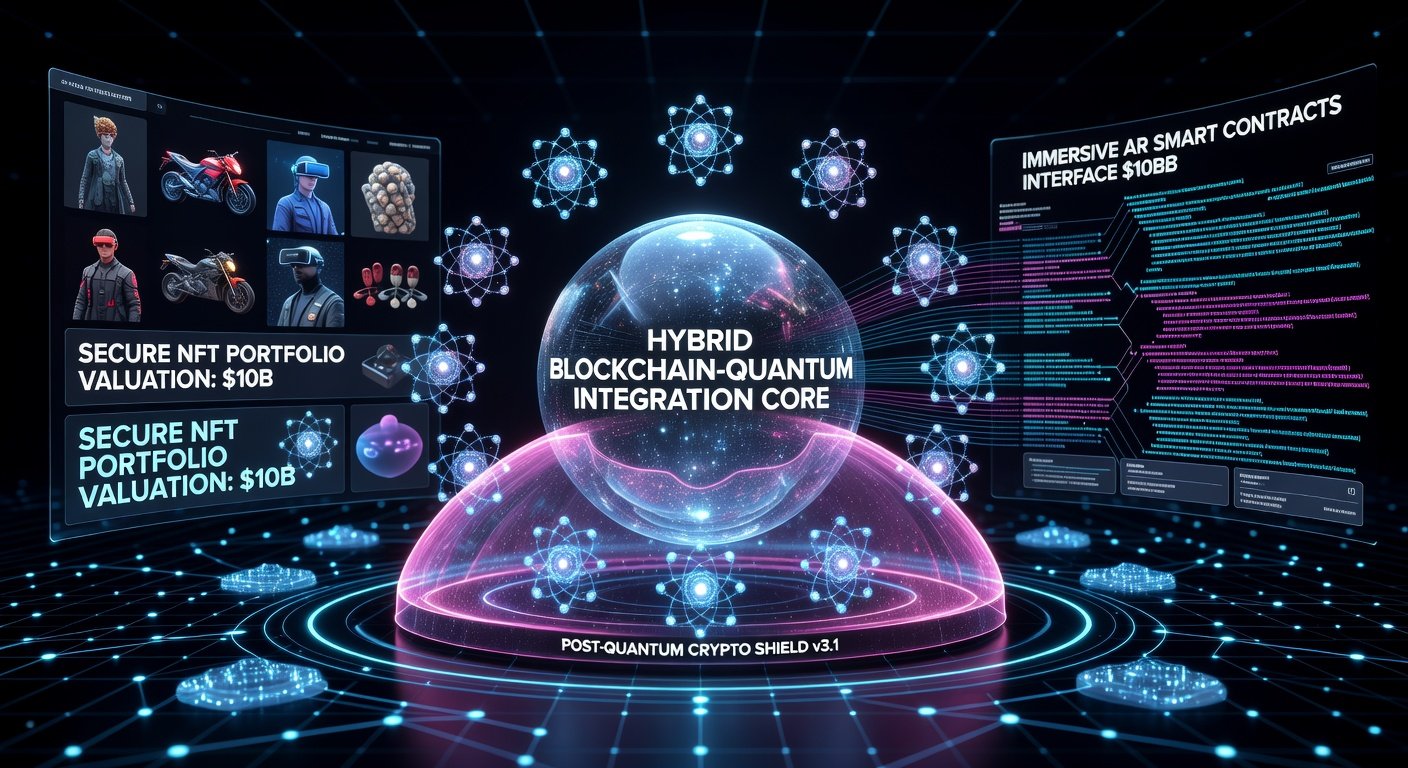
Imagine quantum-accelerated ray tracing in VR worlds, combined with blockchain for tamper-proof user data. Projects like Quantum Resistant Ledger (QRL) are testing integrations in AR prototypes.
Real-World Examples and Performance Benchmarks
Quantum-Resistant Blockchains in Metaverses: QRL powers secure transactions in VR economies, resisting Grover's algorithm (which halves hash security). In 2025 trials, it handled 500 TPS with PQC overhead under 10%.
Benchmarks: Google's Sycamore (53 qubits) achieved quantum supremacy in 2019; by 2026, expect 1,000-qubit supremacy over supercomputers for specific tasks. Blockchain benchmarks: Solana hits 65,000 TPS theoretically, but real-world averages 2,000 TPS.
Hybrid example: IonQ's quantum hardware optimizing DeFi yield farming, reducing computation from days to minutes.
Pros and Cons: A Balanced Comparison
- Blockchain Pros: Proven decentralization, energy-efficient PoS, widespread adoption.
- Blockchain Cons: Vulnerable to quantum attacks pre-PQC, scalability limits.
- Quantum Pros: Exponential speed for AI/ML, unbreakable simulations.
- Quantum Cons: High error rates, centralization risks (few players like IBM, Google).
Hybrid Future Scenarios: The Winning Path?
By 2026, expect 'quantum-blockchain hybrids': quantum key distribution (QKD) for unbreakable comms, quantum random number generators for mining, and blockchain securing quantum data oracles.
Steps to build a hybrid app:
- Choose PQC libraries (e.g., OpenQuantumSafe).
- Integrate quantum cloud APIs from IBM or AWS Braket.
- Test on testnets for latency.
- Deploy in VR/AR via Web3 wallets.
Mistakes to avoid: Ignoring decoherence in quantum modules or skipping PQC audits.
Predictions: Who Dominates VR/AR by 2027?
Blockchain won't vanish; it'll evolve quantum-resistant. Quantum won't replace it but augment. By 2027, hybrids dominate VR/AR: blockchain for ownership, quantum for compute-intensive renders. Investors: Bet on projects like QRL or Ethereum PQC upgrades. Market consensus points to $10B+ quantum-blockchain fusion space.
FAQs: Adoption Timelines and Investment Risks
Q: When will quantum break current blockchains?
A: Not before 2030 for large-scale attacks; PQC migrations accelerate now.
Q: Best investment in this clash?
A: Diversify into quantum firms (IBM) and PQC chains; risks include regulatory hurdles and tech immaturity.
Q: VR/AR hybrid readiness?
A: Prototypes live in 2026; full adoption by 2028.
This showdown shapes our digital future—stay ahead by blending both.
No comments yet. Be the first!