 NeoBit Daily

Quantum Defense Tactics for VR AR Blockchain Networks 2026
As virtual reality, augmented reality, and blockchain decentralized applications expand rapidly in 2026, organizations must adopt proactive quantum defense tactics to protect sensitive data and maintain system integrity. Emerging threats from quantum computing demand immediate attention to threat modeling and protocol upgrades across immersive platforms and distributed ledgers. This comprehensive guide explores advanced strategies that combine traditional cybersecurity with quantum-resistant measures to build resilient systems for the next generation of technology.
Understanding the Quantum Threat Landscape
Quantum computers pose significant risks to traditional cryptographic methods used in VR/AR environments and blockchain networks. Algorithms such as Shor's can efficiently break RSA and ECC encryption, potentially exposing user interactions in virtual spaces and compromising transaction ledgers in decentralized applications. In 2026, the convergence of these technologies creates hybrid systems where classical and quantum elements coexist, requiring specialized defenses that address both current and future attack vectors. Quantum threats extend beyond theoretical concerns, as advancements in quantum hardware accelerate the timeline for practical attacks on existing security infrastructures.
Real-world implications include unauthorized access to AR overlay data streams and manipulation of VR session keys. Blockchain networks face risks to their consensus mechanisms if quantum capabilities allow rapid solving of cryptographic puzzles. Organizations must therefore prioritize defenses that anticipate these developments rather than reacting after vulnerabilities are exploited.
Proactive Threat Modeling for Emerging Tech
Effective defense begins with structured threat modeling tailored to VR, AR, and blockchain ecosystems. Begin by mapping all critical assets including immersive VR sessions, real-time AR overlays, and smart contract executions. Identify quantum-vulnerable entry points such as key exchanges in dApps and data synchronization channels in virtual environments. Use established frameworks that simulate quantum attacks to prioritize risks based on likelihood and potential impact.
- Assess VR headset firmware for encryption weaknesses in real-time rendering pipelines
- Evaluate AR cloud synchronization protocols for exposure during spatial mapping
- Analyze blockchain consensus mechanisms for quantum exposure in proof-of-stake validations
- Review third-party integrations that handle cross-platform data flows between VR and AR components
Advanced modeling incorporates scenario planning for nation-state level quantum resources. Teams should conduct workshops to simulate attacks on sample VR environments and blockchain transactions, documenting mitigation priorities. This proactive approach ensures defenses scale with technological growth.
Quantum-Resistant Encryption Methods
Transitioning to post-quantum cryptography is essential for long-term protection. Lattice-based algorithms like Kyber and Dilithium provide strong resistance against quantum attacks while maintaining efficiency suitable for bandwidth-intensive VR and AR applications. Hash-based signatures add robust layers for blockchain verification processes, ensuring transaction integrity remains intact even under quantum pressure.
Compare current protocols such as AES-256 and standard ECC implementations with upgraded versions incorporating NIST-approved post-quantum standards. Upgraded protocols significantly reduce vulnerability windows while preserving low-latency performance required in real-time immersive applications. For example, integrating hybrid schemes allows gradual migration without disrupting ongoing VR sessions or dApp operations. Organizations benefit from testing these methods in controlled pilots to measure overhead and compatibility.
Integration Workflows and Step-by-Step Examples
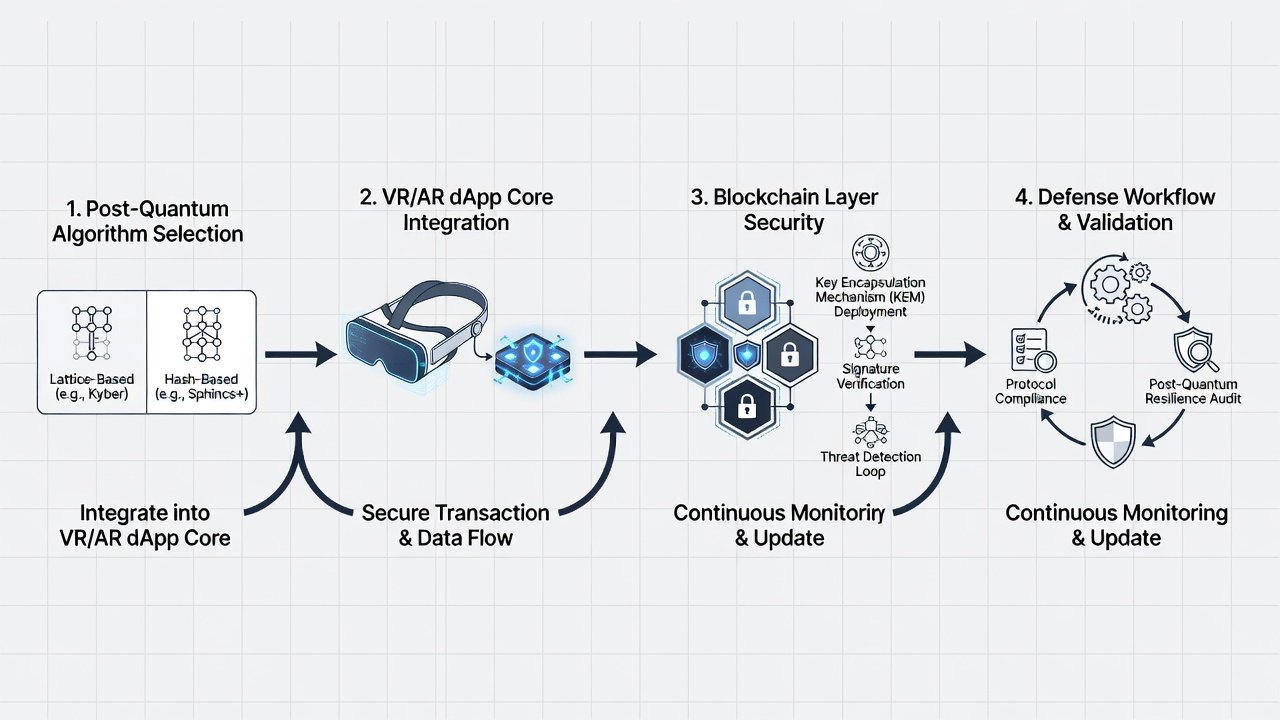
Follow detailed workflows to implement defenses systematically. First, perform a complete audit of existing systems to catalog all cryptographic usages across VR firmware, AR applications, and blockchain smart contracts. Second, select appropriate hybrid encryption suites that combine classical and post-quantum elements. Third, deploy upgrades through phased rollouts with extensive testing at each stage.
Consider a practical example for a blockchain dApp handling AR asset trading: Replace ECC key generation with Kyber-based alternatives during user authentication. Implement step-by-step by updating the wallet module first, then testing signature verification in a sandbox. Monitor latency impacts on VR rendering pipelines during simultaneous AR interactions. Another example involves securing VR collaborative spaces by encrypting session metadata with Dilithium signatures before storage on the blockchain ledger.
Extend the process by incorporating monitoring tools that flag any deviations in encryption performance. Document all changes for compliance and future audits. These workflows ensure seamless integration while minimizing operational disruptions.
Real-World Defense Checklists
Use this expanded checklist for comprehensive coverage across all layers of your systems:
- Conduct quantum risk assessments on a quarterly basis with cross-functional teams
- Implement multi-factor authentication enhanced with post-quantum key exchanges
- Encrypt all VR/AR session data both at rest and during active transmission
- Regularly update smart contract libraries to incorporate quantum-resistant primitives
- Train development and operations teams on quantum-aware security best practices
- Perform penetration testing that includes simulated quantum computing scenarios
- Establish incident response plans specifically addressing quantum-induced breaches
Common Pitfalls to Avoid
Avoid rushing implementations without thorough testing, as this can introduce new vulnerabilities in VR hardware interfaces or AR data pipelines. Do not ignore performance overhead when deploying on resource-constrained VR devices, which may lead to degraded user experiences. Neglecting backward compatibility often disrupts user experiences in AR applications shared across mixed legacy and modern systems. Another frequent mistake is overlooking supply chain risks where third-party components remain unpatched against quantum threats. Teams should also prevent over-reliance on single encryption methods by adopting diverse, layered approaches that distribute risk effectively.
FAQs on Scaling These Defenses
How do I start quantum defense in existing blockchain networks? Begin with a full cryptographic inventory followed by pilot implementations of post-quantum algorithms on testnets before scaling to production environments.
What are the costs of upgrading protocols in 2026? Upgrades vary by organizational scale but emphasize qualitative resilience improvements over specific pricing metrics.
Can these tactics scale for enterprise VR/AR deployments? Yes, modular integration strategies allow gradual scaling while preserving operational continuity and performance standards.
How often should threat models be updated? Review and refresh threat models at least every six months or immediately following major hardware or protocol releases.
Are there open-source tools available for quantum-resistant testing? Several community-supported libraries exist for integrating and validating post-quantum algorithms in development workflows.
Conclusion
Building resilient VR, AR, and blockchain systems in 2026 requires blending proactive threat modeling with quantum-resistant tools and rigorous implementation practices. By following structured workflows, leveraging detailed checklists, and avoiding common pitfalls, teams can secure their networks against emerging quantum threats. Stay informed through authoritative resources like NIST, NIST Cybersecurity Resources, Ethereum Foundation, and IBM Quantum for ongoing guidance and updates.


No comments yet. Be the first!