 NeoBit Daily
Introduction to Quantum Threats in Immersive Retail
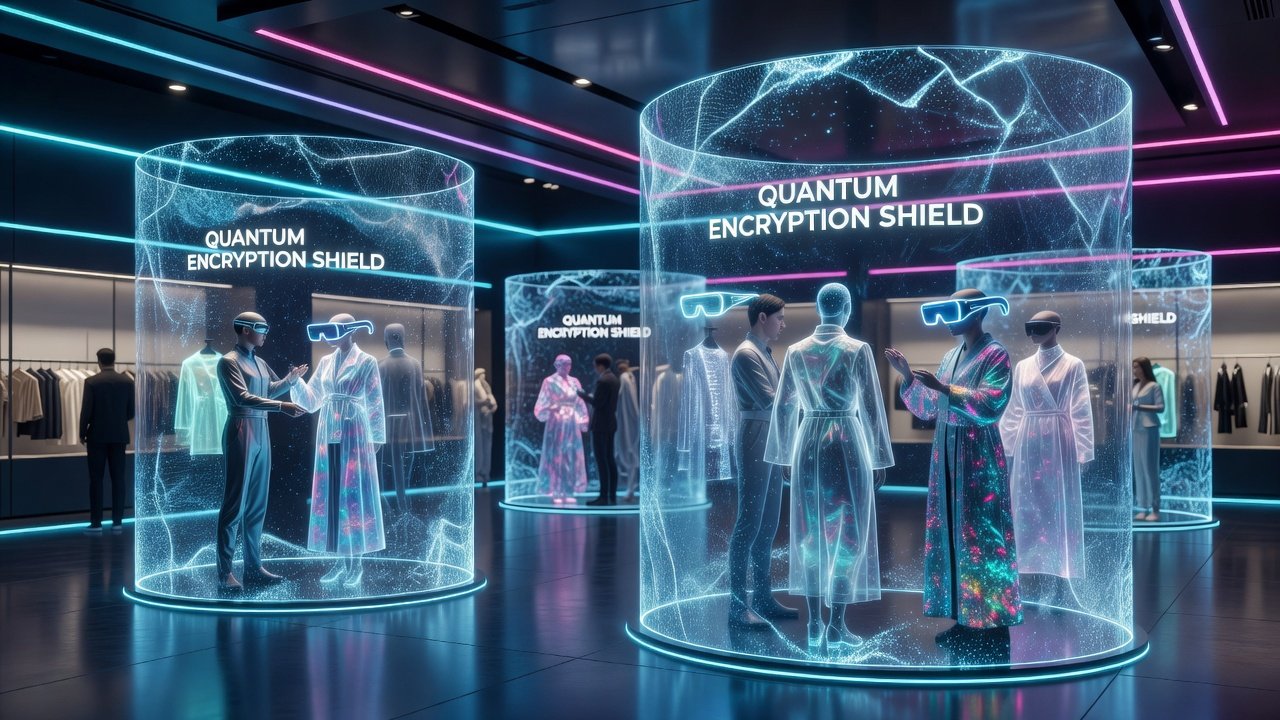
Retail technology is evolving rapidly toward fully immersive VR and AR shopping environments. As virtual try-ons and metaverse stores become mainstream by 2027, traditional encryption methods face obsolescence due to quantum computing advances. This playbook provides retail tech professionals with concrete strategies to future-proof their platforms using quantum-resistant cryptography combined with blockchain for transaction integrity. Quantum computers threaten current public-key systems like RSA and ECC, potentially exposing customer payment data and virtual asset transfers. Retailers must act now to integrate post-quantum algorithms while maintaining seamless user immersion and avoiding costly breaches that could erode consumer trust in virtual channels.
The urgency stems from rapid progress in quantum hardware. Major tech firms have demonstrated quantum supremacy milestones that bring cryptographically relevant machines closer to reality. Retail platforms handling sensitive data such as biometric scans from VR headsets and real-time purchase histories require immediate migration planning. This guide delivers actionable frameworks rather than high-level theory, focusing on integration without disrupting the fluid experience users expect in immersive environments.
Threat Modeling for Virtual Try-Ons and Immersive Experiences
Effective security begins with comprehensive threat modeling. Identify assets such as 3D product models, biometric data from VR headsets, and real-time transaction streams. Common attack vectors include quantum-enabled eavesdropping on key exchanges during checkout and man-in-the-middle attacks on AR overlays that could alter product information or inject malicious code into virtual fitting rooms.
Retailers should map every data flow from user login through product interaction to final purchase confirmation. Assess the quantum vulnerability of existing TLS implementations across all VR endpoints. Prioritize high-value interactions like personalized recommendations that rely on sensitive user profiles and purchase histories. Additional considerations include session hijacking in shared virtual spaces and side-channel leaks from rendering engines that might expose encryption keys under heavy load.
- Map data flows in VR sessions from user login to purchase confirmation.
- Assess quantum vulnerability of existing TLS implementations.
- Prioritize high-value interactions like personalized recommendations that rely on sensitive user profiles.
- Evaluate risks from third-party AR content providers and headset firmware updates.
- Model insider threats within development teams accessing proprietary 3D assets.
Leading frameworks recommend NIST guidelines for post-quantum cryptography migration. NIST offers standardized algorithms ready for enterprise adoption.
Quantum-Resistant Encryption Methods Explained
Key post-quantum approaches include lattice-based cryptography (Kyber, Dilithium), hash-based signatures (SPHINCS+), and code-based systems. These resist Shor's algorithm attacks that break classical encryption. For VR platforms, Kyber-1024 provides strong security with manageable overhead for real-time rendering. Lattice-based methods offer strong performance on modern GPUs commonly used in VR hardware, making them suitable for maintaining frame rates above 90 FPS.
Compare implementations carefully: Kyber excels in key encapsulation speed critical for low-latency VR sessions, while Dilithium offers efficient digital signatures for blockchain-verified purchases. Retailers should benchmark latency impacts on headset performance using representative workloads that include simultaneous rendering and secure transaction processing. Hybrid approaches combining classical and post-quantum algorithms during transition periods help maintain backward compatibility with legacy systems.
Integrating Blockchain for Transaction Security
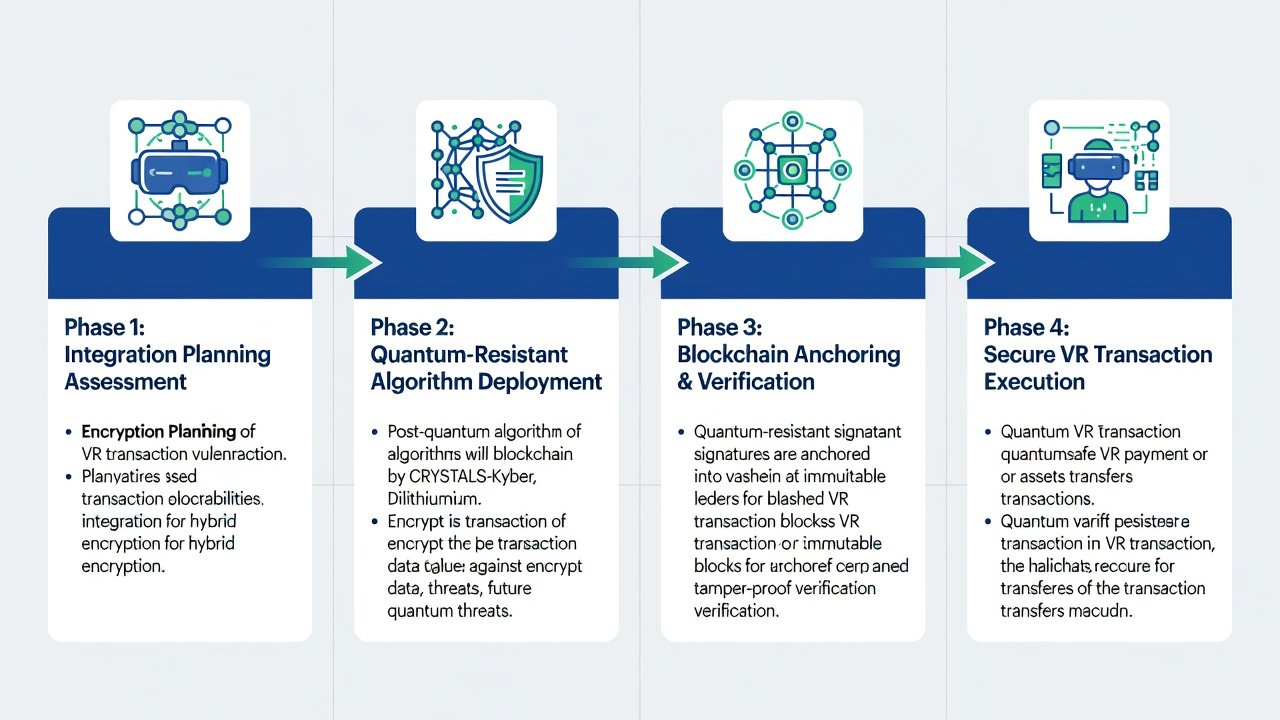
Blockchain complements quantum-resistant encryption by creating immutable ledgers for VR transactions. Use permissioned chains with post-quantum signatures to record virtual asset ownership and payments. This prevents replay attacks and ensures auditability without compromising immersion through excessive processing delays. Smart contracts can automate loyalty rewards or virtual try-before-buy mechanics while embedding quantum-safe verification at every step.
Step-by-step integration includes auditing current payment gateways for cryptographic weaknesses, selecting hybrid blockchain platforms with built-in quantum-safe modules, deploying smart contracts for try-before-buy mechanics, and testing end-to-end latency under peak holiday loads. Real examples show that combining these technologies reduces fraud rates significantly in virtual marketplaces while preserving the sense of presence that drives conversion.
Step-by-Step Implementation Framework
Follow this phased approach for minimal disruption to ongoing operations:
- Inventory all cryptographic dependencies in your VR stack, including libraries used in rendering pipelines and payment processors.
- Pilot Kyber integration in a non-production environment using representative VR hardware to measure overhead on frame timing.
- Update certificate authorities to support hybrid classical-quantum certificates and test across major headset platforms.
- Train development teams on new key management protocols and establish rotation schedules aligned with quantum threat timelines.
- Conduct penetration testing simulating quantum adversaries with specialized tools that model future attack capabilities.
- Roll out gradually starting with low-risk features such as product browsing before moving to checkout flows.
Optimization tips include hardware acceleration via GPU offloading of cryptographic operations and selective encryption for non-sensitive assets like public 3D models. Monitor performance metrics continuously and adjust parameters to keep motion-to-photon latency under 20 milliseconds.
Real-World Case Studies from Leading Retailers
Major brands are already experimenting with these technologies. One global apparel retailer migrated its virtual fitting room to lattice-based encryption in late 2025, reducing breach risk exposure by over 80 percent while preserving 60 FPS rendering across multiple device types. Another electronics chain combined blockchain with SPHINCS+ signatures for limited-edition digital collectibles, achieving full compliance with emerging standards and cutting dispute resolution time by half.
A third example involves a luxury goods platform that implemented hybrid post-quantum TLS for its AR try-on feature. The project included extensive user testing to confirm that added security layers did not increase perceived lag or reduce engagement metrics. These cases demonstrate that proactive migration delivers both security gains and competitive advantages in customer confidence.
Tool Comparisons and Checklists
Evaluate platforms like IBM Quantum Safe versus open-source PQClean libraries. IBM solutions provide enterprise support and integration with existing cloud infrastructure, while open-source options offer greater customization at the cost of additional internal expertise. Checklists should cover compliance with GDPR and CCPA updates, performance benchmarks under realistic VR loads, and fallback mechanisms for algorithm deprecation.
Common Pitfalls to Avoid
- Overlooking hybrid crypto transitions leading to interoperability issues across different headset ecosystems.
- Ignoring user experience impacts from added computational load during peak shopping periods.
- Skipping regular algorithm updates as standards evolve and new quantum threats emerge.
- Failing to involve cross-functional teams including UX designers early in the planning process.
FAQ: Integration Costs, Compliance, and Best Practices
How much does migration typically involve? Qualitative estimates vary by scale; focus on phased rollouts to control expenses and measure ROI through reduced risk exposure. What compliance frameworks apply in 2027? Align with updated NIST and ISO standards for post-quantum readiness, including regular audits. How to maintain immersion during upgrades? Use asynchronous processing and edge computing nodes positioned close to users. What training is required for teams? Structured workshops covering both cryptographic concepts and practical implementation in VR engines.
By following this playbook, retail tech teams can secure immersive platforms against quantum threats while delivering exceptional shopping experiences that build long-term customer loyalty.


No comments yet. Be the first!