 NeoBit Daily

Introduction to Quantum-Secure VR Retail in 2026
Virtual reality shopping platforms are transforming retail by offering immersive experiences that blend digital and physical worlds. As adoption grows, securing these environments against emerging quantum computing threats becomes essential. This guide provides retailers with practical steps to implement quantum-resistant encryption layered onto blockchain-powered VR systems in 2026. Retailers face increasing pressure to protect customer transactions and personal data in virtual spaces where traditional security measures fall short against future quantum attacks.
Quantum computers threaten traditional cryptographic methods used in transaction ledgers. Retailers must adopt post-quantum cryptography to protect customer data and payment flows in immersive settings. The approach combines threat modeling specific to VR with careful algorithm selection and phased integration. By following this structured process, businesses can achieve higher security completion rates while maintaining seamless user experiences.
Threat Modeling for Immersive Retail Environments
Effective security starts with identifying risks unique to VR retail. Attackers may target avatar interactions, virtual try-on data, or real-time transaction streams. Key vectors include man-in-the-middle attacks during AR overlays and ledger tampering via quantum algorithms. Begin by mapping data flows from user authentication in the headset to blockchain settlement. Assess latency tolerances because delays in AR try-ons can degrade user experience significantly. Document assets like biometric inputs and 3D model intellectual property that require protection.
Conduct a comprehensive asset inventory by listing every component in the VR ecosystem including headsets, rendering servers, and smart contracts. Create attack trees that outline potential entry points such as compromised user credentials or exploited smart contract vulnerabilities. Simulate quantum-assisted attacks on current encryption to understand exposure levels. Include physical-world intersections like delivery address leaks from virtual purchases. This modeling phase typically takes two to four weeks for mid-size operations and sets the foundation for all subsequent security decisions.
Selecting Post-Quantum Algorithms
Choose algorithms standardized for 2026 deployment. Lattice-based options such as Kyber and Dilithium offer strong security with manageable overhead. Hash-based signatures provide alternatives for ledger signing needs. Evaluate performance against your VR engine requirements and test for compatibility with existing elliptic curve implementations during transition periods. Consider code-based and multivariate polynomial algorithms as additional options for specific use cases like key encapsulation in high-volume transaction environments.
Run comparative testing across multiple hardware configurations including standalone VR headsets and cloud-rendered sessions. Prioritize algorithms with proven resistance to both classical and quantum attacks while monitoring NIST updates for any revisions. Factor in implementation complexity because some algorithms require specialized hardware modules that may not integrate easily with consumer VR devices.
Integrating with Existing Blockchain Ledgers
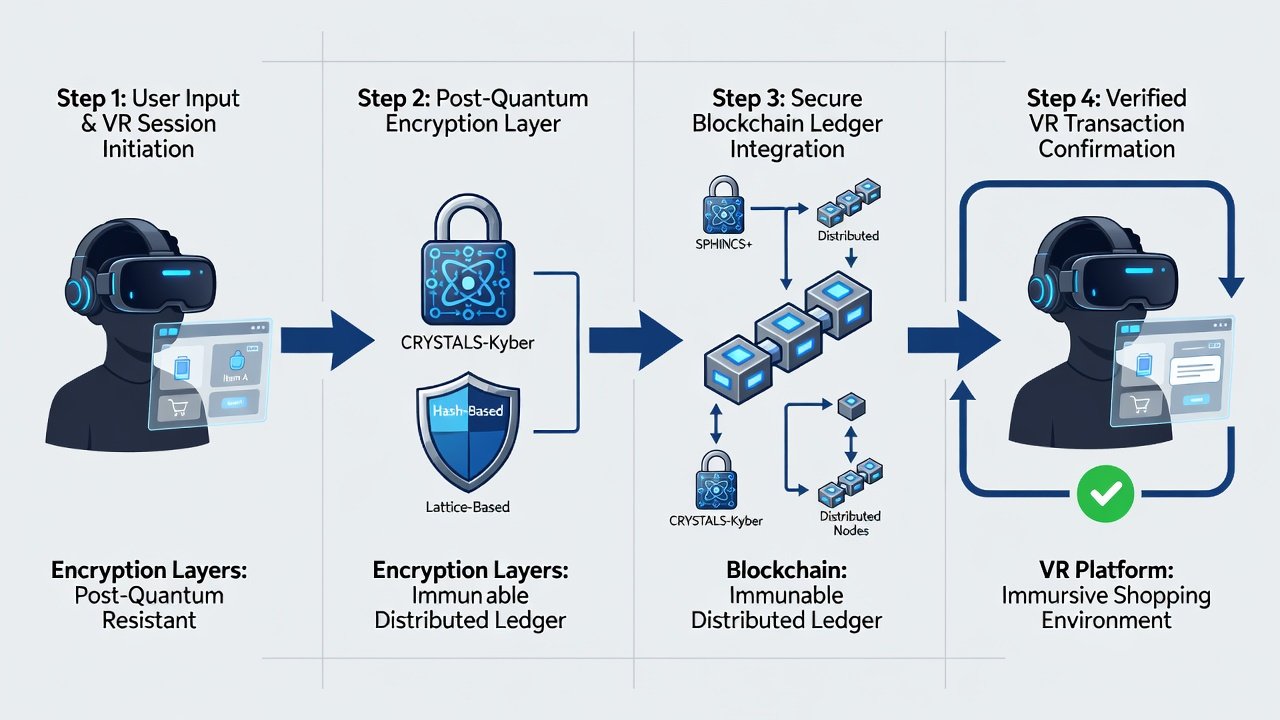
Layer new encryption without disrupting current operations. Use hybrid schemes that combine classical and post-quantum methods initially. Update smart contracts to support larger signature sizes from quantum-resistant schemes. Work with modular blockchain frameworks that allow plugin-based cryptography upgrades. Validate each integration step through sandbox testing before production rollout.
Follow these detailed steps for integration. First audit the current ledger architecture to identify all cryptographic functions. Second implement a hybrid signature layer that signs transactions with both traditional and post-quantum methods. Third update node software across the network to recognize new signature formats. Fourth conduct load testing to measure impact on transaction throughput. Fifth deploy monitoring tools that alert teams to any anomalies during the transition. This methodical approach minimizes downtime and allows rollback options if issues arise.
Phased Rollout Examples from Mid-Size Brands
Mid-size retailers have demonstrated success with staged implementations. One fashion brand began with non-transactional VR showrooms then expanded to secure checkout over a six-month period. Another electronics retailer piloted quantum-resistant payments in a single virtual store before scaling to all locations. A home goods company focused first on internal inventory ledgers before customer-facing features. These examples highlight the value of starting small and measuring user retention at each phase while collecting performance data to guide expansions.
Each brand documented lessons learned including the importance of staff training on new security interfaces and customer communication about enhanced protections. Phased approaches reduced overall project risk and allowed iterative improvements based on real-world usage patterns.
Performance Benchmarks Versus Traditional Setups
Benchmarks from 2026 implementations show quantum-resistant setups add 15-25% overhead in transaction processing compared to legacy systems. VR frame rates remain stable when algorithms are optimized for GPU acceleration. Compare metrics such as end-to-end latency and throughput where traditional setups may edge out in raw speed yet quantum layers deliver superior long-term protection. Test under peak loads simulating holiday shopping events to ensure reliability.
Additional benchmarks reveal that memory consumption increases by approximately 30 percent in headsets but can be mitigated through efficient key caching strategies. Network bandwidth requirements rise modestly and remain within acceptable limits for most broadband connections used by consumers.
Common Pitfalls Including Latency in AR Try-Ons
Avoid underestimating computational costs during peak shopping hours. Latency spikes in AR try-ons often stem from oversized signatures rather than network issues. Mitigate by caching verified keys and using hardware acceleration. Other pitfalls include incomplete key rotation schedules and neglecting mobile headset compatibility testing. Overlooking user consent flows for biometric data collection can also lead to compliance violations.
Develop contingency plans for each identified pitfall such as fallback encryption modes during high-traffic periods. Regular audits help catch configuration drift that could reintroduce vulnerabilities after initial deployment.
Comparing Three Vendor Stacks
| Vendor Stack | Pros | Cons |
|---|---|---|
| Stack A: Lattice-Focused Platform | Strong NIST alignment, low integration friction, excellent documentation | Higher memory usage in headsets, requires GPU optimization |
| Stack B: Hybrid Blockchain Suite | Backward compatibility, flexible scaling options, strong community support | Complex configuration for VR engines, longer initial setup time |
| Stack C: Hash-Based Ledger Add-On | Proven security track record, minimal changes to existing code | Larger signature sizes impacting speed, limited third-party integrations |
Evaluate each stack against your specific VR platform requirements and conduct proof-of-concept projects before committing to a full license. Consider long-term vendor support and update roadmaps when making final selections.
Implementation Checklist
- Conduct full threat assessment including asset mapping and attack simulation
- Select and test two post-quantum algorithms across target hardware
- Prototype hybrid ledger integration in a controlled sandbox environment
- Run performance benchmarks in VR environment under varied load conditions
- Plan phased rollout with user feedback loops and rollback procedures
- Document compliance evidence for audits including test results and configuration logs
- Train staff on monitoring tools and incident response protocols
- Establish ongoing key management and rotation schedules
FAQ on Compliance
How does this align with emerging regulations? Quantum-resistant measures support compliance with data protection frameworks emphasizing forward secrecy and long-term data protection.
What audit requirements apply? Maintain logs of algorithm transitions and penetration test results for at least three years.
Can existing ledgers be upgraded in place? Yes through modular cryptography plugins available in major frameworks.
How often should algorithms be reviewed? Schedule reviews annually or whenever NIST releases new guidance.
What training do teams need? Focus on post-quantum concepts, monitoring dashboards, and incident response procedures.
For authoritative guidance on post-quantum standards, consult NIST. Retailers exploring blockchain foundations may review resources at Hyperledger. Additional cybersecurity best practices appear at CISA.
Conclusion
Implementing quantum-resistant encryption in VR retail platforms requires careful planning but delivers robust protection against future threats. By following the threat modeling, algorithm selection, integration, and rollout steps outlined above, retailers can secure their blockchain-powered environments effectively. Regular testing and adherence to the provided checklist ensure sustained security and compliance in the evolving 2026 landscape.


No comments yet. Be the first!