 NeoBit Daily
Introduction to Cybersecurity in Emerging Tech for 2026
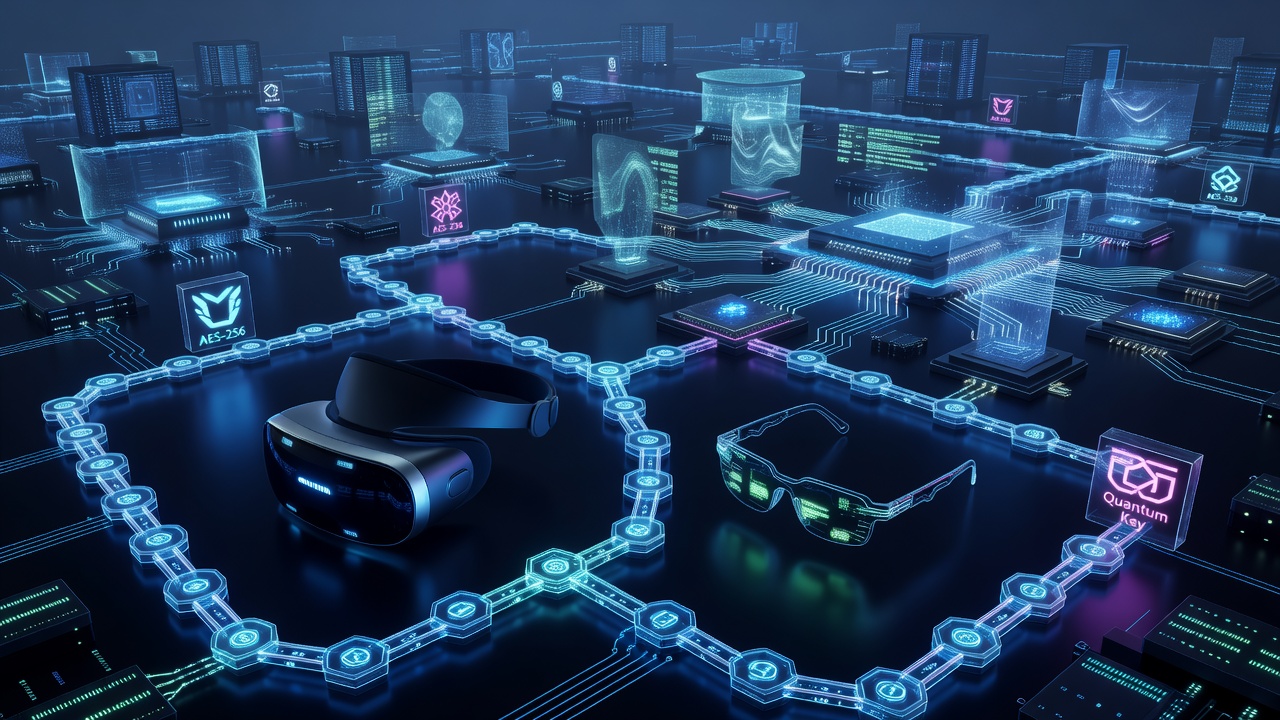
As VR, AR, blockchain, and quantum computing converge in 2026, organizations face sophisticated threats that demand proactive defenses. This article provides in-depth strategies to protect these integrated systems, focusing on real-world applications in finance and gaming while offering practical comparisons and checklists. The rapid adoption of these technologies has created new attack surfaces where immersive data meets decentralized ledgers and quantum processing power, requiring a holistic approach that goes beyond traditional perimeter security. Businesses must now consider how these technologies interact in real-time scenarios, such as quantum-secured blockchain transactions powering VR-based financial simulations or AR-enhanced gaming platforms with immutable ledgers.
Key Threats Facing Integrated Emerging Tech Systems
In 2026, attackers target the intersections of immersive environments, decentralized ledgers, and quantum processing. Quantum computers threaten current encryption standards by potentially breaking RSA and ECC algorithms in hours rather than years. VR and AR platforms risk data interception during real-time rendering of user movements and environments, exposing sensitive biometric information. Blockchain networks face smart contract exploits and 51% attacks amplified by quantum speed advantages. Understanding these risks starts with recognizing how legacy systems fail against next-generation attacks, including side-channel exploits in hardware accelerators and supply-chain compromises in quantum chip manufacturing. Additional threats include deepfake manipulations in AR overlays and ransomware targeting quantum cloud services, which can cascade across interconnected ecosystems. CISA highlights the importance of monitoring these evolving vectors through continuous threat intelligence sharing.
Quantum-Resistant Encryption Methods
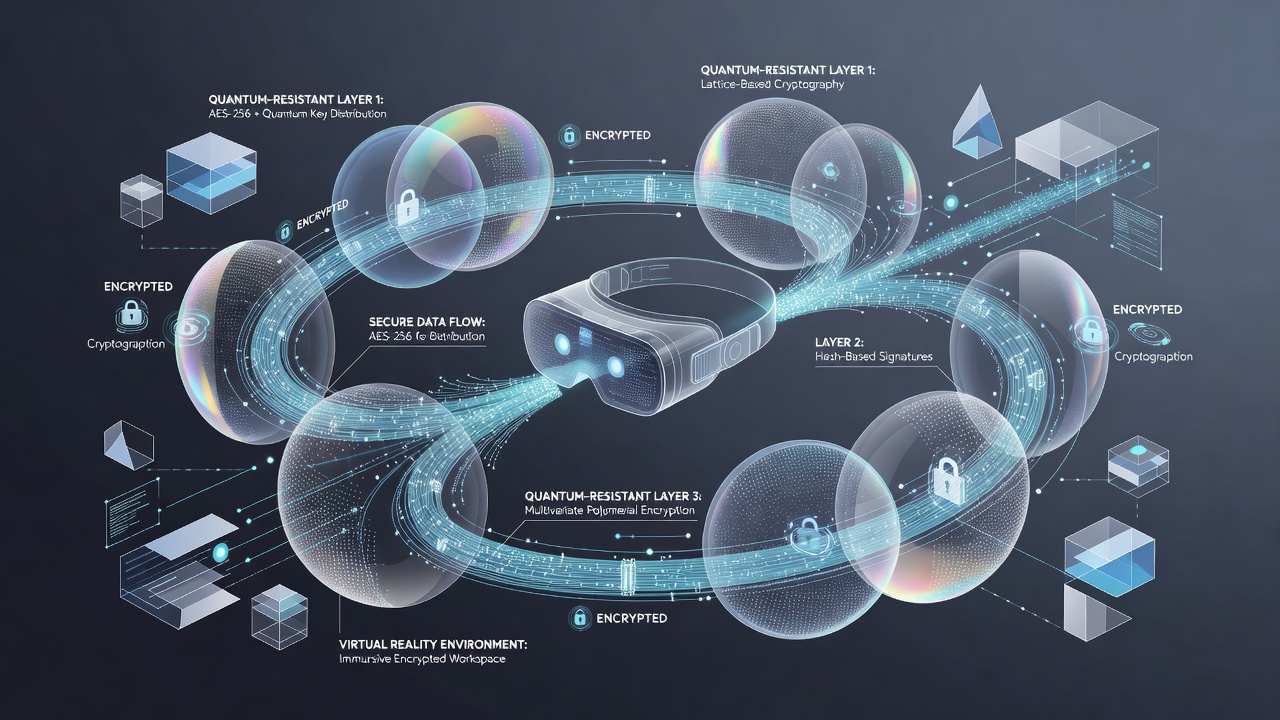
Transitioning to post-quantum cryptography is essential. Algorithms like lattice-based cryptography, hash-based signatures, and code-based schemes provide resistance to quantum algorithms such as Shor's. Organizations should evaluate NIST's ongoing standardization efforts for seamless integration into existing infrastructures. NIST offers guidance on migrating from RSA to quantum-safe alternatives, ensuring data integrity across blockchain ledgers and VR sessions. Practical steps include hybrid encryption models that combine classical and post-quantum methods during transition periods, with testing on simulated quantum environments to validate performance overhead, which remains under 15% in most benchmarks for 2026 deployments. Enterprises are also exploring isogeny-based methods for lighter computational loads in mobile AR devices, allowing faster key generation without sacrificing security margins.
Secure Data Flows in Immersive VR and AR Environments
Immersive experiences generate vast biometric and spatial data that must be protected at every layer. End-to-end encryption combined with zero-trust architectures prevents unauthorized access during transmission and storage. Secure multi-party computation allows collaborative AR without exposing raw inputs, while edge computing nodes handle localized processing to reduce latency. Additional measures include watermarking virtual assets to prevent theft and implementing behavioral analytics to detect anomalous user interactions in real time. Organizations can further enhance flows by deploying homomorphic encryption for processing encrypted data directly in VR clouds, preserving privacy even during complex rendering tasks shared across global teams.
Blockchain Auditing Techniques for 2026
Regular smart contract audits using formal verification tools detect vulnerabilities early before deployment. Implement continuous monitoring with AI-driven anomaly detection on ledgers to flag unusual transaction patterns. Techniques such as Merkle tree enhancements, sharding with quantum-resistant hashes, and decentralized identity verification strengthen resilience against evolving threats. Finance sector examples show that combining on-chain analytics with off-chain oracles reduces false positives in fraud detection by up to 40% when integrated properly. Regular penetration testing of consensus mechanisms also helps identify timing attacks that quantum computers might exploit in proof-of-stake networks.
Legacy Versus Next-Gen Defenses: A Practical Comparison
Legacy firewalls struggle with quantum decryption speeds, whereas next-gen solutions incorporate post-quantum key exchange protocols that maintain forward secrecy. Traditional VPNs lack support for AR real-time streams and introduce unacceptable latency; modern alternatives use edge computing with embedded encryption layers that adapt dynamically to user movement. Basic blockchain monitoring misses subtle quantum attacks on elliptic curve signatures, but advanced auditing platforms provide predictive threat modeling using machine learning trained on historical breach data. Organizations comparing the two approaches often find that next-gen defenses reduce incident response times by half while requiring initial investment in staff training and hardware upgrades. A side-by-side evaluation reveals that legacy systems incur higher long-term costs due to frequent breaches, while next-gen options deliver better scalability for high-volume immersive applications.
Case Studies from Finance and Gaming Sectors
In finance, a major bank deployed quantum-resistant encryption across blockchain payment rails in early 2026, reducing breach risks significantly by replacing vulnerable key exchanges with lattice-based alternatives and conducting monthly penetration tests. This resulted in seamless compliance with emerging regulatory standards and protected high-value transactions from quantum-enabled adversaries. Gaming studios protecting VR multiplayer environments with secure data pipelines and zero-trust access controls reported fewer exploits in 2026 deployments, particularly around avatar asset theft and session hijacking. These examples highlight scalable tactics applicable beyond specific industries, demonstrating how layered defenses can be tailored to sector-specific data sensitivities and user volumes. One gaming firm integrated AR overlays with audited blockchain rewards systems, achieving a 60% drop in cheating incidents after full implementation.
Step-by-Step Implementation Checklist
- Assess current infrastructure for quantum vulnerabilities using automated scanning tools that simulate Shor's algorithm impacts.
- Adopt NIST-recommended post-quantum algorithms and run pilot tests on non-critical systems first.
- Integrate zero-trust frameworks into VR/AR platforms by segmenting user sessions and enforcing continuous authentication.
- Conduct quarterly blockchain audits with automated tools supplemented by third-party reviews for complex smart contracts.
- Train teams on emerging threat landscapes through workshops that include hands-on quantum simulation exercises.
- Test defenses through simulated quantum attacks and red-team exercises focused on immersive data exfiltration.
- Monitor and update policies continuously with real-time dashboards that aggregate logs from all technology layers.
- Establish cross-functional teams to review integration points between VR data streams and blockchain ledgers quarterly.
Common Pitfalls Addressed in FAQs
What is the biggest mistake when securing VR data flows?
Overlooking biometric encryption often leads to identity theft in immersive setups, as unencrypted eye-tracking or gesture data can be reconstructed into personal profiles.
How do legacy systems compare in blockchain environments?
They frequently fail against quantum-enhanced attacks on signature schemes, necessitating immediate upgrades to maintain ledger immutability and transaction trust.
Is full migration to quantum-resistant tech feasible in 2026?
Phased rollouts with hybrid encryption minimize disruption while maximizing protection, allowing gradual replacement of vulnerable components without halting operations.
What common error occurs during blockchain auditing?
Relying solely on automated tools without manual code review misses logical flaws in complex decentralized applications that could enable fund drains.
Conclusion
Implementing these cybersecurity strategies ensures robust protection for VR, AR, blockchain, and quantum technologies in 2026. By prioritizing quantum-resistant methods, secure immersive flows, and rigorous auditing, businesses can mitigate risks effectively and stay ahead of threats while enabling innovation across sectors.


No comments yet. Be the first!