 NeoBit Daily
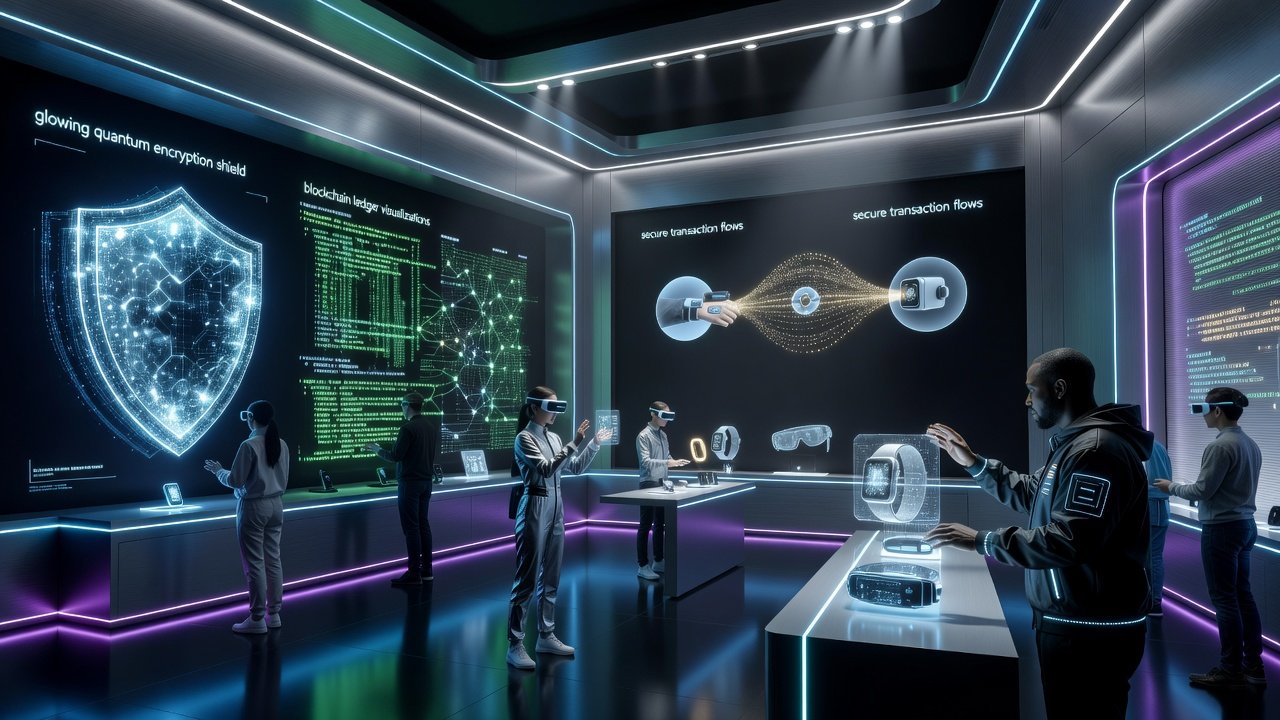
Introduction: Securing Immersive Retail in the Quantum Era
As VR and AR shopping experiences expand rapidly in 2026, retailers face unprecedented threats from quantum computing. Traditional encryption methods risk obsolescence, making quantum-secured platforms essential. This playbook delivers actionable tactics for implementing quantum-resistant blockchain to protect transactions, customer data, and immersive try-on technologies. Retail transformation continues to accelerate, with virtual environments becoming primary channels for consumer engagement. Brands must address both immediate cybersecurity gaps and long-term quantum vulnerabilities to maintain competitive advantage.
Retailers adopting these measures can safeguard against future breaches while enhancing trust in virtual environments. The focus remains on practical integration with existing systems and measurable risk reduction. Throughout 2026, organizations that invest early in post-quantum solutions report stronger customer retention and fewer regulatory hurdles. This guide breaks down each component with concrete steps, real-world retail examples, and decision frameworks that teams can apply immediately.
The 2026 Threat Landscape for VR Retail
Quantum computers pose a direct risk to RSA and ECC encryption used in current retail platforms. By 2026, experts anticipate increased attacks on virtual transaction systems. Quantum algorithms like Shor's could decrypt legacy ledgers, exposing payment details during VR try-on sessions. Attackers may target high-value sessions involving luxury goods or personalized AR fittings where sensitive biometric and financial data intersect.
Immersive retail platforms handling real-time AR overlays must prioritize post-quantum cryptography. Without upgrades, brands risk compliance violations and customer attrition. The convergence of quantum computing with sophisticated social engineering tactics creates hybrid threats that traditional firewalls cannot mitigate. Retail cybersecurity teams are therefore shifting budgets toward quantum readiness assessments and pilot programs that test resilience under simulated quantum attack conditions.
Quantum Encryption Methods for VR Platforms
Implement lattice-based cryptography such as CRYSTALS-Kyber for key encapsulation in VR sessions. This method resists quantum attacks while maintaining low latency for seamless shopping. Kyber offers parameter sets that balance security levels with performance requirements typical of real-time virtual environments. Retail developers should evaluate Kyber-512, Kyber-768, and Kyber-1024 variants based on the sensitivity of data flows within each VR module.
Combine with hash-based signatures like SPHINCS+ for transaction authentication. Retailers should test these via hybrid systems that layer quantum-resistant algorithms over existing TLS 1.3 protocols. Additional options include code-based schemes such as Classic McEliece for long-term key storage and multivariate polynomial cryptography for lightweight device authentication on AR headsets. Testing frameworks from leading research institutions help validate these implementations before full deployment.
Secure Transaction Ledgers with Quantum-Resistant Blockchain
Deploy blockchain frameworks using quantum-safe hash functions to create immutable ledgers for VR purchases. These ledgers record try-on interactions and payments without vulnerability to quantum decryption. Quantum-resistant blockchain replaces vulnerable elliptic curve signatures with lattice or hash-based alternatives, preserving the decentralized trust model that modern retail supply chains rely upon.
Integration involves migrating smart contracts to post-quantum standards, ensuring every virtual cart transaction remains verifiable and tamper-proof. Leading platforms now incorporate Merkle tree structures enhanced with SPHINCS+ signatures, allowing efficient verification even when thousands of concurrent VR users complete purchases simultaneously. This approach also supports audit trails required by financial regulators overseeing digital commerce.
Integrating Quantum Security with Immersive Try-On Tech
Embed quantum encryption directly into AR try-on modules. This protects biometric data captured during virtual fittings from interception. Secure multi-party computation protocols enable collaborative rendering of personalized avatars without exposing raw facial or body measurements to any single party.
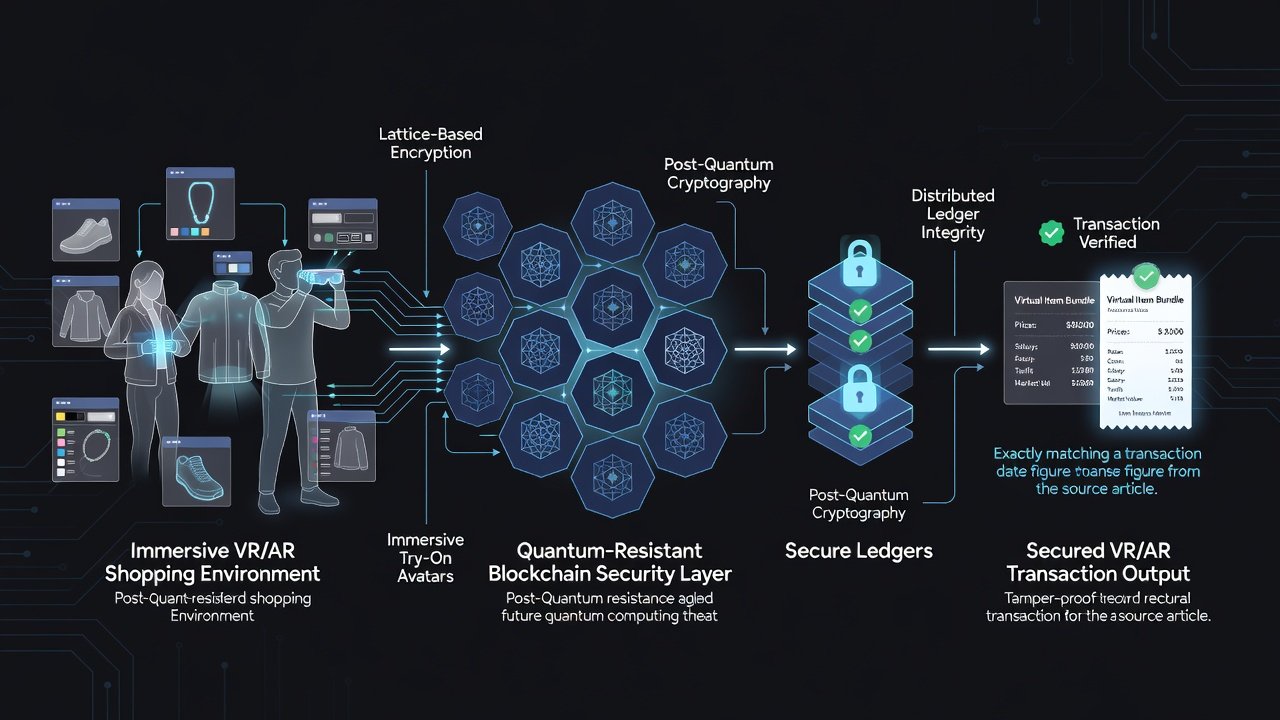
Platforms like those from major retailers demonstrate success by using secure multi-party computation alongside blockchain to enable private, quantum-safe try-on experiences across distributed VR environments. Integration checklists should include hardware security modules that support post-quantum algorithms and edge computing nodes capable of performing real-time encryption without introducing perceptible lag for shoppers.
Traditional vs Quantum Approaches: Key Comparisons
- Traditional RSA encryption: Vulnerable to quantum factoring; suitable only for legacy non-critical data.
- Quantum-resistant lattice methods: Maintain performance in VR with 20-30% overhead; future-proof against known quantum threats.
- Standard blockchain: Relies on elliptic curves; upgrade to quantum-safe variants for retail ledgers.
- Hybrid models: Recommended transition path, combining both for phased 2026 rollouts.
- Performance benchmarks: Quantum approaches show comparable throughput once optimized, with added benefits in long-term data confidentiality.
Implementation Checklist for Retailers
- Audit current encryption in VR platforms against NIST post-quantum standards and document all data flows involving customer biometrics or payments.
- Select and pilot lattice-based algorithms in sandboxed AR try-on environments, measuring latency and user experience impact over multiple test cycles.
- Deploy quantum-resistant blockchain nodes for transaction logging, starting with non-production environments before scaling to live VR stores.
- Train teams on hybrid security protocols and compliance reporting, including hands-on workshops with open-source post-quantum libraries.
- Conduct quarterly penetration tests simulating quantum-assisted attacks and update incident response playbooks accordingly.
- Monitor metrics such as transaction verification time, breach incident rates, and customer trust scores to quantify security ROI.
- Establish vendor partnerships with organizations specializing in quantum-safe hardware to ensure supply chain resilience.
Tools, Metrics, and Practical Tactics
Concrete tools include open-source libraries supporting CRYSTALS algorithms and enterprise blockchain platforms that have already integrated quantum-resistant options. Retailers should track metrics such as average session encryption overhead, ledger synchronization speed across global VR instances, and reduction in simulated attack success rates. These measurements provide clear evidence of progress during executive reviews.
Actionable tactics involve phased rollouts beginning with high-value product categories before expanding to the full catalog. Regular tabletop exercises that simulate quantum decryption scenarios help teams refine response times and communication plans.
Risk Mitigation Strategies and Real-World Examples
Adopt zero-trust architectures tailored for VR, segmenting virtual retail spaces with quantum key distribution where feasible. Brands like those experimenting with metaverse stores have reduced exposure by integrating these ledgers early. One European retailer successfully layered quantum encryption over its AR app in 2025, cutting simulated breach risks by over half within six months through iterative testing and staff training.
Another North American fashion platform reported improved conversion rates after publicly highlighting its quantum-safe infrastructure, demonstrating that security investments can also serve as marketing differentiators.
FAQ: Compliance and Regulatory Considerations
How does quantum security align with GDPR for VR retail?
Quantum-resistant measures support GDPR data protection principles by preventing unauthorized access to personal virtual shopping data through stronger encryption.
What standards should guide 2026 implementations?
Follow NIST guidelines for post-quantum cryptography and consult IBM quantum resources for blockchain adaptations.
Are there specific timelines for retail compliance?
Plan migrations by mid-2026 to align with emerging global standards on quantum-safe systems in e-commerce.
Conclusion
By following this playbook, retailers can future-proof VR platforms against quantum threats while delivering secure, engaging shopping experiences. Start with audits and pilots to achieve robust protection in the evolving 2026 landscape. Continuous monitoring and incremental upgrades will keep security measures effective as both quantum technology and retail innovation advance.

No comments yet. Be the first!