 NeoBit Daily

Introduction to Space Systems Cybersecurity in 2026
The rapid expansion of satellite constellations and orbital infrastructure has transformed global communications, navigation, and data transmission. In 2026, thousands of active satellites support everything from broadband internet to military reconnaissance, creating an interconnected ecosystem that is both powerful and vulnerable. This growth brings heightened cyber risks that extend far beyond traditional IT environments, where distance from Earth and reliance on radio frequencies introduce unique attack surfaces. Protecting sensitive data flows from sophisticated hacks now demands specialized knowledge of space-specific threats, including signal vulnerabilities, supply chain exposures, and the integration challenges between orbital and terrestrial systems.
As more organizations and governments rely on space-based assets for critical operations, a single breach can lead to widespread data privacy violations affecting millions of users. This article explores the advanced threat landscape in depth, provides practical defenses, examines real-world examples, and offers guidance on compliance with evolving international standards. By understanding these elements, stakeholders can build resilient architectures that safeguard privacy without compromising operational capabilities.
Emerging Cyber Risks to Satellite Networks
Satellite networks face threats that leverage their distance from Earth and reliance on radio frequencies. Attackers increasingly target these systems to intercept or manipulate data streams, compromising privacy on a massive scale. Risks include jamming, spoofing, and unauthorized access to onboard processors that control data routing and encryption keys.
Signal Interception Tactics
Adversaries use advanced techniques to capture transmissions between satellites and ground stations. These include spoofing signals or exploiting weak encryption in legacy protocols. For instance, attackers may deploy ground-based equipment to mimic legitimate satellite beacons, tricking receivers into routing sensitive telemetry or payload data through compromised channels. Mitigation involves adopting quantum-resistant encryption and continuous monitoring of frequency bands using spectrum analyzers integrated with AI anomaly detection. Organizations should also implement frequency-hopping spread spectrum techniques to make interception more difficult.
Supply Chain Vulnerabilities in Launch Systems
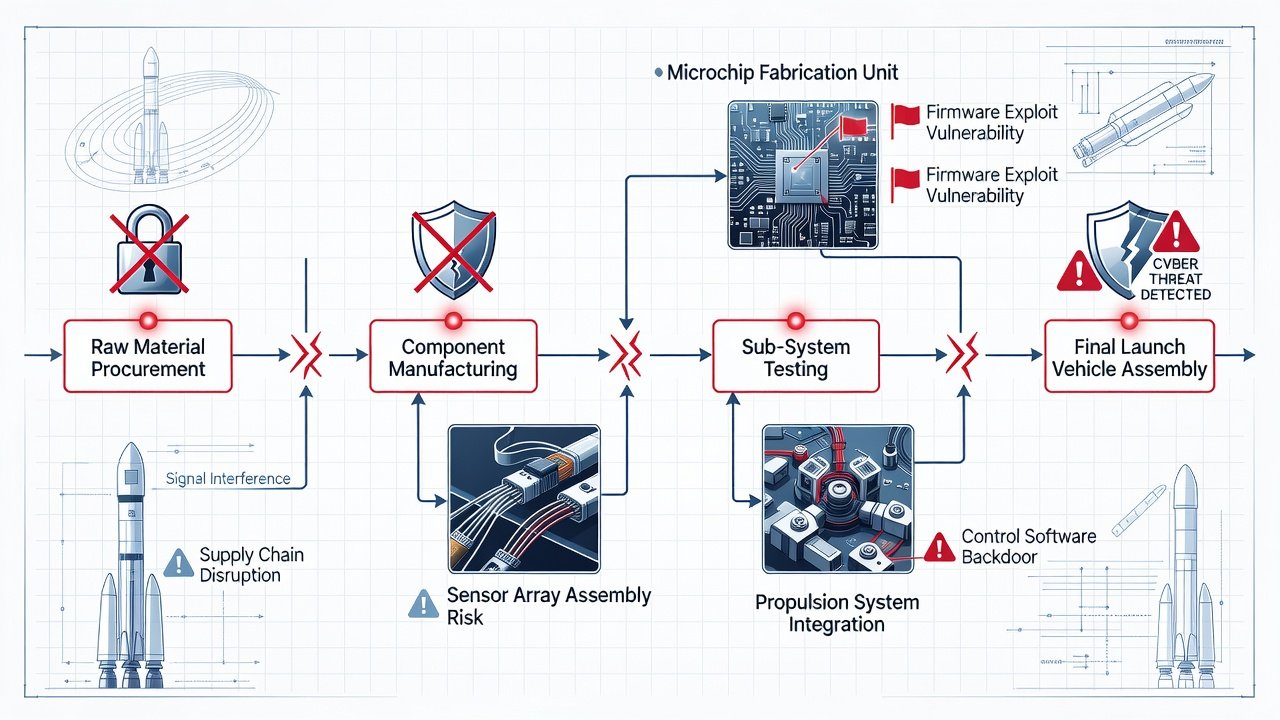
The complexity of building and deploying space hardware creates entry points for malicious actors. Compromised components in rockets or satellites can introduce backdoors that persist throughout a mission's lifecycle. From chip fabrication to software firmware updates, each stage presents opportunities for tampering. Recent analyses show that third-party suppliers in multiple countries increase the attack surface, making rigorous vetting essential. Companies must audit hardware provenance and use hardware security modules to verify integrity at every integration point.
Integration with Ground-Based Defenses
Effective protection requires seamless coordination between orbital assets and terrestrial cybersecurity frameworks. Organizations must align satellite security with broader network defenses to prevent cascading failures. This includes establishing secure gateways that authenticate all commands sent to satellites and using end-to-end encryption that remains unbroken even if ground stations are compromised. Hybrid defense models that combine on-orbit processing with cloud-based analytics are becoming standard in 2026.
Real-World Case Examples
Historical incidents, such as the 2022 Viasat attack, highlight how ground infrastructure compromises can disrupt satellite services across Europe. More recent simulations in 2025 demonstrated successful interceptions of unencrypted telemetry data from commercial constellations, underscoring the need for proactive measures. In one documented exercise, researchers exploited a known vulnerability in an older satellite modem to exfiltrate location data from thousands of connected devices. These examples illustrate that even non-state actors can cause significant privacy breaches when legacy systems remain in use.
Step-by-Step Mitigation Strategies
Implementing robust defenses requires a structured approach. First, conduct comprehensive risk assessments of all space assets, mapping every data pathway and identifying single points of failure. Second, implement multi-layered encryption for all data links, prioritizing post-quantum algorithms. Third, regularly audit supply chain partners for security compliance using independent third-party evaluations. Fourth, deploy AI-driven anomaly detection for real-time threat response across both space and ground segments. Fifth, establish incident response protocols tailored to orbital environments, including procedures for isolating compromised satellites without losing constellation-wide functionality. Sixth, perform annual penetration testing that simulates advanced persistent threats specific to space systems.
Legacy vs Next-Gen Protocols Comparison
Legacy systems often rely on outdated standards like basic DES encryption, leaving them exposed to modern computational attacks. These protocols lack forward secrecy and are susceptible to replay attacks. Next-generation protocols incorporate post-quantum cryptography and zero-trust architectures, offering superior resilience through continuous authentication and micro-segmentation. Transitioning requires careful planning to avoid service disruptions, often involving phased rollouts where new satellites operate alongside older ones with gateway translators. The benefits of next-gen approaches include reduced latency in threat detection and better support for privacy-preserving data analytics.
Practical Checklist for Organizations
- Map all data flows involving satellites and classify sensitivity levels.
- Update firmware across ground and space segments on a scheduled cadence.
- Train teams on space-specific threat vectors through specialized simulations.
- Test recovery plans through tabletop exercises that include orbital scenarios.
- Monitor compliance with international privacy regulations such as updated GDPR extraterritorial provisions.
- Establish partnerships with space situational awareness providers for early warning of physical or cyber anomalies.
- Implement zero-trust network access controls for all command and control links.
Regulatory Landscape and Compliance
Navigating the regulatory environment is critical in 2026. Bodies like the NIST have released updated guidelines for space system cybersecurity that emphasize supply chain risk management. Similarly, the CISA provides resources on securing critical infrastructure that now explicitly includes orbital assets. Compliance involves regular reporting of vulnerabilities and demonstration of encryption standards that protect user privacy during data transit and storage.
Future Trends in Space Cybersecurity
Looking ahead, artificial intelligence will play a larger role in autonomous threat response on satellites. Quantum key distribution experiments are expected to move from testing to operational use within the next two years. Additionally, increased collaboration between commercial operators and agencies such as NASA and ESA will standardize best practices across the industry.
FAQ on Compliance with Evolving Privacy Standards
What standards apply to space data privacy in 2026?
Key frameworks include updates from NIST and guidelines from space agencies emphasizing data minimization and encryption. Organizations should also reference the latest ISO standards adapted for space environments.
How do breaches affect GDPR compliance?
Satellite data handling must align with extraterritorial rules, requiring robust consent mechanisms and breach notification procedures within strict timeframes.
Are there specific certifications for space cybersecurity?
Yes, emerging certifications build on ISO 27001 with space extensions, recommended by bodies like CISA and industry consortia.
What role does international cooperation play?
Cross-border agreements help harmonize responses to incidents that span multiple jurisdictions and orbital regimes.
Conclusion
Securing space systems against cyber threats in 2026 demands a holistic approach combining technical upgrades, supply chain vigilance, and regulatory adherence. By implementing the strategies outlined above, organizations can safeguard data privacy amid evolving risks while maintaining the performance benefits of modern satellite networks. Continued investment in research and collaboration with authoritative bodies will be essential for staying ahead of adversaries.

No comments yet. Be the first!