 NeoBit Daily

Introduction to Open Source Security Challenges in 2026
Open source software forms the backbone of countless applications, from web frameworks to machine learning libraries, yet it carries inherent risks that have intensified in 2026. Supply chain vulnerabilities now pose direct threats to cybersecurity and data privacy, with attackers increasingly targeting dependencies to gain unauthorized access to sensitive information. Developers and security teams face mounting pressure to implement robust defenses as regulatory scrutiny grows and breach incidents multiply. This comprehensive guide examines the latest threats, provides detailed workflows for vulnerability management, compares leading tools, shares real-world examples from 2026, and delivers a practical step-by-step roadmap for secure coding practices that protect user data.
The interconnected nature of modern software means a single compromised library can cascade failures across entire systems. Privacy regulations emphasize accountability throughout the software lifecycle, requiring organizations to maintain visibility into every open source component they adopt. Without proactive measures, teams risk both financial penalties and loss of customer trust. The following sections break down these issues with actionable depth.
Emerging Risks in Open Source Dependencies and Supply Chain Vulnerabilities
Supply chain attacks have grown more sophisticated, exploiting the trust placed in public repositories. Attackers use techniques such as typosquatting, where malicious packages mimic legitimate names, or dependency confusion to inject harmful code during builds. In 2026, data privacy risks escalate when vulnerabilities expose personally identifiable information processed by applications built on affected libraries. Common entry points include outdated cryptographic modules that weaken encryption and logging utilities that inadvertently leak credentials.
Another rising concern involves supply chain poisoning through compromised maintainer accounts or automated update mechanisms. Teams must also contend with transitive dependencies, where a vulnerability in a sub-component propagates upward undetected. Real threats extend beyond code execution to include data exfiltration vectors that bypass traditional perimeter defenses. Monitoring community discussions and repository activity becomes essential for early detection of suspicious changes.
Vulnerability Scanning Workflows for Continuous Protection
Integrating vulnerability scanning into daily operations requires a structured workflow that begins with comprehensive dependency mapping. Security teams should first generate a software bill of materials listing every direct and indirect dependency. Automated scanners then analyze this inventory against known vulnerability databases, flagging issues by severity and potential data impact.
Next, configure continuous integration pipelines to run scans on every code commit and scheduled builds. Prioritize remediation based on exploit availability, data sensitivity, and business context rather than raw severity scores alone. Generate detailed reports that track trends over time, enabling teams to identify recurring weak libraries that may warrant replacement. Regular manual reviews supplement automation by catching context-specific risks that tools might overlook.
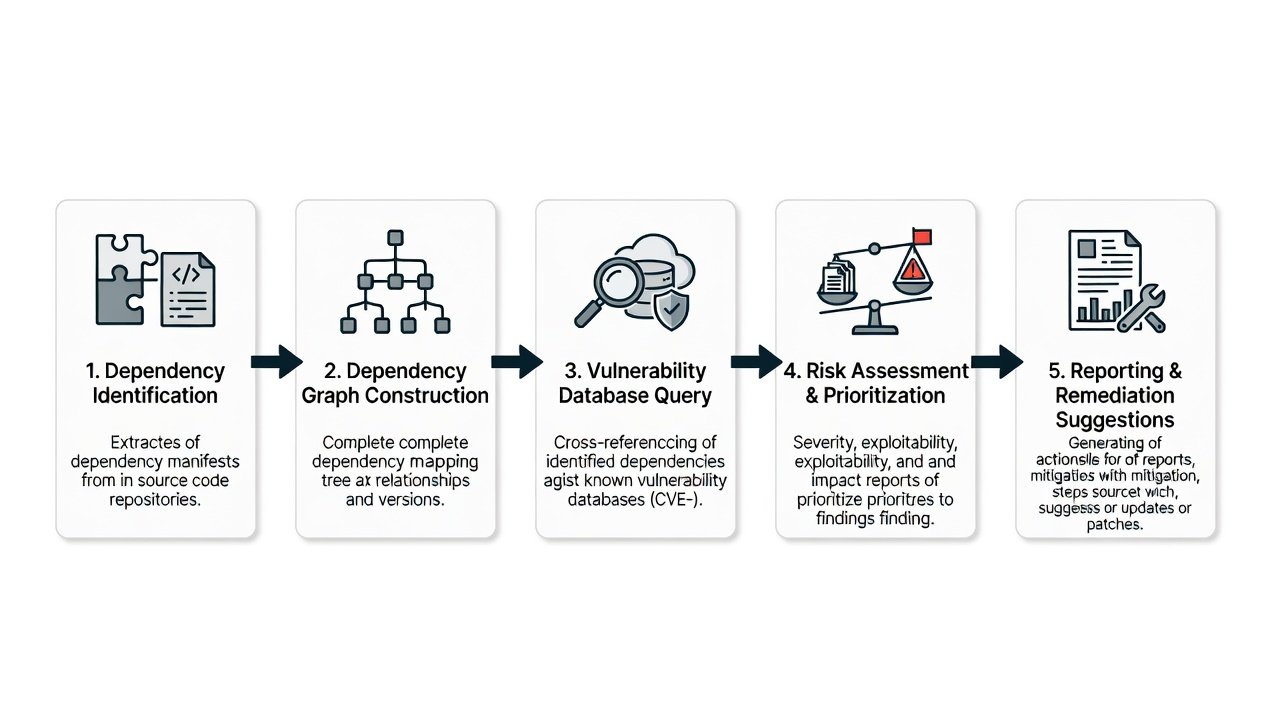
Finally, establish escalation procedures so critical findings reach decision-makers quickly. Document every step to demonstrate compliance during audits.
Patch Management Processes That Minimize Exposure
Effective patch management balances speed with stability to avoid introducing new issues. Begin by categorizing vulnerabilities according to exploitability and the volume of sensitive data at risk. Automate application of low-risk patches through dependency management bots while routing higher-risk updates through staged testing environments that mirror production.
Establish clear service-level agreements for remediation timelines, such as addressing critical issues within 48 hours. Maintain a rollback plan for every applied patch and conduct post-implementation reviews to verify that fixes do not degrade performance or privacy controls. Over time, analyze patch patterns to inform architectural decisions, such as reducing reliance on frequently vulnerable components.
Compliance with Evolving Data Privacy Regulations
Regulatory frameworks in 2026 demand greater transparency regarding open source usage and security controls. Organizations must maintain auditable records of dependency inventories, scan results, and incident response actions. Aligning with standards from authoritative bodies helps demonstrate due diligence when handling personal data.
Key references include guidance from NIST on secure software development and resources from CISA for supply chain risk management. These frameworks emphasize risk assessments, supplier vetting, and ongoing monitoring that directly support privacy compliance efforts.
Comparison of Popular Open Source Security Tools
Selecting the right tools depends on team size, language ecosystem, and integration requirements. OWASP Dependency-Check provides free, open source scanning across multiple languages with strong reporting capabilities, though it requires more manual configuration. Snyk offers intuitive developer workflows, automated pull requests, and detailed fix guidance, making it popular for fast-moving teams despite its commercial tiers.
GitHub Dependabot excels at seamless integration within GitHub repositories, automatically creating update pull requests, but offers less customization for complex monorepos. Additional options include Trivy for container-focused scanning and Renovate for broad dependency updates. Evaluate tools through proof-of-concept trials that measure false positive rates, remediation speed, and reporting clarity. Community resources such as the OWASP Foundation and OpenSSF provide unbiased evaluations and best-practice templates.
Real-World 2026 Case Examples of Open Source Incidents
In early 2026, a widely used authentication library suffered a supply chain compromise that exposed session tokens across thousands of applications, highlighting the dangers of insufficient provenance checks. Rapid adoption of signed releases and enhanced scanning limited further damage in affected organizations. Another incident involved a popular data processing package whose update introduced a subtle memory leak that leaked user analytics data, prompting swift regulatory investigations.
These cases underscore the importance of reproducible builds and runtime monitoring. Teams that maintained strict governance policies recovered faster and avoided major privacy violations.
Step-by-Step Guide to Implementing Secure Coding Practices
- Perform an initial audit of all current dependencies using multiple independent scanners to establish a baseline.
- Enforce cryptographic signing and provenance verification for every third-party package before integration.
- Configure automated vulnerability alerts with severity thresholds tailored to your data sensitivity levels.
- Adopt least-privilege principles when granting permissions to open source contributors or internal libraries.
- Implement runtime application self-protection layers that detect anomalous behavior from dependencies.
- Conduct quarterly training sessions covering common attack patterns targeting open source components.
- Create an open source governance committee responsible for approving new library adoptions based on security posture.
- Run tabletop breach simulations focused on supply chain scenarios at least twice per year.
- Maintain an up-to-date incident response playbook that includes steps for notifying affected users about potential data exposure.
- Regularly review and retire unused dependencies to reduce the overall attack surface.
Common Mistakes to Avoid in Open Source Governance
Many teams delay patching until after public exploits appear, creating unnecessary windows of exposure. Others rely on a single scanning tool without cross-verification, missing context-specific issues. Failing to document decisions around accepted risks can lead to compliance failures during audits. Overlooking transitive dependencies remains a frequent oversight that sophisticated attackers exploit.
Frequently Asked Questions
How frequently should vulnerability scans occur?
Daily automated scans integrated into CI/CD pipelines, supplemented by on-demand checks before releases, deliver the strongest protection.
Which regulations most directly affect open source security practices?
Updated data protection laws require documented supply chain controls, breach notification timelines, and evidence of ongoing monitoring to safeguard personal information.
Can governance frameworks completely eliminate breach risks?
While no approach guarantees zero incidents, comprehensive governance dramatically reduces likelihood and impact through proactive detection and rapid response capabilities.
What role does developer training play in open source security?
Regular training helps teams recognize social engineering attempts and understand secure integration patterns that protect data privacy from the outset.
Conclusion
Securing open source software in 2026 requires layered defenses, continuous monitoring, and a commitment to security-first development culture. By adopting the detailed workflows, tool evaluations, and implementation steps outlined above, development and security teams can effectively mitigate supply chain threats while maintaining strong data privacy standards. Consistent application of these practices builds resilient systems capable of withstanding evolving attacks.


No comments yet. Be the first!