 NeoBit Daily

Introduction to AI Model Security in 2026
As artificial intelligence systems become integral to business operations across industries, cybersecurity threats targeting these models have evolved rapidly in sophistication and scale. In 2026, organizations face sophisticated risks including data privacy breaches and targeted hacks that exploit vulnerabilities in machine learning pipelines. This comprehensive guide provides tech professionals with in-depth strategies to protect AI deployments, drawing from recent incidents and proven implementation techniques that address both foundational and advanced concerns.
AI models process vast amounts of sensitive data, making them prime targets for malicious actors seeking competitive advantage or financial gain. Understanding emerging threats is the first step toward building a robust defense strategy that integrates seamlessly into existing infrastructure.
Emerging Threats to AI and Machine Learning Systems
Data privacy risks have intensified with the proliferation of large language models and computer vision systems deployed at enterprise scale. Unauthorized data extraction allows attackers to reverse-engineer training datasets, exposing proprietary information and violating user trust. Hacking news trends from early 2026 highlight increased incidents involving cloud-based AI services, where attackers leverage API vulnerabilities to siphon model behaviors.
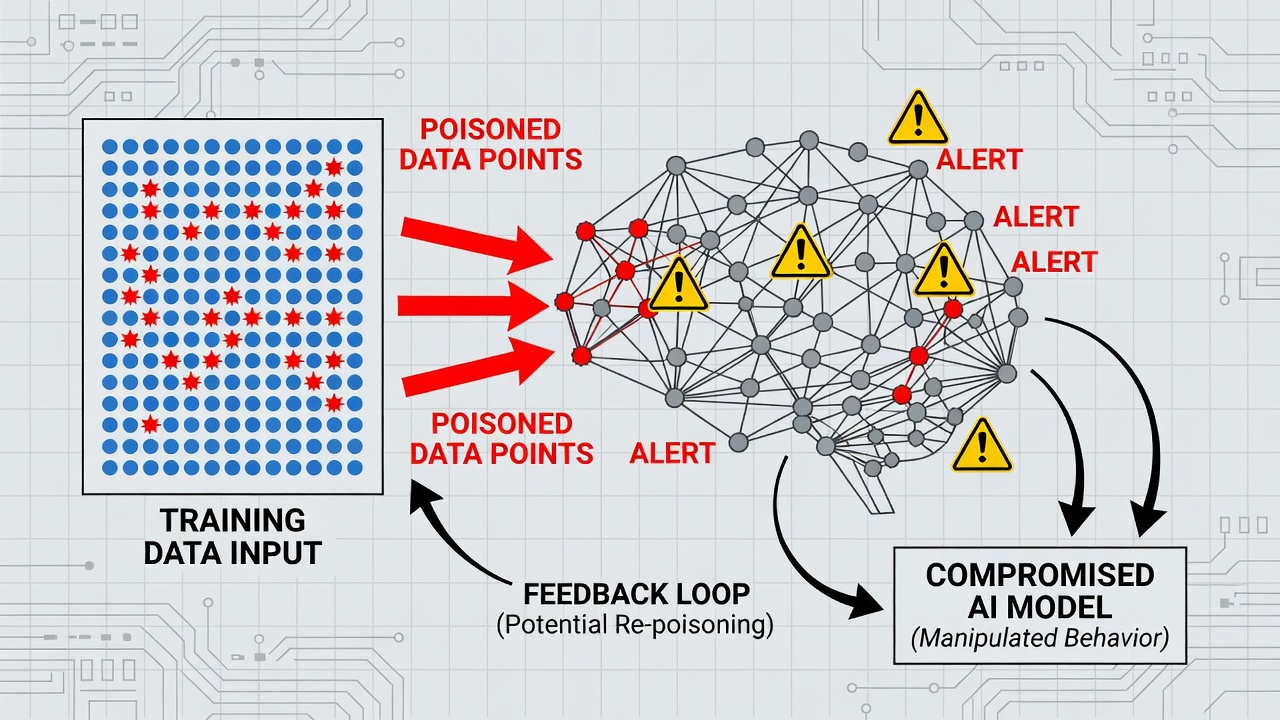
Key threats include adversarial attacks, where subtle input perturbations cause models to misclassify data with high confidence. Model poisoning involves injecting malicious samples during training to degrade performance or create persistent backdoors that activate under specific conditions. Real-world examples include the 2025 compromise of a financial AI system through poisoned transaction data, leading to manipulated fraud detection outputs that allowed fraudulent activities to go undetected for weeks. Another notable case involved a retail recommendation engine poisoned via manipulated user feedback loops, resulting in biased product suggestions that favored competitor brands.
Adversarial Attacks Explained
Adversarial examples exploit model decision boundaries by introducing imperceptible noise to inputs. Attackers craft inputs that appear normal to humans but trigger incorrect predictions, often with devastating consequences in high-stakes environments. In 2026, these attacks have targeted autonomous vehicle perception systems, causing misidentification of road signs and temporary disruptions in navigation accuracy. Mitigation begins with understanding attack vectors such as Fast Gradient Sign Method and Projected Gradient Descent, which remain prevalent in research and real deployments.
Model Poisoning Incidents
Recent cases demonstrate how supply chain vulnerabilities enable poisoning without direct access to core systems. For instance, a healthcare AI platform was affected when corrupted medical imaging data was introduced via a third-party dataset provider, leading to degraded diagnostic accuracy across multiple hospitals. Defenders must implement continuous validation of incoming data streams to detect statistical anomalies early.
Unauthorized Data Extraction Risks
Extraction attacks query models repeatedly to reconstruct training data or approximate model parameters. This violates privacy regulations and exposes intellectual property, particularly in competitive sectors like pharmaceuticals and finance. Attackers often combine these with membership inference techniques to determine whether specific records were part of the original training set.
Step-by-Step Techniques for Securing Training Data
Protecting training datasets requires a multi-layered approach that combines technical controls with procedural safeguards. Follow these practical steps for effective implementation:
- Implement data provenance tracking using blockchain-inspired ledgers to verify dataset origins and maintain an immutable audit trail of every modification or addition.
- Apply differential privacy techniques to add calibrated noise during data collection, reducing extraction risks while preserving overall model utility for downstream tasks.
- Conduct rigorous data sanitization to detect and remove anomalous samples before training begins, leveraging outlier detection algorithms such as isolation forests and autoencoders.
- Use encrypted storage solutions with role-based access controls limited to verified personnel, ensuring that raw data remains protected even if storage systems are compromised.
- Regularly audit datasets for potential poisoning indicators through statistical analysis tools that compare distributions against expected baselines and flag deviations exceeding predefined thresholds.
- Establish data minimization principles by collecting only necessary features, thereby reducing the attack surface available to extraction attempts.
These measures help mitigate risks at the source and create a foundation for trustworthy model development.
Securing Inference Pipelines
Inference pipelines handle real-time predictions and require continuous protection against both external and internal threats. Start by isolating model endpoints behind secure APIs with strict rate limiting and authentication mechanisms such as OAuth 2.0 combined with API keys. Deploy input validation filters to detect adversarial perturbations before processing, using techniques like input sanitization and ensemble-based consistency checks. Monitor outputs for anomalies using ensemble methods that compare multiple model predictions and flag discrepancies exceeding acceptable variance levels.
Encrypt model weights at rest and in transit, utilizing hardware security modules for key management to prevent unauthorized access. Finally, implement comprehensive logging and anomaly detection systems to flag unusual query patterns indicative of extraction attempts, integrating these logs with centralized security information and event management platforms for rapid response. Regular penetration testing of inference endpoints, conducted quarterly, further strengthens resilience against evolving attack methods.
Traditional Security Tools vs AI-Specific Defenses
Traditional tools like firewalls, intrusion detection systems, and antivirus software provide essential baseline protection but fall short against AI-unique threats that operate at the algorithmic level. They excel at network-level monitoring yet cannot address adversarial inputs or poisoned gradients that manipulate model behavior without triggering conventional alerts.
AI-specific defenses include adversarial training, where models learn to resist perturbations through augmented datasets, and robust optimization frameworks that incorporate worst-case scenario analysis during training. Solutions such as gradient masking and certified defenses offer stronger mathematical guarantees against specific attack classes. A comparison shows traditional methods reduce general malware risks effectively in standard environments, while AI-specific approaches address model integrity more directly by hardening decision boundaries. Organizations should combine both for comprehensive coverage, integrating tools from established frameworks and regularly updating defense libraries as new research emerges.
For authoritative guidance on these hybrid strategies, refer to resources at NIST, OWASP, and CISA.
Building a Comprehensive AI Security Framework
Developing an overarching framework involves aligning security practices with organizational risk tolerance and regulatory requirements. Begin with asset inventory to catalog all AI models and their data dependencies. Next, conduct threat modeling sessions using STRIDE or PASTA methodologies tailored to machine learning components. Implement continuous monitoring dashboards that visualize model performance metrics alongside security indicators. Train cross-functional teams on AI-specific risks through workshops and simulated attack exercises. Finally, establish incident response playbooks that outline escalation paths when anomalies are detected in production systems.
FAQ: Common Compliance Concerns
How does GDPR apply to AI model training?
GDPR requires explicit consent for personal data use and mandates explainability in automated decisions. Organizations must document data processing activities thoroughly to demonstrate compliance during audits and provide mechanisms for data subjects to exercise their rights.
What standards address AI cybersecurity?
Frameworks from NIST provide detailed guidelines for managing AI risks, including secure development lifecycles and ongoing monitoring protocols that help organizations maintain resilience against emerging threats.
Are there specific certifications for AI security?
Professionals can pursue certifications focused on machine learning security to validate expertise in defending against emerging threats and implementing best practices across diverse deployment environments.
Conclusion
Securing AI models demands proactive, multi-layered measures against 2026's evolving threats. By implementing the outlined steps for training data and inference pipelines, blending traditional with specialized defenses, and establishing a structured security framework, tech teams can safeguard deployments effectively. Continuous adaptation and vigilance remain essential as the threat landscape continues to shift.


No comments yet. Be the first!