 NeoBit Daily

Introduction to Cybersecurity Awareness in 2026
As organizations navigate an increasingly complex digital landscape in 2026, cybersecurity awareness training has become essential for protecting data privacy. Employees remain the first line of defense against evolving threats that target sensitive information through sophisticated social engineering and remote work vulnerabilities. This comprehensive guide provides actionable strategies to build programs that go beyond basic tips and foster a proactive security culture across the entire workforce.
With remote and hybrid work models firmly established, companies must address risks that have intensified since 2025. Training programs now incorporate lessons from high-profile incidents involving data leaks and ransomware that disrupted operations at major firms. The focus is on practical skills that employees can apply daily to safeguard both personal and corporate data.
Key 2026 Data Privacy Threats
Recent hacking news from early 2026 reveals attackers using AI-enhanced phishing and credential-stuffing attacks to exploit weak remote access points. For example, several healthcare organizations faced breaches when employees clicked links in emails mimicking internal IT support. Data privacy regulations continue to tighten, making employee mistakes costly in terms of compliance fines and reputational damage.
Other prominent threats include deepfake voice calls requesting urgent data transfers and malware delivered through compromised collaboration tools. Organizations must update training content quarterly to reflect these tactics, drawing from reports published by government agencies that track global cyber incidents.
Core Training Modules
Phishing Recognition
Effective phishing training uses simulated attacks tailored to company-specific scenarios. Employees learn to examine email headers, hover over links before clicking, and verify unusual requests through secondary channels. Practical examples include recreating the 2026 finance department impersonation campaigns where attackers posed as CFOs requesting wire transfers. Regular drills reduce click rates dramatically when combined with immediate feedback sessions.
Secure Remote Access
Remote access modules emphasize multi-factor authentication, secure VPN configurations, and device encryption. Staff practice identifying unsecured public Wi-Fi risks and learn to use company-approved password managers. Case studies from manufacturing firms show how unpatched home routers became entry points for attackers in 2025 incidents. Training includes step-by-step guides for setting up secure home networks.
Incident Reporting
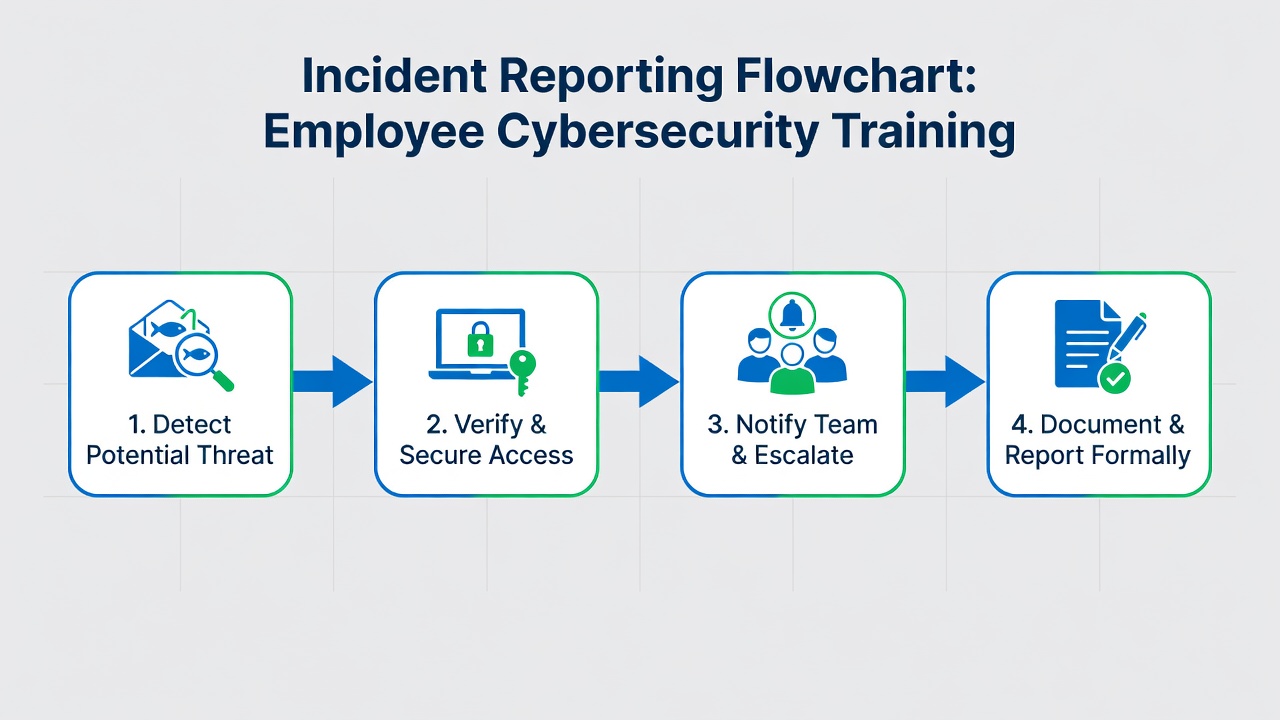
Clear reporting protocols minimize breach impact. Employees practice recognizing signs of compromise such as unusual account activity or unexpected pop-ups. Training covers escalation paths, including when to contact the security team versus following automated ticketing systems. Real-world examples demonstrate how early reporting prevented data exfiltration in logistics companies targeted by supply-chain attacks.
Measuring Program ROI Through Metrics
Return on investment is tracked through quantifiable metrics including phishing simulation click rates, average time to report incidents, and reduction in security tickets. Organizations often see a 40-60 percent drop in risky behaviors after six months of consistent training. Additional indicators include completion rates of mandatory modules and results from quarterly knowledge assessments. These measurements help leadership allocate resources effectively and demonstrate compliance during audits.
Integrating Security Tips Into Daily Workflows
Embedding security into everyday tools increases retention. Short micro-learning prompts appear in email signatures or chat platforms reminding users to verify attachments. Teams adopt habits such as weekly password reviews and automatic updates enabled on all devices. One effective approach involves creating department-specific tip sheets that align with common tasks like handling customer data or accessing shared drives. This method turns abstract concepts into habitual actions that protect data privacy continuously.
Comparing In-Person vs Digital Delivery Methods
- In-person workshops foster discussion and allow trainers to address specific questions in real time, building stronger team accountability.
- Digital platforms provide on-demand access, progress tracking, and scalability for global teams with flexible schedules.
- Hybrid models combine recorded videos with live Q&A sessions, offering the benefits of both approaches while accommodating different learning preferences.
Studies from industry leaders indicate hybrid delivery often yields the highest engagement rates when organizations provide both options.
Step-by-Step Implementation Plan
- Conduct a baseline assessment using anonymous surveys and simulated attacks to identify knowledge gaps across departments.
- Design role-specific content that addresses unique risks faced by finance, HR, and IT teams.
- Secure executive sponsorship to emphasize the importance of participation and allocate necessary resources.
- Launch the program with clear timelines, including monthly refreshers and annual recertification requirements.
- Establish feedback loops through post-training surveys and incident trend analysis to refine future sessions.
- Schedule quarterly reviews to update materials based on the latest threat intelligence from reliable sources.
Customizable Checklists
Weekly checklist items include verifying software updates, reviewing access permissions, and confirming backup procedures. Monthly checklists cover completing assigned modules, participating in phishing simulations, and updating emergency contacts. Annual checklists focus on full program audits and policy acknowledgments. These tools can be customized by industry, such as adding HIPAA-specific items for healthcare providers.
Common Mistakes to Avoid
Many programs fail because they rely on one-time annual sessions instead of ongoing reinforcement. Another frequent error is using generic content that does not reflect the organization's actual tools and workflows. Overloading employees with technical jargon reduces engagement, while neglecting to measure outcomes leaves leadership without evidence of effectiveness.
FAQ: Addressing Compliance Challenges
How does training align with regulations? It supports frameworks from bodies like CISA and NIST by documenting employee education efforts required under data protection laws.
What if employees resist participation? Introduce gamification elements such as leaderboards and tie completion to performance reviews while explaining personal benefits like protecting family data from identity theft.
How often should content be updated? Review materials at least quarterly and immediately after major incidents to maintain relevance with emerging 2026 threats.
Can small businesses implement similar programs? Yes, scalable digital platforms allow even teams of ten to run effective training without dedicated security staff.
Conclusion
Effective cybersecurity awareness training builds lasting resilience against 2026 data privacy threats. By focusing on targeted modules, measurable outcomes, and seamless workflow integration, organizations create a proactive security culture that protects valuable information and supports long-term compliance success.


No comments yet. Be the first!