 NeoBit Daily
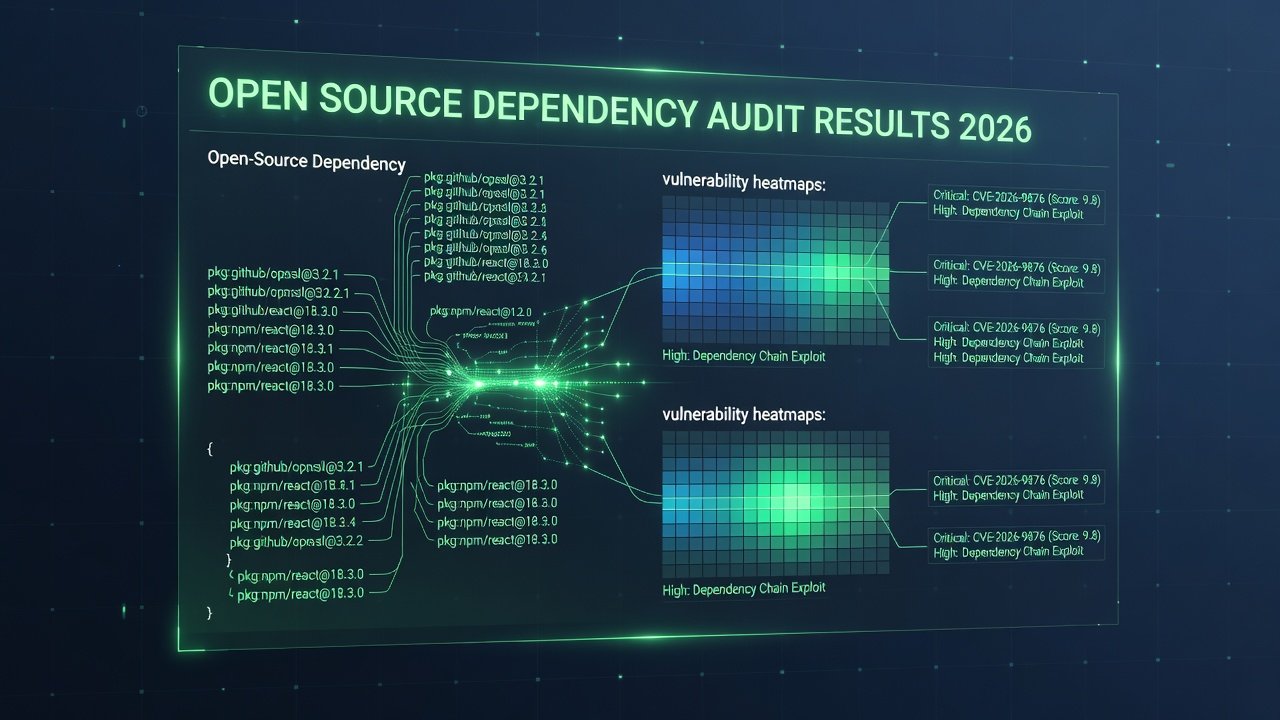
Introduction to Open Source Dependency Audits in 2026
In an era where software supply chains face escalating threats, conducting thorough open source dependency audits has become a cornerstone of proactive cybersecurity. Organizations must move beyond basic vulnerability checks to implement comprehensive strategies that safeguard data privacy and system integrity. This guide delves into advanced methods tailored for 2026, emphasizing automated tools, SBOM generation, and risk prioritization to address evolving attack vectors. As open source usage grows exponentially, dependencies often account for the majority of code in modern applications, making audits essential for preventing breaches that expose sensitive user information.
Developers and security teams increasingly rely on open source components, yet unmaintained packages introduce hidden risks. By focusing on proactive defense, teams can mitigate supply chain attacks that have plagued industries in recent years. Effective audits also support regulatory compliance and build trust with stakeholders who demand transparency in software composition.
Understanding Supply Chain Attacks Through Real-World Case Studies
Supply chain attacks targeting open source dependencies continue to evolve. The 2020 SolarWinds incident highlighted how compromised build systems can infiltrate thousands of organizations, leading to widespread data exfiltration. More recently, attacks on packages like those in the npm ecosystem demonstrated the dangers of dependency confusion and typo-squatting, where malicious code masquerades as legitimate libraries. These cases underscore the need for rigorous auditing processes that include provenance verification and continuous monitoring.
Analyzing these events reveals patterns: attackers often exploit outdated or poorly maintained libraries to inject backdoors or steal credentials. Proactive audits help identify such weaknesses before exploitation occurs, protecting sensitive data from breaches that could compromise user privacy on a massive scale. For instance, the Log4Shell vulnerability in 2021 showed how a single transitive dependency could impact millions of systems worldwide, emphasizing the value of depth in dependency mapping.
Automated Scanning Tools for Modern Dependency Audits
Automated tools form the backbone of efficient audits in 2026. Solutions integrate with CI/CD pipelines to scan dependencies in real time, flagging issues like known CVEs and license violations. Key platforms offer features such as reachability analysis, which determines if a vulnerable function is actually invoked in your codebase, and graph-based visualization of dependency trees. This allows teams to focus resources on high-impact issues rather than chasing every minor alert.
Comparisons of leading tools reveal trade-offs in speed versus depth, with some excelling at broad ecosystem coverage while others provide superior integration with containerized environments. Teams should evaluate integration capabilities with existing workflows and consider hybrid setups that combine open source options with commercial enhancements. For enhanced accuracy, combine multiple scanners to cross-verify results and reduce false positives, creating a more reliable security baseline.
Creating and Leveraging Software Bill of Materials (SBOMs)
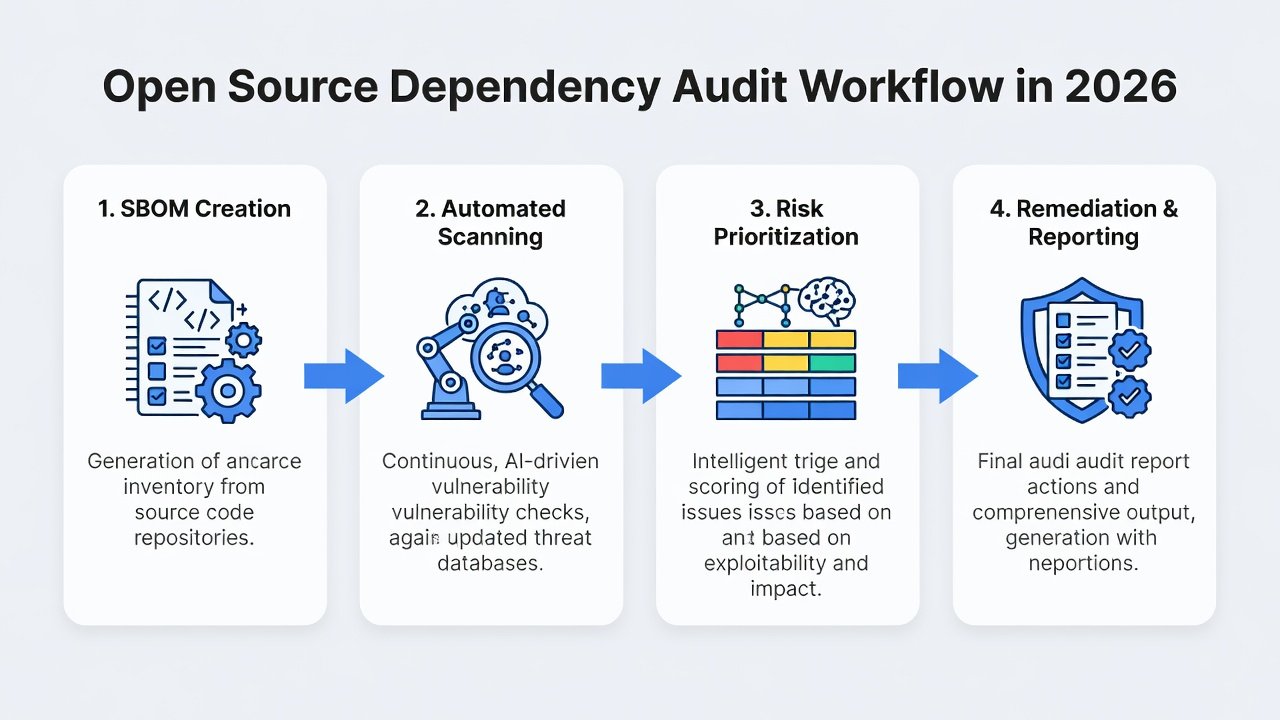
SBOMs provide a detailed inventory of all components, versions, and dependencies within an application. In 2026, standards like SPDX and CycloneDX enable machine-readable formats that facilitate automated analysis across development and operations teams. Generating an SBOM early in development allows for ongoing tracking of updates and vulnerabilities, serving as a living document that evolves with the project.
Best practices include embedding SBOMs in release artifacts and using them during audits to map transitive dependencies that might otherwise go unnoticed. This approach supports compliance with emerging regulations and strengthens incident response by offering quick visibility into affected components. Organizations can also share SBOMs with partners to foster collaborative security efforts, reducing the likelihood of cascading failures in interconnected systems.
Vulnerability Prioritization Methods
Not all vulnerabilities warrant immediate action. Effective prioritization uses factors such as exploitability, business impact, and asset exposure. Frameworks like EPSS (Exploit Prediction Scoring System) help rank threats based on real-world likelihood, allowing teams to allocate efforts efficiently. Contextual factors, including whether a vulnerability affects internet-facing services or handles personal data, further refine these decisions.
Teams can implement risk scoring models that incorporate data from threat intelligence feeds. This method avoids alert fatigue while ensuring critical issues receive prompt attention, aligning with proactive defense strategies. Regular recalibration of scoring criteria based on new threat landscapes ensures the process remains relevant throughout the year.
Step-by-Step Audit Workflows for Security Teams
- Inventory all dependencies using automated discovery tools that crawl repositories and build files.
- Generate an SBOM and validate its completeness against actual runtime usage.
- Run scans for known vulnerabilities, license risks, and potential license conflicts.
- Prioritize findings using contextual analysis and business impact assessments.
- Remediate high-risk issues through updates, patches, or code refactoring, and document changes thoroughly.
- Establish continuous monitoring for new threats and schedule periodic re-audits.
Following this workflow ensures systematic coverage from initial discovery to ongoing maintenance. Integrate it into sprint planning to maintain momentum without disrupting development cycles, and assign clear ownership to avoid gaps in responsibility.
Integrating SAST and DAST for Comprehensive Coverage
SAST (Static Application Security Testing) analyzes source code for vulnerabilities, while DAST (Dynamic Application Security Testing) examines running applications. Combining these with dependency audits creates layered defenses that catch issues at multiple stages. SAST identifies issues in custom code interacting with dependencies, and DAST reveals runtime exploits that static analysis might miss.
Comparisons show SAST excels at early detection during coding phases, whereas DAST provides insights into deployed behavior under real conditions. Hybrid approaches using both yield the most robust results for 2026 environments, particularly when augmented with dependency-specific rulesets. This integration helps teams address both direct and indirect risks effectively.
Common Mistakes to Avoid in Dependency Audits
Many teams fall into pitfalls such as ignoring transitive dependencies, which can constitute the bulk of an application's risk profile. Another frequent error is failing to update audit processes when new tools or standards emerge, leading to outdated practices. Over-reliance on automated tools without manual review can also miss nuanced issues like semantic vulnerabilities in library usage.
To avoid these, establish peer review checkpoints and maintain up-to-date knowledge bases. Documenting lessons from past audits helps refine future efforts and prevents repetition of errors across projects.
Practical Checklists for Developers and Security Teams
- Review dependency update policies quarterly to align with organizational risk tolerance.
- Pin exact versions in lockfiles to prevent unexpected changes from breaking builds or introducing new risks.
- Monitor for unmaintained packages using activity metrics such as last commit dates and maintainer responsiveness.
- Conduct peer reviews of dependency additions before merging into main branches.
- Test patches in isolated environments before production rollout to catch compatibility issues.
- Document all audit findings and remediation steps for audit trails and knowledge sharing.
- Train team members on interpreting scan results to improve overall security awareness.
Mitigating Risks from Unmaintained Packages
Unmaintained packages pose significant threats due to unpatched vulnerabilities and lack of community support. Mitigation strategies include forking repositories for critical components or migrating to actively supported alternatives with similar functionality. Regular health checks on package maintainers and commit frequency help flag risks early, enabling proactive replacements.
Teams should establish policies requiring justification for using niche or legacy libraries, reducing overall attack surface. In cases where replacement is not feasible, wrapping the dependency with additional security controls like input validation can provide temporary protection while planning longer-term solutions.
Advanced Techniques and Emerging Trends
Beyond basics, 2026 audits increasingly incorporate machine learning models to predict vulnerability trends and automate prioritization. Integration with zero-trust architectures further enhances protection by verifying every dependency interaction. Privacy-focused audits also examine how dependencies handle data flows, ensuring compliance with global regulations.
Exploring these trends positions teams ahead of threats, fostering innovation in secure development practices.
Conclusion: Building a Proactive Defense Strategy
Mastering open source dependency audits in 2026 requires integrating advanced techniques like SBOMs, automated scanning, and intelligent prioritization. By applying these methods, organizations enhance cybersecurity posture and protect data privacy against sophisticated supply chain threats. Implement the workflows and checklists outlined here to foster resilient development practices that stand the test of evolving risks. Resources from OWASP, CISA, and NIST provide further guidance for ongoing improvement.

No comments yet. Be the first!