 NeoBit Daily

Introduction to Cybersecurity in 2026
In 2026, cyber threats are more sophisticated than ever, powered by AI-driven attacks, quantum computing risks, and deepfake social engineering. Hackers evolve faster than defenses, but proactive strategies can keep you ahead. This listicle shares 10 practical cybersecurity tips tailored for businesses and individuals. Each includes step-by-step implementation and real-world examples of breaches avoided. Whether you're fortifying a startup or personal devices, these tips ensure robust data privacy.
According to recent reports, cyber incidents cost trillions annually, but organizations adopting modern defenses see 50% fewer breaches. Let's dive in.
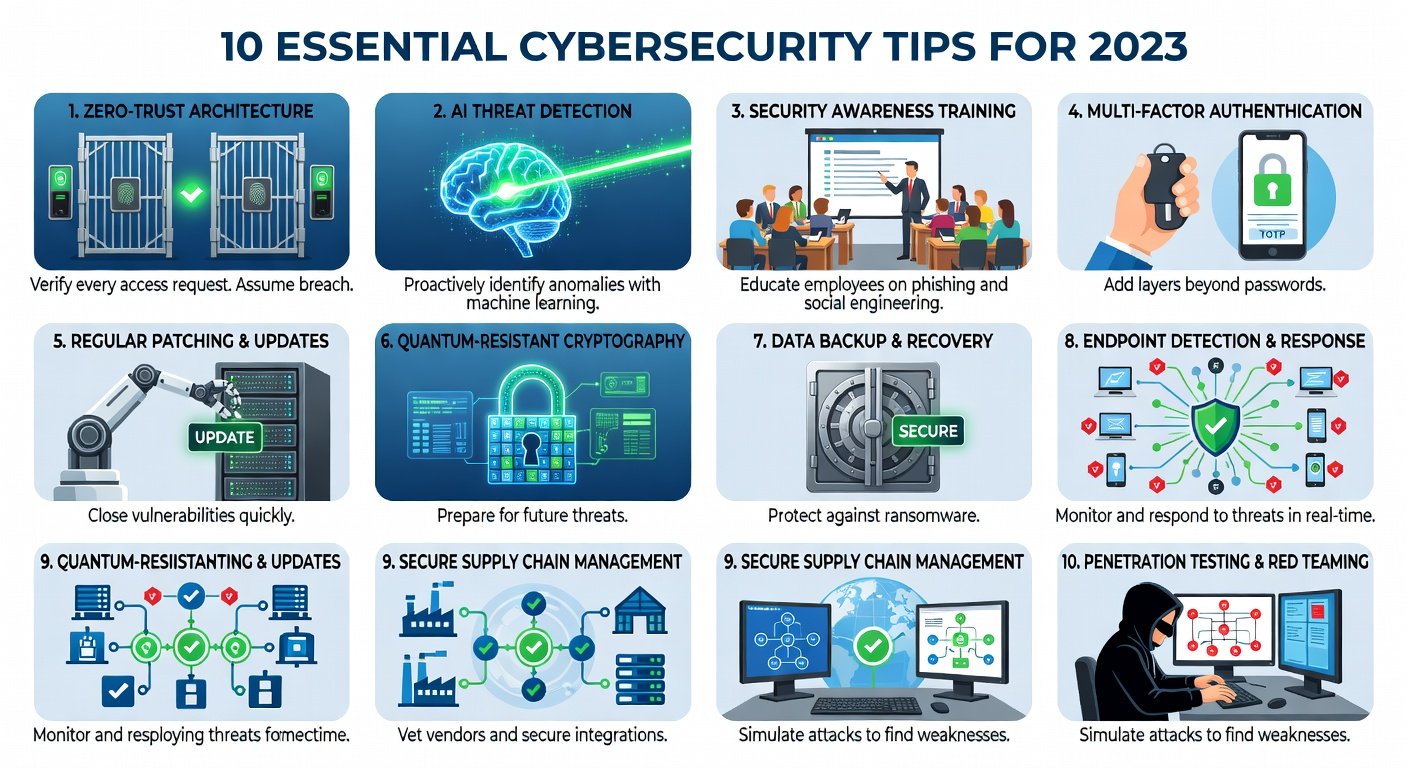
1. Implement Zero-Trust Architecture
Zero-trust assumes no user or device is inherently trustworthy. Verify everything, always.
- Assess your network: Map assets, users, and data flows.
- Deploy micro-segmentation tools like those from Zscaler or Palo Alto Networks.
- Enforce least-privilege access via identity providers (e.g., Okta).
- Continuously monitor with SIEM systems.
Real-world win: A major bank avoided a $100M ransomware hit in 2025 by zero-trusting lateral movement post-initial breach. Learn more from NIST's guidelines at NIST.gov.
2. Leverage AI-Driven Threat Detection
AI spots anomalies humans miss, predicting attacks in real-time.
- Choose platforms like Darktrace or Microsoft Sentinel.
- Integrate with existing logs for behavioral analysis.
- Train models on your data while anonymizing PII.
- Review AI alerts weekly to reduce false positives.
In 2024, a tech firm using AI detected a supply-chain attack mimicking SolarWinds, blocking it pre-escalation.
3. Roll Out Comprehensive Employee Training
Humans are the weakest link; train them rigorously.
- Quarterly phishing simulations via KnowBe4.
- Interactive modules on AI deepfakes and vishing.
- Role-based training: devs on secure coding, execs on business email compromise.
- Track metrics and gamify compliance.
A retail chain trained staff, slashing phishing clicks by 90% and averting a credential-stuffing breach. Check CISA resources at CISA.gov.
4. Enforce Multi-Factor Authentication (MFA) Everywhere
MFA blocks 99% of account takeover attempts.
- Mandate hardware keys (YubiKey) for high-risk accounts.
- Phase out SMS in favor of app-based (Authy) or passkeys.
- Integrate with SSO for seamless enforcement.
- Audit and rotate authenticators bi-annually.
Post-Okta breach, firms mandating MFA prevented lateral pivots.
5. Automate Patching and Vulnerability Management
Unpatched software is hacker heaven; automate fixes.
- Inventory all assets with tools like Tenable.
- Prioritize CVEs using EPSS scores.
- Deploy patch management (WSUS or Ivanti).
- Test patches in staging before prod rollout.
Log4Shell victims who auto-patched in 2022 avoided exploitation.
6. Adopt Quantum-Resistant Encryption
Quantum computers threaten RSA; future-proof now.
- Migrate to NIST-approved post-quantum algos like Kyber.
- Encrypt data at rest (AES-256) and in transit (TLS 1.3).
- Use HSMs for key management.
- Hybrid schemes during transition.
Google's quantum-safe trials in 2025 protected experimental data from hypothetical breaks.
7. Follow the 3-2-1 Backup Rule with Immutability
Ransomware loves backups; make them unchangeable.
- 3 copies of data, 2 media types, 1 offsite/air-gapped.
- Immutable storage via AWS S3 Object Lock.
- Automate backups daily, test restores monthly.
- Encrypt and segment backups.
A hospital restored from immutable backups post-2024 attack, minimizing downtime.
8. Deploy Endpoint Detection and Response (EDR)
EDR watches endpoints 24/7 for stealthy threats.
- Select CrowdStrike or SentinelOne.
- Enable behavioral blocking and rollback.
- Centralize telemetry for hunting.
- Integrate with threat intel feeds.
Colonial Pipeline's EDR upgrade in 2023 caught insider threats early.
9. Secure the Supply Chain
Vendors are attack vectors; vet them rigorously.
- SBOMs for software transparency.
- Contractual security clauses and audits.
- Zero-trust for third-party access.
- Monitor vendor news via feeds.
- Annual pentests by certified firms (e.g., Offensive Security).
- Red team exercises quarterly.
- Fix findings with remediation timelines.
- Post-mortem reviews for lessons.
SolarWinds survivors now audit suppliers, preventing repeats. Reference OWASP at OWASP.org.
10. Conduct Regular Penetration Testing and Red Teaming
Simulate attacks to find gaps.
Equifax post-breach adopted this, stopping multiple exploits since.
Conclusion: Build Your 2026 Cyber Fortress
Implementing these 10 tips creates layered defenses against 2026's threats. Start with quick wins like MFA and training, then scale to zero-trust and AI. Regularly audit and adapt—cybersecurity is a marathon. Stay vigilant, and your data privacy will thank you.


No comments yet. Be the first!