 NeoBit Daily

Introduction
In the fast-evolving field of machine learning, the ability to spot emerging trends through careful analysis of AI news can provide a decisive edge. As organizations prepare their 2026 roadmaps, professionals who learn to interpret signals from research papers, tool announcements, and industry reporting will gain early access to transformative technologies. This comprehensive guide details proven methods for using AI news to identify rising machine learning trends well before they reach mainstream adoption. We cover key signals such as novel model architectures and tool releases, offer a detailed step-by-step workflow using modern AI tools, present real-world examples from leading teams, compare major news platforms, highlight pitfalls to avoid, and include practical FAQs for seamless integration into planning cycles. By mastering these techniques, ML teams can reduce reaction time and allocate resources more strategically in a competitive landscape.
Key Signals in Artificial Intelligence Reporting
Identifying rising trends requires attention to recurring patterns in high-quality reporting. New model architectures frequently surface first through preprints or lab announcements, often accompanied by benchmark improvements in areas like efficiency, multimodal processing, or reasoning capabilities. Tool releases serve as another critical indicator, especially when open-source frameworks gain traction among early adopters. Additional signals include mentions of novel training techniques, hardware optimizations, and collaborative initiatives between academic institutions and industry labs. Monitoring these elements allows teams to anticipate shifts in areas such as generative models, edge deployment, and ethical AI frameworks before they dominate headlines. Professionals should also watch for discussions on regulatory developments and dataset innovations that often precede widespread implementation.
Model Architectures as Early Indicators
Breakthroughs in architectures like advanced transformers or hybrid neural-symbolic systems often appear in technical blogs and academic repositories months before commercial applications emerge. Professionals should track discussions around scalability, energy efficiency, and novel attention mechanisms that promise to reduce computational costs while boosting performance. These signals frequently precede major funding rounds or product launches by several quarters.
Tool Releases and Ecosystem Growth
When established players or startups launch new libraries, APIs, or evaluation suites, these releases frequently foreshadow broader adoption. Pay close attention to integration with existing stacks and community feedback that signals real-world viability. Ecosystem growth metrics, such as GitHub stars or contributor activity, provide quantitative backing for trend potential.
Building a Monitoring Workflow with AI Tools
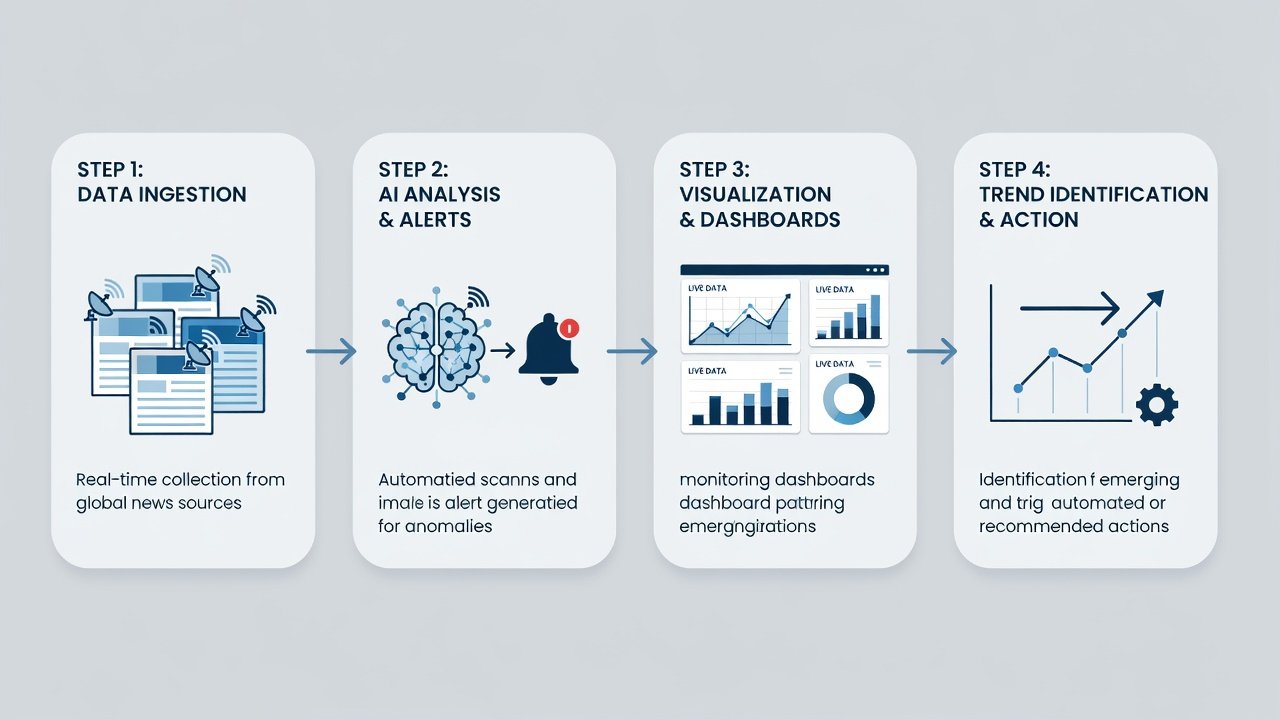
Creating an effective monitoring system involves systematic steps that combine curation, automation, and analysis. Here is a practical workflow that ML teams can implement immediately:
- Identify and curate a core set of sources including academic repositories, lab blogs, and specialized outlets. Prioritize outlets known for rigorous technical coverage and establish a daily ingestion routine.
- Configure AI-powered summarization and alerting tools to process incoming content daily, extracting mentions of architectures, benchmarks, and releases while filtering out noise.
- Establish keyword filters focused on high-impact terms such as specific model names, performance metrics, and deployment scenarios to surface relevant items quickly.
- Centralize findings in a collaborative dashboard where team members can tag, comment, and prioritize items for deeper investigation and knowledge sharing.
- Conduct weekly review sessions to detect acceleration patterns and cross-reference signals across multiple sources for increased confidence.
- Document validated trends with supporting evidence for roadmap discussions and maintain an archive for longitudinal analysis.
This structured approach minimizes information overload while maximizing signal detection. Teams that follow these steps report faster identification of actionable opportunities and improved cross-functional alignment.
Real-World Examples from Industry Teams
Several prominent organizations have successfully leveraged news monitoring to stay ahead. For instance, research groups at major technology companies tracked early discussions around efficient inference techniques through paper releases and quickly incorporated them into production systems, resulting in measurable latency reductions. Another example involves a healthcare AI startup that identified multimodal model advancements via targeted alerts and integrated them into diagnostic tools six months ahead of competitors. A third case comes from an automotive firm that monitored hardware optimization signals to pivot their edge ML strategy, achieving faster time-to-market for autonomous features. These cases demonstrate how consistent monitoring translates into tangible product advantages and reduced development timelines across diverse sectors.
Comparing Leading AI News Platforms
Choosing the right platforms is essential for timeliness and relevance. Academic repositories excel at raw speed for original research, while curated technology publications provide contextual analysis that helps ML professionals understand practical implications. Cross-referencing multiple outlets balances speed with depth. Key factors to evaluate include update frequency, technical rigor, and focus on applied versus theoretical content. Professionals often combine primary sources with interpretive commentary to form a complete picture. For example, some platforms emphasize benchmark results while others highlight ethical considerations or business applications, making a diversified approach most effective for comprehensive trend detection.
Common Pitfalls and How to Validate Trends Quickly
Common mistakes include overreacting to hype without evidence or neglecting context from established research groups. Additional pitfalls involve relying on single sources, ignoring reproducibility data, or failing to account for regional variations in adoption. To validate trends rapidly, examine citation trajectories, seek reproducibility studies, and run small-scale internal tests. Reliable sources such as arXiv and Nature offer transparent data that supports quick assessment. Additional validation comes from monitoring community discussions on platforms affiliated with MIT and tracking adoption metrics from open repositories. Teams should also consult IEEE resources for standards-related signals that lend further credibility.
Actionable FAQs for Integrating Findings into 2026 ML Roadmaps
How frequently should teams review AI news feeds? A combination of daily automated scans and weekly team syntheses provides optimal coverage without excessive time investment, allowing for both rapid response and thoughtful evaluation.
Which AI tools best support news monitoring workflows? Summarization models paired with RSS aggregators and dashboard applications streamline the process effectively for most organizations and can be customized to specific team needs.
How can validated trends be incorporated into existing roadmaps? Map emerging capabilities directly to quarterly objectives, allocating resources for pilot projects and skill development to ensure smooth integration.
What metrics indicate a trend is gaining momentum? Rising citation counts, increasing mentions in technical forums, and early commercial pilots serve as reliable indicators that warrant further exploration.
How do teams avoid missing subtle signals? Maintain diverse source lists and periodically audit filters to capture emerging terminology and niche developments before they become mainstream.
What role does cross-team collaboration play in trend validation? Involving domain experts from engineering, product, and ethics teams strengthens the assessment process and reduces blind spots.
Conclusion
Mastering the analysis of AI news empowers machine learning professionals to anticipate and act on 2026 trends with confidence. By implementing structured workflows, studying real examples, comparing platforms thoughtfully, and applying rigorous validation, teams can integrate forward-looking insights into their strategic planning. The result is a proactive approach that turns information into competitive advantage. Begin refining your monitoring practices now to lead rather than follow the next wave of innovation and position your organization for sustained success in the evolving AI landscape.

No comments yet. Be the first!