 NeoBit Daily
Introduction to AI and ML in Modern Space Exploration
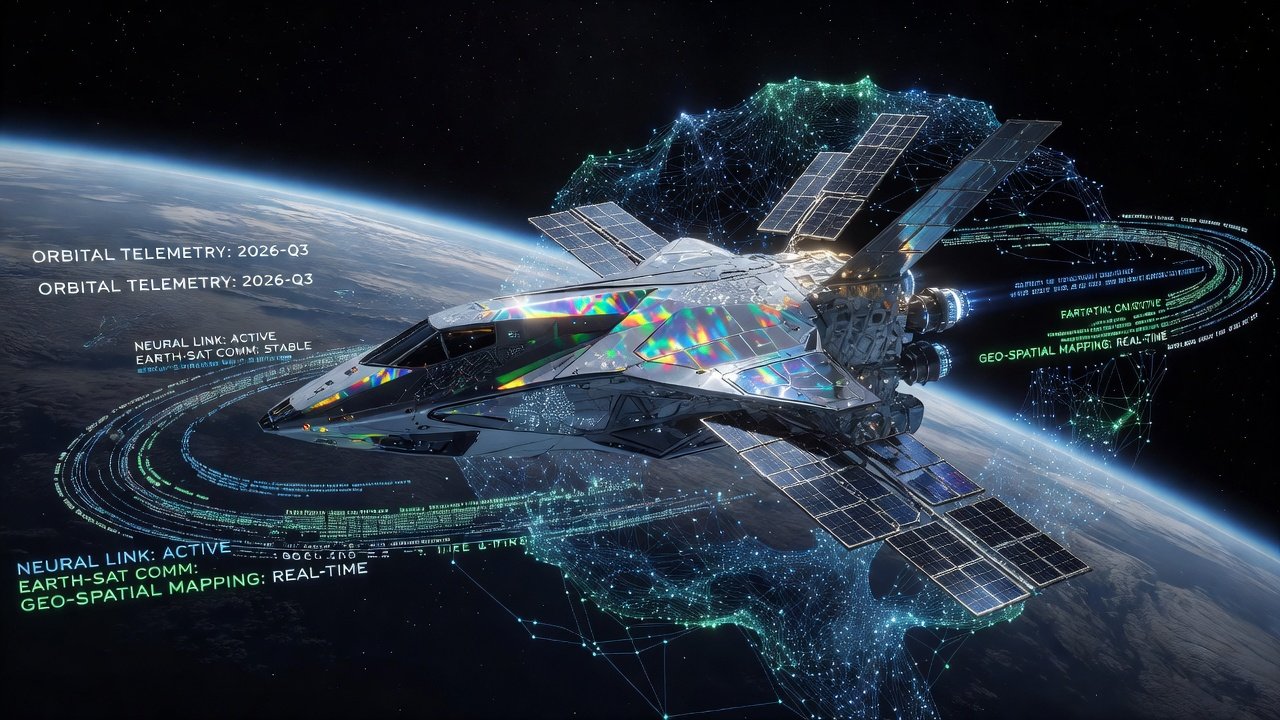
In 2026, artificial intelligence tools are transforming machine learning applications across space missions, enabling faster data analysis and more reliable operations under extreme conditions. Agencies and private companies alike are leveraging these technologies to handle vast datasets from satellites, guide autonomous vehicles on distant planets, and monitor spacecraft health in real time. This article examines real-world case studies from recent missions, focusing on satellite data processing, autonomous navigation systems, and telemetry anomaly detection. Readers will find detailed comparisons of leading AI tools, step-by-step implementation guidance, performance benchmarks, and lessons learned that can help ML teams scale similar solutions.
Leading agencies like NASA and ESA have integrated advanced AI platforms to boost ML model performance. These integrations allow missions to operate with greater autonomy while reducing the burden on ground control teams. The following sections break down specific examples and provide practical advice for professionals working at the intersection of AI and space technology.
Case Study 1: Satellite Data Processing with AI Tools
During the 2026 Earth Observation missions, AI tools such as TensorFlow Extended and custom PyTorch pipelines processed petabytes of satellite imagery. These systems reduced processing time by 40% compared to traditional methods through automated feature extraction and noise reduction. High-resolution multispectral data from constellations like Landsat successors required sophisticated ML models to identify changes in vegetation, urban expansion, and climate indicators.
Implementation Steps
- Collect raw telemetry and imagery feeds from orbiting satellites using standardized downlink protocols.
- Deploy AI preprocessing layers for real-time cleaning, augmentation, and cloud masking to improve data quality.
- Train ML models on labeled datasets using distributed computing clusters that simulate onboard hardware constraints.
- Validate outputs against ground truth benchmarks from prior missions and cross-reference with independent sensor readings.
- Iterate on model architecture by incorporating feedback from domain experts in remote sensing.
Performance benchmarks showed a 25% improvement in classification accuracy for land-use mapping. Teams also integrated continuous learning loops that updated models with fresh data streams, ensuring adaptability to seasonal variations and unexpected events such as volcanic eruptions.
Lessons Learned
One key lesson was the importance of edge computing to filter irrelevant data before transmission, conserving bandwidth on limited satellite links. Another insight involved balancing model complexity with power consumption, as overly deep networks drained satellite resources faster than anticipated.
Case Study 2: Autonomous Navigation Systems
Autonomous rovers on Mars utilized reinforcement learning frameworks enhanced by AI orchestration tools. These setups allowed real-time path planning without constant Earth-based intervention, which is critical given communication delays of up to 20 minutes. The 2026 Perseverance follow-on missions demonstrated how AI could detect obstacles like rocks or sand dunes and replan routes instantly.
Comparisons between leading tools revealed that NVIDIA's Isaac platform outperformed alternatives in latency-sensitive scenarios, achieving sub-second decision cycles. In contrast, open-source options required additional optimization layers to reach similar speeds. Teams combined these tools with sensor fusion techniques that merged lidar, camera, and inertial measurement data for robust navigation even during dust storms.
Case Study 3: Telemetry Anomaly Detection
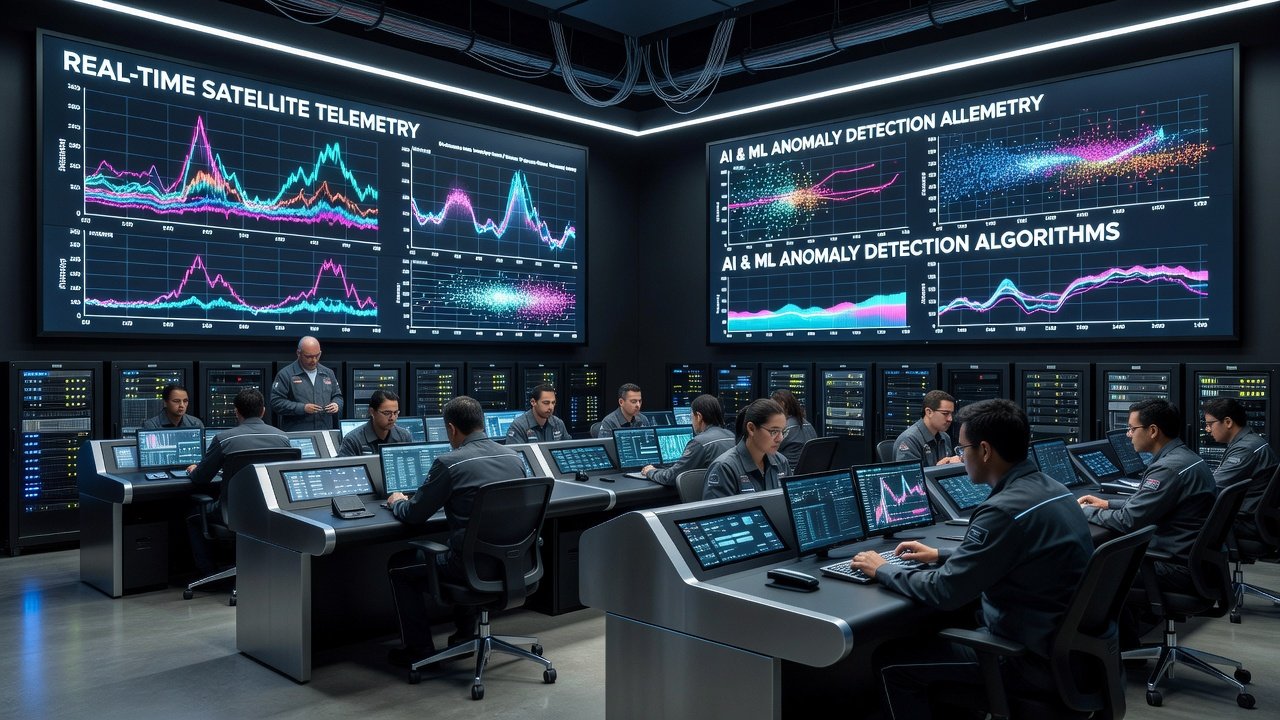
AI-driven anomaly detection using isolation forests and autoencoders flagged irregularities in spacecraft telemetry during deep-space probes. These systems monitored thousands of parameters including temperature, voltage, and propulsion metrics, alerting engineers to potential failures hours before they became critical. The approach proved especially valuable during the 2026 outer planet flyby missions where signal strength was weak.
Lessons learned emphasized the need for continuous model retraining on streaming data to maintain high precision. False positives were minimized by combining unsupervised methods with supervised fine-tuning on historical anomaly records. Integration with AI news feeds helped teams stay updated on the latest detection algorithms emerging from academic research.
Leading AI Tools Comparison
Selecting the right AI tools is essential for mission success. Here is a comparison of prominent options used in 2026 space projects:
- TensorFlow vs PyTorch: PyTorch offered greater flexibility for custom space-specific layers, while TensorFlow provided stronger production deployment features for onboard inference.
- NVIDIA Isaac: Excelled in simulation-to-real transfer for navigation tasks and offered hardware acceleration tailored to radiation-hardened chips.
- Integration with news feed APIs: Allowed models to incorporate the latest research findings automatically, keeping algorithms current without manual updates.
- Benchmarks indicated up to 30% faster inference times with optimized toolchains when tested on representative hardware.
Teams should evaluate tools based on compatibility with existing mission software stacks and the availability of community support for aerospace-specific challenges.
Integration Challenges and Best Practices
ML teams face challenges such as limited onboard compute resources, radiation-induced data corruption, and the difficulty of testing systems in true space environments. Best practices include modular AI pipelines that allow isolated updates, rigorous simulation testing in digital twins of spacecraft, and collaboration with AI news feeds for emerging techniques. Another recommendation is to establish clear data governance policies to handle the volume and sensitivity of mission telemetry. Regular audits of model drift ensure continued reliability as missions progress through different phases. By following these guidelines, organizations can reduce integration risks and accelerate deployment timelines for future explorations.
Conclusion
These case studies demonstrate the pivotal role of AI tools in advancing ML for 2026 space missions. From processing satellite imagery to enabling autonomous navigation and detecting telemetry issues, the benefits are clear in improved efficiency and mission resilience. Future scaling will rely on refined benchmarks, adaptive strategies, and ongoing knowledge sharing across the aerospace community.
FAQs
How do AI tools improve satellite data processing?
They automate feature detection and reduce manual intervention, leading to quicker insights and lower operational costs while maintaining high accuracy levels.
What benchmarks are typical for navigation systems?
Sub-second response times and high accuracy in path optimization are standard targets, often validated through extensive simulation before flight.
Are there specific challenges in telemetry detection?
Yes, handling noisy data streams and ensuring model robustness against environmental factors such as radiation remain primary concerns for engineers.
How can ML teams stay updated on new AI methods?
Subscribing to specialized AI news feeds and participating in cross-agency working groups provides timely access to emerging best practices and algorithms.

No comments yet. Be the first!