 NeoBit Daily
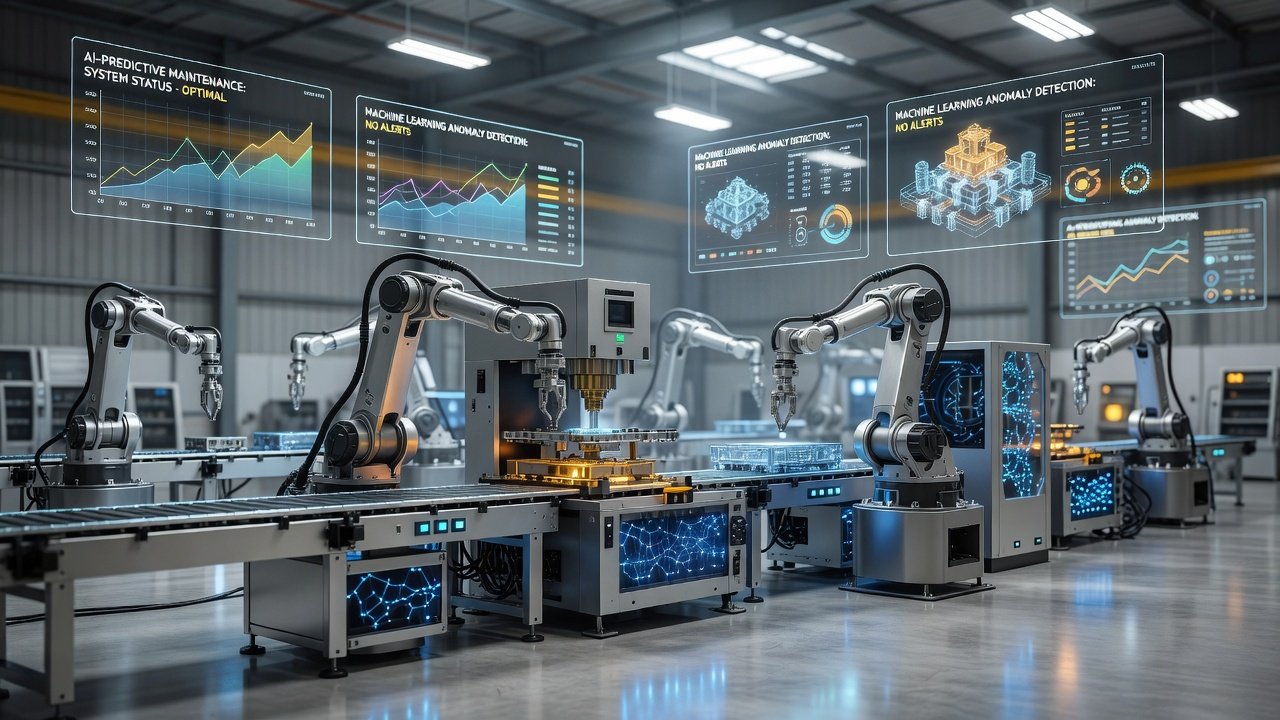
In 2026, manufacturers face mounting pressure to minimize unplanned downtime while maximizing equipment lifespan. AI tools integrated with machine learning models have emerged as essential for predictive maintenance, shifting from reactive repairs to proactive interventions. This comprehensive guide delivers actionable insights for ML teams, covering sensor data integration, model training workflows, real-time anomaly prediction, and sector-specific examples from automotive and aerospace industries. By leveraging current AI advancements, organizations can achieve substantial reductions in operational costs and improved equipment reliability across global supply chains.
Understanding Predictive Maintenance with AI in 2026
Traditional maintenance relies on fixed schedules or reactive fixes after failures occur, often leading to unnecessary downtime or catastrophic breakdowns. AI-driven approaches analyze vast datasets from IoT sensors to forecast issues days or weeks ahead with remarkable precision. Recent advancements allow models to process vibration, temperature, acoustic, and pressure signals simultaneously using hybrid neural network architectures. This evolution enables continuous monitoring of complex machinery in high-volume production environments where even minor disruptions can cascade into major losses. Manufacturers adopting these technologies report enhanced decision-making capabilities through predictive insights that integrate seamlessly with enterprise resource planning systems.
Sensor Data Integration Best Practices
Effective predictive maintenance starts with robust sensor networks deployed strategically across production floors. Install vibration sensors on rotating machinery such as pumps and motors, thermal cameras on electrical panels, and acoustic monitors near gearboxes to capture subtle anomalies. Integrate these streams using edge computing gateways to reduce latency and bandwidth demands on central servers. Ensure data pipelines normalize inputs with standardized protocols before feeding them into ML platforms. Common tools include Apache Kafka for high-throughput streaming, AWS IoT Core for secure connectivity, and Azure Digital Twins for virtual modeling of physical assets. Teams should prioritize calibration routines and redundancy checks to maintain data integrity, especially in harsh industrial settings prone to electromagnetic interference or extreme temperatures.
Model Training Workflows Step-by-Step
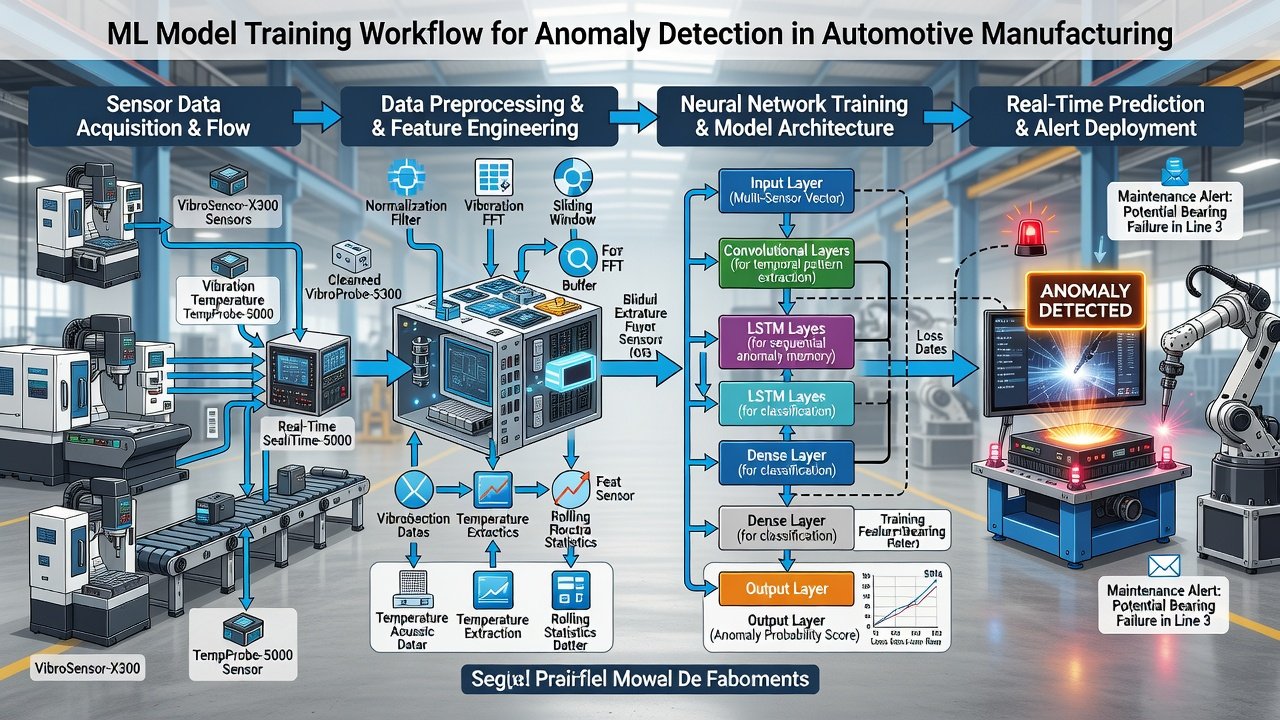
Begin by collecting historical failure data alongside normal operating parameters from multiple production cycles. Clean datasets rigorously to remove noise and outliers, then apply advanced feature engineering to extract metrics like mean time between failures, spectral features from vibration signals, and trend indicators. Train models using a combination of supervised learning on labeled failure examples and unsupervised techniques for early anomaly detection. Validate performance with stratified cross-validation on holdout sets drawn from real production lines across different shifts. Iterate continuously by incorporating new sensor readings on a quarterly basis, employing transfer learning to adapt models quickly when equipment configurations change. Incorporate ensemble methods combining random forests with deep learning to boost robustness against varying operational conditions.
Real-Time Anomaly Prediction Techniques
Deploy trained models on edge devices for immediate inference without relying on constant cloud connectivity. Utilize recurrent neural networks or transformer architectures to detect subtle deviations in multivariate time-series data streams. Set dynamic thresholds that adapt automatically to seasonal production variations, material changes, or environmental factors. When anomalies arise, trigger prioritized alerts through integrated dashboards that include root-cause analysis recommendations. This real-time capability proves critical in fast-paced lines where delays of even minutes can impact output targets significantly.
Automotive Sector Implementation Example
In automotive plants, AI models monitor robotic welders, stamping presses, and conveyor systems with high granularity. Teams integrate data from over 500 sensors per assembly line, capturing everything from torque variations to thermal profiles. A typical workflow involves training on six months of operational logs followed by fine-tuning with domain expert annotations. This yields accuracy rates around 92 percent in predicting bearing failures, compared to 68 percent with traditional vibration analysis alone. The result enables precise maintenance scheduling during planned shifts, cutting unplanned downtime by up to 40 percent and extending asset life through optimized lubrication cycles. Real-world deployments often incorporate digital thread concepts linking maintenance data directly to quality control metrics for holistic process improvements.
Aerospace Sector Implementation Example
Aerospace manufacturers apply these techniques to turbine engines, hydraulic actuators, and composite layup equipment. High-fidelity simulations supplement real flight and ground test data to enrich training sets. Models trained on extensive engine telemetry predict component wear with 89 percent accuracy, significantly outperforming rule-based systems that struggle with nonlinear degradation patterns. Integration with digital twins allows virtual testing of maintenance scenarios before any physical intervention, reducing risk and resource expenditure. Learn more from authoritative resources like NASA on aerospace reliability standards and best practices for mission-critical systems.
Accuracy Rate Comparisons: Traditional vs AI-Driven
Traditional approaches such as scheduled inspections or basic statistical process control often achieve 60 to 75 percent prediction accuracy depending on equipment complexity. AI models leveraging deep learning and ensemble techniques routinely reach 85 to 95 percent on validated industrial datasets when sufficient historical data exists. The performance gap widens notably in environments with multiple interacting failure modes or variable loads. Continuous retraining and feedback loops maintain high performance as equipment ages or undergoes modifications, ensuring sustained value over multi-year deployments.
Common Pitfalls and Troubleshooting Tips
- Poor data quality leads to excessive false positives—solution: implement automated validation scripts combined with regular sensor health checks.
- Model drift occurs as operating conditions evolve—solution: schedule monthly performance audits with automated retraining pipelines using fresh production labels.
- Integration challenges with legacy PLC systems—solution: deploy middleware APIs and phased migration strategies to avoid production interruptions.
- Overfitting to limited training data—solution: apply strong regularization techniques and source diverse validation sets from multiple plants and operating regimes.
- Scalability bottlenecks during peak data ingestion—solution: optimize edge preprocessing and adopt hybrid cloud architectures for elastic compute resources.
FAQ: Scalability and Data Privacy Concerns
How do teams scale these systems across global factories?
Start with focused pilot lines in a single facility to refine workflows, then replicate using containerized model deployments managed through orchestration platforms. Cloud-based tools facilitate centralized updates while preserving local edge processing for latency-sensitive predictions, ensuring consistent performance worldwide.
What steps address data privacy in shared manufacturing environments?
Anonymize sensor streams at the collection point and adopt federated learning frameworks that keep raw data localized. Align implementations with established frameworks from NIST to meet cybersecurity and privacy requirements in industrial IoT ecosystems.
Can smaller manufacturers with limited budgets benefit from these AI tools?
Yes, open-source libraries and modular cloud services allow phased adoption starting with high-impact assets. Focus initially on critical failure modes to demonstrate quick wins before expanding scope.
Conclusion
AI tools for ML predictive maintenance deliver measurable improvements through reduced downtime and optimized maintenance schedules. By emphasizing high-quality data integration, rigorous iterative training, and tailored adaptations to specific sectors, ML teams can realize superior outcomes throughout 2026. Initiate targeted pilots with clear success metrics and expand methodically to build organizational capability and sustained competitive advantage.


No comments yet. Be the first!