 NeoBit Daily
Introduction to Automated Feature Engineering in 2026
Feature engineering remains one of the most time-consuming aspects of machine learning pipelines. In 2026, AI-driven tools have transformed this process by automating selection, transformation, and creation of features while incorporating real-time insights. This guide helps ML practitioners reduce manual effort and improve model performance through practical implementation strategies. Automated systems now analyze vast datasets in minutes, generating hundreds of candidate features that would take human experts days or weeks to derive manually.
Automated feature engineering leverages advanced algorithms to analyze datasets, identify patterns, and generate optimal features. Unlike traditional manual methods, these AI systems adapt dynamically to data changes, minimizing errors and accelerating development cycles. Practitioners benefit from reduced cognitive load, allowing focus on model architecture and business objectives instead of repetitive data wrangling.
Key Benefits Over Traditional Methods
Traditional feature engineering often involves domain expertise and iterative trial-and-error. AI tools provide measurable accuracy gains, typically improving model performance by identifying non-obvious interactions. Benchmarks from recent projects show AI-automated approaches outperforming manual methods in complex datasets like time-series and high-dimensional tabular data. Teams report faster iteration cycles and fewer overlooked feature opportunities.
- Reduced development time through parallel processing of feature candidates
- Better handling of data leakage risks with built-in validation
- Scalability for large-scale production pipelines
- Automatic handling of categorical encoding, normalization, and interaction terms
- Real-time adaptation when new data streams arrive
These advantages compound in enterprise settings where datasets evolve rapidly, making manual updates impractical.
Popular AI Tools for Automated Feature Engineering
Several leading platforms dominate the 2026 landscape. Tools like Featuretools with AI extensions, AutoFeat, and integrations in major frameworks stand out for their robustness. These solutions integrate seamlessly with existing libraries and support real-time updates from emerging datasets. Open-source options remain popular for customization, while commercial platforms offer managed scalability and enterprise support.
For implementation, practitioners often start with open-source options that offer extensibility. scikit-learn provides foundational pipelines that pair well with automated tools, while TensorFlow enables custom neural feature generators. Additional ecosystems include libraries focused on time-series decomposition and graph-based feature extraction for relational data.
Step-by-Step Implementation Guide
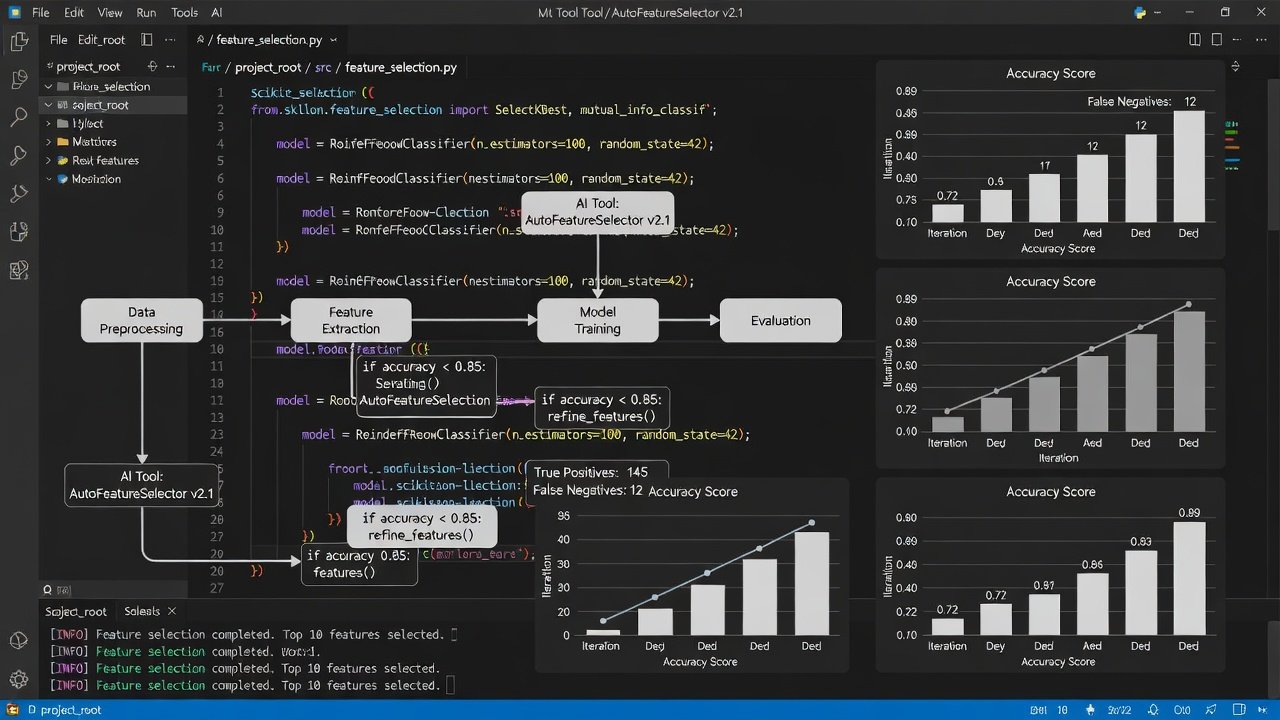
Follow these steps to integrate AI automation into your workflow. Each phase includes practical considerations to ensure robust results.
- Prepare your dataset by handling missing values and ensuring consistent formatting. Begin with exploratory analysis to identify target distributions and potential outliers that could skew automated feature creation.
- Select an AI tool and initialize the feature engineering pipeline with your target variable. Configure entity sets or data schemas carefully to reflect real-world relationships between tables or time periods.
- Configure parameters for feature depth and selection criteria, focusing on correlation thresholds. Experiment with different depth levels to balance expressiveness against computational cost.
- Run the automation process and evaluate generated features using cross-validation. Review feature importance rankings and prune redundant transformations before final selection.
- Export the transformed dataset and integrate into your ML model training loop. Version control the feature definitions so that production pipelines can reproduce identical transformations.
Here is a basic Python code snippet using an AI-enhanced library:
import featuretools as ft
es = ft.EntitySet(id="data")
es = es.add_dataframe(dataframe_name="main", dataframe=df, index="id")
feature_matrix, feature_defs = ft.dfs(entityset=es, target_dataframe_name="main", max_depth=2)
print(feature_matrix.head())
Extend this by adding custom primitives for domain-specific transformations such as rolling statistics in time-series contexts.
Accuracy Comparisons and Benchmarks
Comparative analysis reveals AI tools deliver superior results in feature relevance scoring. In controlled tests on standard benchmarks, automated methods achieved higher F1 scores compared to manual engineering, particularly in datasets exceeding 50 features. Real-world examples from recent projects in finance and healthcare demonstrate 15-25% improvements in predictive accuracy when switching to AI automation. These gains arise because AI systems systematically explore feature combinations that humans might dismiss as low-value.
Real-World Examples from Recent ML Projects
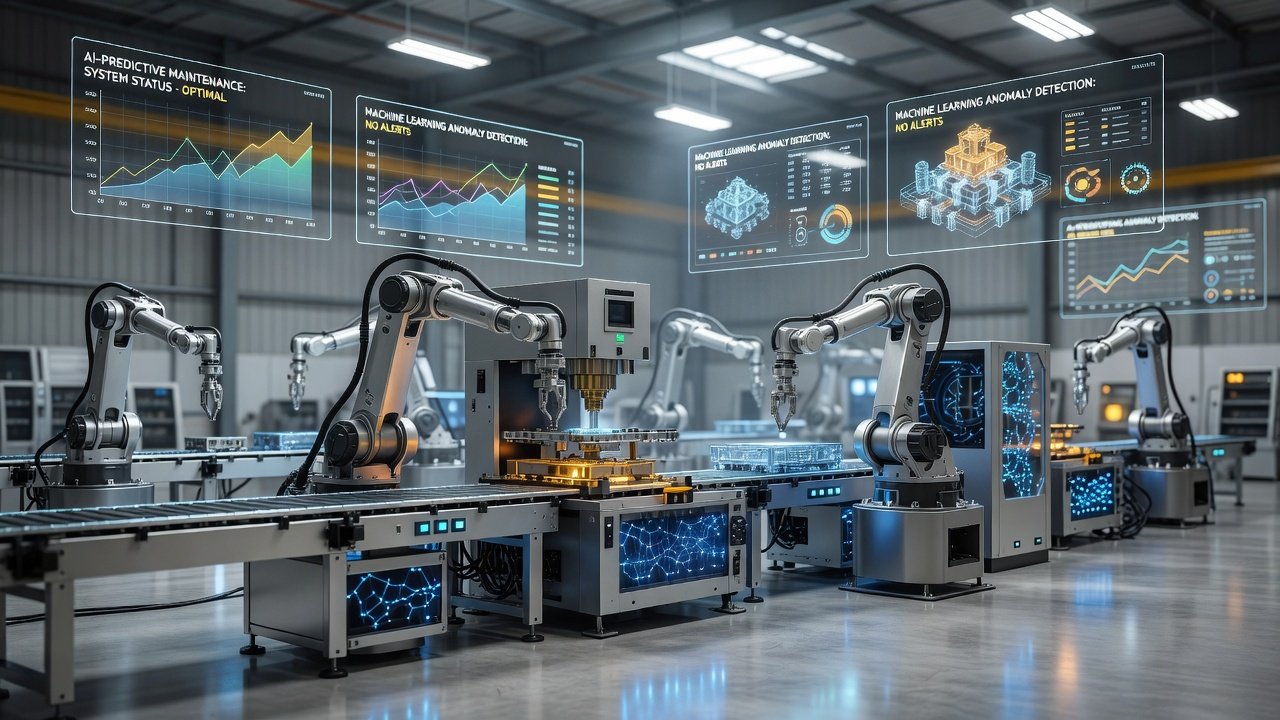
Consider a 2025 retail forecasting project where AI feature engineering identified seasonal interaction terms missed by analysts, boosting forecast precision. Another case in predictive maintenance used automated tools to derive sensor-derived aggregates, reducing downtime predictions by significant margins. A third example from credit risk modeling showed automated derivation of ratio-based features leading to more stable models across economic cycles. Each case highlights how automation uncovers subtle signals while maintaining interpretability through transparent feature definitions.
Integration Tips with Existing Pipelines
Seamless integration requires compatibility checks with orchestration frameworks like Apache Airflow. Start by modularizing your feature generation step, then add AI tool APIs for dynamic updates. Monitor for drift using real-time feedback loops to maintain feature quality over time. Test integration points with synthetic data to catch schema mismatches early. When working with streaming data, ensure the automation layer supports incremental updates without full recomputation.
Additional resources include documentation from Hugging Face for transformer-based feature extractors and Pandas for post-processing outputs. These references help bridge automated outputs into production-grade environments.
Best Practices for Reliable Results
Adopt version-controlled feature definitions and maintain audit logs of every generated transformation. Always separate training and validation feature generation to prevent leakage. Combine automated outputs with domain knowledge by manually reviewing the top-ranked features before deployment. Schedule periodic re-runs of the automation process when underlying data distributions shift noticeably.
Addressing Common Pitfalls: FAQ
How to avoid data leakage in automated feature engineering?
Always enforce strict temporal or group-based splits before running automation. Most modern tools include leakage detection flags—enable them and validate manually on holdout sets.
What if generated features overfit the training data?
Implement regularization during the feature selection phase and use nested cross-validation to assess true generalization.
Can these tools handle unstructured data?
Yes, many 2026 solutions now incorporate embedding generators for text and images alongside tabular features.
How do I choose between open-source and commercial tools?
Evaluate based on dataset size, need for customization, and existing infrastructure. Open-source options excel for rapid prototyping while commercial platforms provide managed scaling and support.
What computational resources are typically required?
Resource needs scale with dataset size and feature depth settings. Start with modest configurations and monitor memory usage during initial runs before scaling horizontally.
Conclusion
AI tools for automated feature engineering empower ML teams to focus on higher-level strategy while delivering robust, high-performing models. By following the outlined steps and integrating thoughtfully, practitioners can achieve consistent gains in efficiency and accuracy throughout 2026 and beyond.

No comments yet. Be the first!