 NeoBit Daily
Introduction to AI Tools for Machine Learning Model Monitoring
In 2026, organizations deploying machine learning models in production face increasing complexity due to evolving data patterns and emerging threats. AI tools have become essential for maintaining model performance through real-time tracking and proactive issue resolution. This article examines practical strategies that leverage artificial intelligence to monitor machine learning systems effectively, helping teams avoid costly downtime and maintain accuracy across diverse industries such as finance, healthcare, and e-commerce.
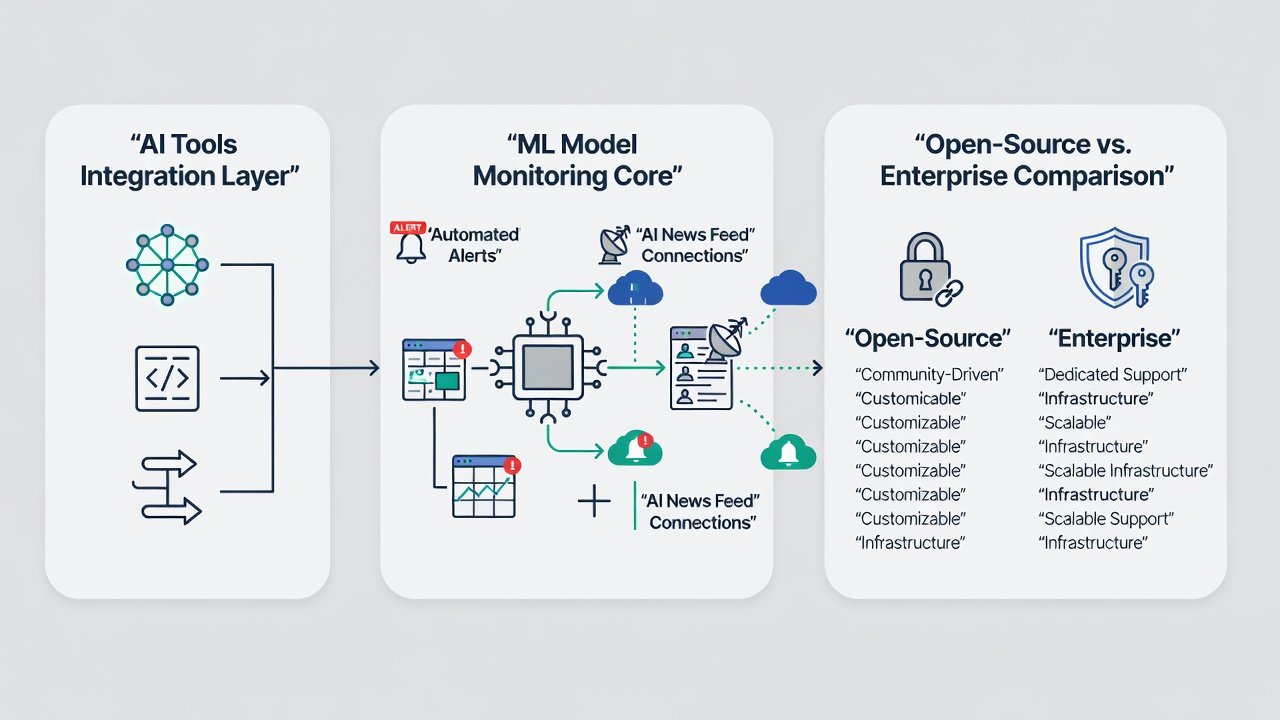
Effective monitoring goes beyond basic metrics. It incorporates automated systems that detect anomalies instantly while integrating external AI news feeds to stay ahead of new vulnerabilities. Mid-sized teams particularly benefit from these advancements, as they balance limited resources with the need for robust oversight. Without proper AI-driven monitoring, models can silently degrade, leading to inaccurate predictions that erode user trust and business outcomes.
Why Real-Time Performance Tracking Matters in 2026
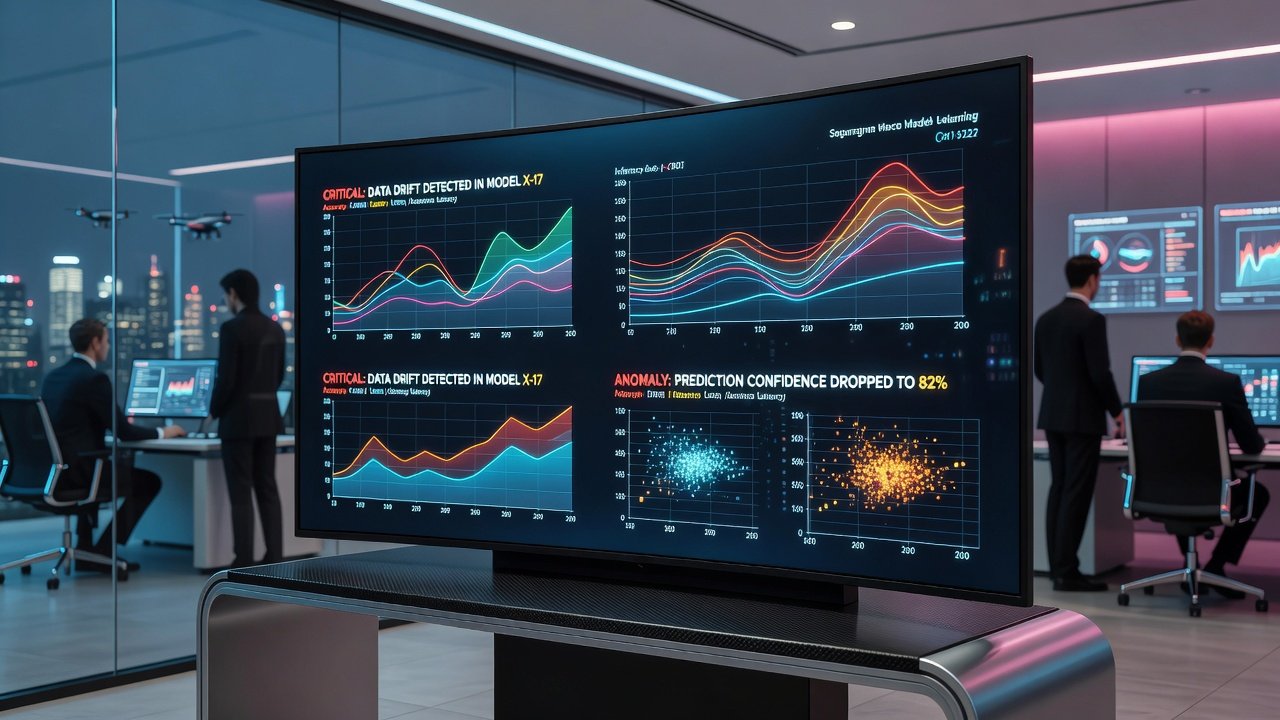
Machine learning models degrade over time without continuous oversight. Real-time performance tracking using AI tools allows teams to observe key indicators such as prediction accuracy, latency, and resource usage as data flows through production environments. This approach prevents small issues from escalating into major failures that could impact thousands of users daily.
Proactive resolution powered by artificial intelligence identifies subtle shifts before they impact end users. For instance, models trained on historical data may encounter unexpected inputs, leading to unreliable outputs. AI-driven monitoring systems flag these changes immediately, enabling rapid intervention and reducing mean time to resolution by significant margins compared to manual processes.
Key Metrics to Monitor with AI Tools
Successful machine learning monitoring starts with selecting the right metrics. Core indicators include model accuracy, precision, recall, F1 scores, and inference latency. Additionally, teams should track data volume, feature distributions, and prediction confidence intervals. AI tools excel at correlating these metrics in real time to surface hidden patterns that humans might miss.
Advanced platforms also monitor infrastructure health, such as CPU and GPU utilization, alongside model-specific signals. This holistic view ensures that performance bottlenecks are identified early, whether they stem from data issues or hardware constraints.
Automated Alerting Systems for ML Models
Automated alerting forms a cornerstone of modern monitoring strategies. These systems use artificial intelligence to analyze streaming data and trigger notifications based on predefined thresholds or learned patterns. In 2026, advanced AI tools can differentiate between benign fluctuations and genuine problems, reducing alert fatigue that plagues many operations teams.
Implementation typically involves configuring thresholds for metrics like data drift or concept drift. When anomalies occur, alerts route to the appropriate team members via integrated channels such as Slack or email. This automation ensures 24/7 coverage without constant human supervision. Teams can further customize escalation rules so critical issues reach on-call engineers within minutes.
Integrating AI News Feeds for Emerging Threats
Staying informed about new developments in artificial intelligence enhances monitoring capabilities. Integration with AI news feeds allows monitoring platforms to cross-reference model behavior against reported threats or breakthroughs. Teams can automatically pull updates from sources discussing vulnerabilities in popular frameworks.
This connection helps anticipate risks. For example, if AI news highlights a new attack vector targeting certain neural network architectures, monitoring tools can prioritize checks for similar patterns in deployed models. Such proactive measures strengthen overall security posture. Practical integration often uses APIs from established providers to embed contextual intelligence directly into dashboards.
Learn more about foundational concepts at TensorFlow and explore monitoring frameworks at MLflow. Additional guidance on secure AI deployments is available via NIST.
Open-Source vs Enterprise Monitoring Solutions
Choosing between open-source and enterprise AI tools depends on team size, budget, and required features. Open-source options offer flexibility and community support, while enterprise solutions provide polished interfaces and dedicated assistance.
- Open-Source Advantages: Customizable codebases, no licensing fees, strong community contributions for rapid updates, and transparency for compliance audits.
- Open-Source Challenges: Requires in-house expertise for setup and maintenance, potentially higher long-term operational costs, and limited official support channels.
- Enterprise Advantages: Scalable support, pre-built integrations with cloud providers, compliance features tailored for regulated industries, and regular security patches.
- Enterprise Challenges: Higher upfront investment and less flexibility for highly customized or niche use cases.
Mid-sized teams often start with open-source tools and migrate to hybrid approaches as needs grow, balancing cost with reliability.
Step-by-Step Implementation Examples
Consider implementing monitoring with popular AI tools like those built on Prometheus and Grafana extended by AI capabilities. Begin by instrumenting your model to export metrics. Next, set up a pipeline that feeds data into an AI analysis layer for drift detection.
Step 1: Install the monitoring agent and connect it to your machine learning inference endpoint while ensuring secure API keys are configured.
Step 2: Define baseline performance metrics using historical data from the past 90 days to establish reliable benchmarks.
Step 3: Configure AI-powered anomaly detection rules that adapt over time using unsupervised learning techniques.
Step 4: Integrate an AI news API to enrich alerts with contextual threat information pulled from trusted external sources.
Step 5: Test the system with simulated drift scenarios and refine thresholds based on real incident logs.
These steps create a resilient monitoring framework tailored to 2026 production demands and can be completed within two weeks by a small engineering team.
Case Studies from Mid-Sized Teams
A fintech company with 50 employees deployed an open-source monitoring stack enhanced by AI components. Within three months, they reduced model retraining cycles by 40% through early drift detection, saving substantial compute resources. Another healthcare startup integrated enterprise AI tools, achieving seamless compliance reporting alongside real-time alerts that prevented several potential outages during high-traffic periods.
A retail analytics firm used hybrid solutions to monitor recommendation engines, resulting in a 25% improvement in prediction stability after implementing automated alerting tied to AI news updates. These examples demonstrate how targeted use of AI tools delivers measurable improvements in machine learning reliability across different sectors.
FAQ: Addressing Common Pitfalls Like Data Drift Detection
How can teams effectively detect data drift?
Use statistical tests within AI monitoring platforms to compare incoming data distributions against training sets. Regular retraining schedules combined with continuous monitoring minimize risks and maintain model relevance over extended periods.
What mistakes should be avoided when setting up alerts?
Overly sensitive thresholds lead to notification overload. Start conservative and iterate based on actual incidents. Always validate alerts against business impact metrics rather than purely technical signals.
Is integration with AI news feeds necessary?
While not mandatory, it provides valuable context for emerging threats, making monitoring more comprehensive in a rapidly evolving artificial intelligence landscape where new vulnerabilities appear frequently.
How do open-source tools compare in handling concept drift?
Many open-source libraries now include built-in drift detectors that perform comparably to enterprise versions, though they may require additional configuration and testing to reach production-grade stability.
What role does infrastructure monitoring play alongside model metrics?
Infrastructure signals often correlate with model performance issues. AI tools that combine both layers provide earlier warnings and more accurate root cause analysis during incidents.
Conclusion
Adopting AI tools for machine learning model monitoring in 2026 empowers teams to maintain high performance through real-time insights and proactive measures. By combining automated alerting, AI news integration, and thoughtful solution comparisons, organizations can build resilient systems that adapt to changing conditions. Implementing these best practices positions mid-sized teams for sustained success in artificial intelligence deployments while reducing operational risks and improving overall model longevity.
No comments yet. Be the first!