 NeoBit Daily
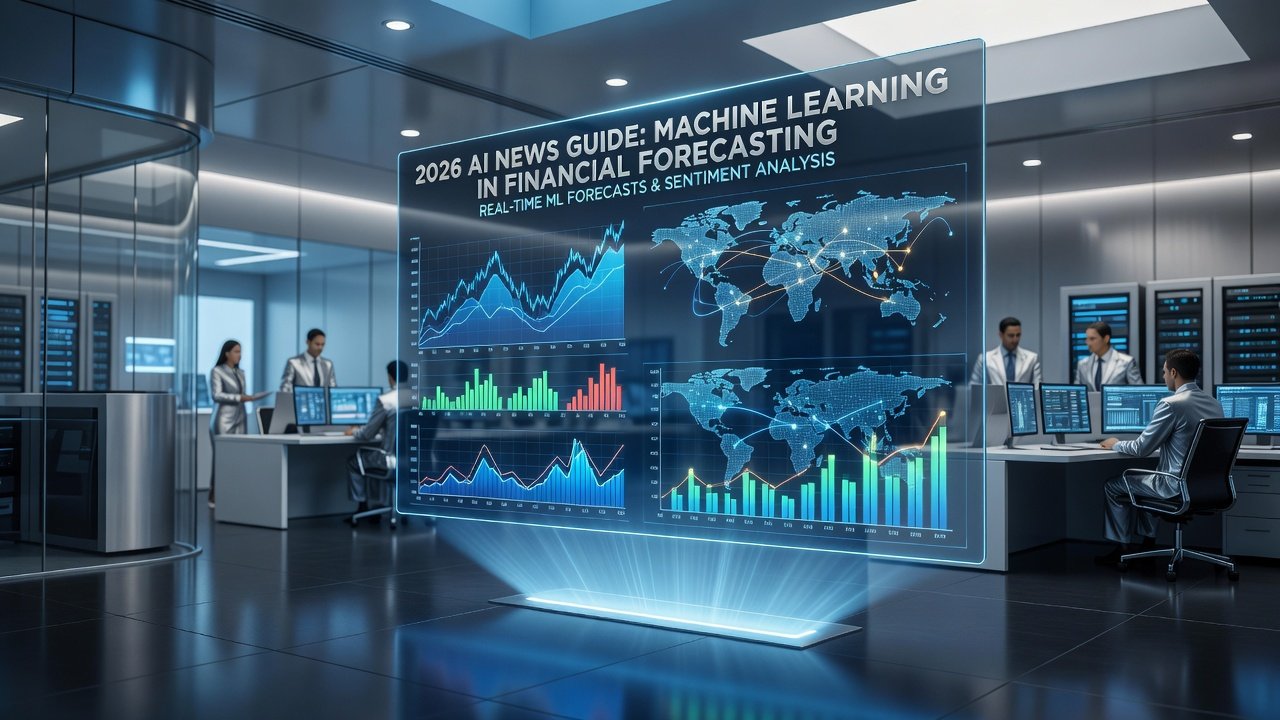
Introduction to AI-Driven Financial Forecasting in 2026
The financial industry is undergoing a profound shift as machine learning models integrate real-time AI news feeds to enhance predictive accuracy. In 2026, organizations are moving beyond traditional time-series analysis by incorporating sentiment from news sources to anticipate market movements with greater precision. This guide examines practical adoption strategies, data integration techniques, and performance benchmarks that address searcher intent around implementing these technologies effectively. Financial institutions now recognize that static historical data alone cannot capture the rapid pace of global events, regulatory announcements, and corporate developments that influence asset prices daily.
Real-time AI news integration allows models to process breaking stories from thousands of outlets simultaneously, converting unstructured text into quantifiable features. This evolution supports more responsive forecasting systems that adapt to both gradual trends and sudden disruptions. Practitioners benefit from understanding not only the technical foundations but also the operational considerations required for successful deployment across trading desks, risk management teams, and investment committees.
The Role of Real-Time AI News in Enhancing ML Models
Real-time AI news provides unstructured data that captures market sentiment, geopolitical events, and economic indicators before they appear in structured financial datasets. Machine learning models trained solely on historical prices often miss sudden shifts; adding news-derived features allows algorithms to detect early signals of volatility or opportunity. For instance, natural language processing techniques parse thousands of articles daily to generate sentiment scores that feed directly into forecasting pipelines. These scores can highlight positive or negative tones surrounding specific companies, sectors, or macroeconomic themes, enabling models to adjust predictions dynamically.
Advanced implementations use transformer-based architectures to extract nuanced relationships, such as the impact of supply chain disruptions mentioned in industry reports on commodity futures. By fusing news embeddings with price and volume data, hybrid models achieve better generalization across different market regimes. This approach proves especially valuable during periods of heightened uncertainty when traditional indicators provide incomplete pictures of emerging risks.
Selecting Relevant AI News Feeds and Data Sources
Choosing high-quality news feeds is critical. Prioritize sources with API access, low latency, and broad coverage across global markets. Key considerations include relevance to specific asset classes, frequency of updates, and credibility to minimize noise. Financial institutions commonly combine premium news aggregators with open datasets from regulatory bodies. Federal Reserve economic data offers reliable macroeconomic context that complements AI-curated news streams.
Practical selection criteria include:
- API reliability and documentation quality
- Coverage of emerging markets and alternative data
- Built-in sentiment tagging or easy integration with NLP tools
- Compliance with data licensing and privacy standards
- Historical depth for robust backtesting
- Multi-language support for international portfolios
Teams should also evaluate vendor support for custom filters that exclude irrelevant content while retaining high-signal articles. Regular audits of feed quality help maintain model performance over time.
Comparing Predictive Models Enhanced by News Sentiment Analysis
Traditional statistical models such as ARIMA serve as baselines, but modern approaches leverage recurrent neural networks, transformers, and ensemble methods augmented with news features. Benchmark studies show that sentiment-enhanced models reduce forecast error by capturing event-driven anomalies that pure price models overlook. When comparing options, evaluate metrics like mean absolute percentage error, directional accuracy, and Sharpe ratio improvements in backtesting environments. Transformer models often outperform older recurrent networks when processing long sequences of news text, while gradient boosting ensembles provide strong results when combining sentiment with technical indicators.
Organizations typically run parallel experiments to identify the optimal architecture for their specific use case, whether forecasting equity returns, bond yields, or currency movements. The addition of news sentiment consistently improves performance during event-heavy periods, though gains vary by asset class and forecast horizon.

Step-by-Step Workflows for Implementation
Successful deployment follows a structured process. First, establish data pipelines that ingest and clean both price series and news text. Next, apply feature engineering to extract sentiment embeddings using pre-trained language models. Then train and validate ML architectures while monitoring for overfitting on news-specific patterns. Finally, integrate outputs into trading or risk systems with continuous monitoring dashboards. Each phase requires close collaboration between data engineers, quantitative analysts, and compliance officers to ensure the end-to-end system meets institutional standards.
- Define forecasting horizon and target variables based on business objectives
- Connect news APIs and historical archives while setting up real-time streaming
- Preprocess text and generate sentiment features using domain-adapted NLP models
- Train baseline and enhanced models in parallel with rigorous cross-validation
- Conduct rigorous out-of-sample testing across multiple market conditions
- Deploy with automated retraining schedules and performance alerts
- Document model decisions for regulatory review and internal governance
Real-World Examples from Banking and Investment Firms
Leading institutions demonstrate tangible results. Global banks have reported improved credit risk assessments by layering news sentiment onto loan default predictions. Investment firms use similar techniques to adjust equity portfolios ahead of earnings announcements or regulatory changes. These cases highlight the importance of domain-specific fine-tuning rather than generic off-the-shelf solutions. One major European bank integrated news feeds into its corporate lending models, achieving earlier identification of distress signals in borrower industries. Asset managers in the United States have deployed similar systems to rebalance thematic funds based on emerging sentiment around sustainability topics.
Benchmark Comparisons Against Traditional Methods
Side-by-side evaluations reveal consistent advantages for news-augmented ML systems. Traditional methods excel in stable regimes but lag during high-impact events. Hybrid approaches deliver superior risk-adjusted returns across multiple asset classes when measured over rolling windows that include both calm and turbulent periods. Backtests conducted over the past five years indicate that sentiment-enhanced models maintain higher accuracy even when news volume spikes unexpectedly.
FAQ: Addressing Common Challenges
How do teams manage data latency in real-time news integration?
Latency is mitigated through edge computing, prioritized API tiers, and efficient streaming architectures that process only relevant articles. Regular audits ensure pipelines maintain sub-second delivery where market impact is highest.
What regulatory compliance considerations apply?
Firms must adhere to guidelines on data provenance, model explainability, and fair lending practices. SEC resources provide frameworks that help organizations document AI usage and maintain audit trails for forecasting models.
Which performance metrics matter most for stakeholders?
Beyond accuracy, decision-makers focus on economic value added, false positive rates in trading signals, and model robustness across regime shifts. Transparent reporting of these metrics builds trust with regulators and clients.
How can organizations address potential biases in news-derived features?
Bias mitigation involves diversifying news sources, applying fairness constraints during training, and conducting periodic reviews of model outputs across different market segments. Collaboration with external auditors further strengthens defensibility.
Conclusion
Integrating real-time AI news into machine learning financial forecasting represents a competitive necessity in 2026. By following structured selection, comparison, and implementation practices, organizations can achieve more resilient and insightful predictions while navigating technical and regulatory hurdles successfully. Continued advances in language models and data infrastructure promise even greater capabilities in the years ahead.


No comments yet. Be the first!