 NeoBit Daily
Introduction to Transfer Learning Efficiency in 2026
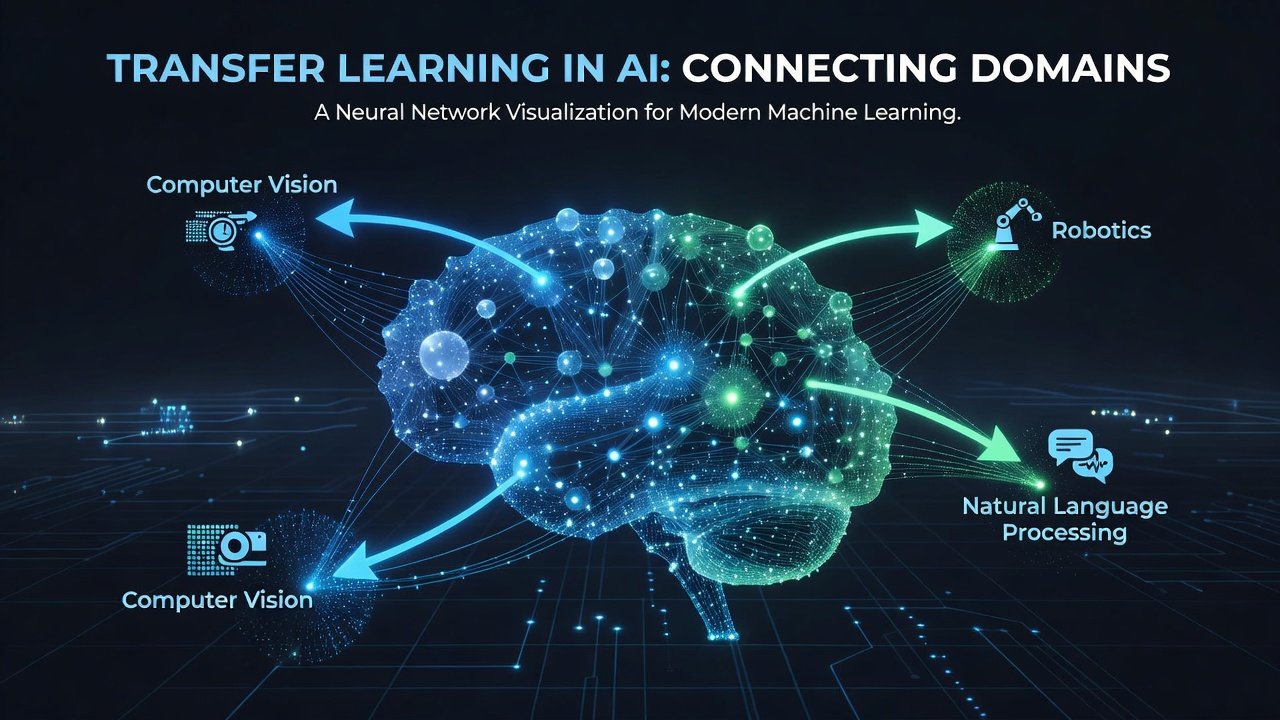
Transfer learning remains a cornerstone technique for machine learning practitioners adapting pre-trained models to new domains with limited data. In 2026, emerging AI tools are dramatically boosting efficiency by automating model selection, optimizing hyperparameters, and providing real-time benchmarks. This practical guide explores how these advancements help intermediate ML engineers achieve faster adaptation across domains while integrating seamlessly with AI news feeds for staying updated on new models. As datasets grow more complex and domains shift rapidly, manual approaches to transfer learning often fall short, leading to wasted compute resources and suboptimal performance. AI-assisted platforms now handle much of the heavy lifting, allowing engineers to focus on high-level strategy rather than repetitive tuning cycles.
Pre-Trained Model Selection Strategies
Choosing the right pre-trained model is critical for successful transfer learning. Modern AI tools leverage embedding similarity searches and domain-specific metadata to recommend optimal starting points from repositories like Hugging Face. For example, engineers can input target domain descriptions and receive ranked suggestions based on 2026 advancements in multimodal embeddings that account for both text and vision modalities. These systems evaluate factors such as model architecture compatibility, training data diversity, and downstream task alignment using sophisticated similarity algorithms. Practitioners should prioritize models with strong zero-shot or few-shot capabilities when data is scarce. Additional considerations include checking for recent community fine-tunes that address niche edge cases and reviewing model cards for documented limitations in areas like bias or adversarial robustness. Tools now integrate automated audits for bias and robustness, reducing manual review time by up to 60% compared to traditional methods. In practice, an ML engineer working on medical imaging might start by querying a tool with keywords like "chest X-ray classification" and instantly receive a shortlist of vision transformers pre-trained on large radiology corpora, complete with performance previews on similar benchmarks.
Fine-Tuning Best Practices with AI-Assisted Hyperparameter Optimization
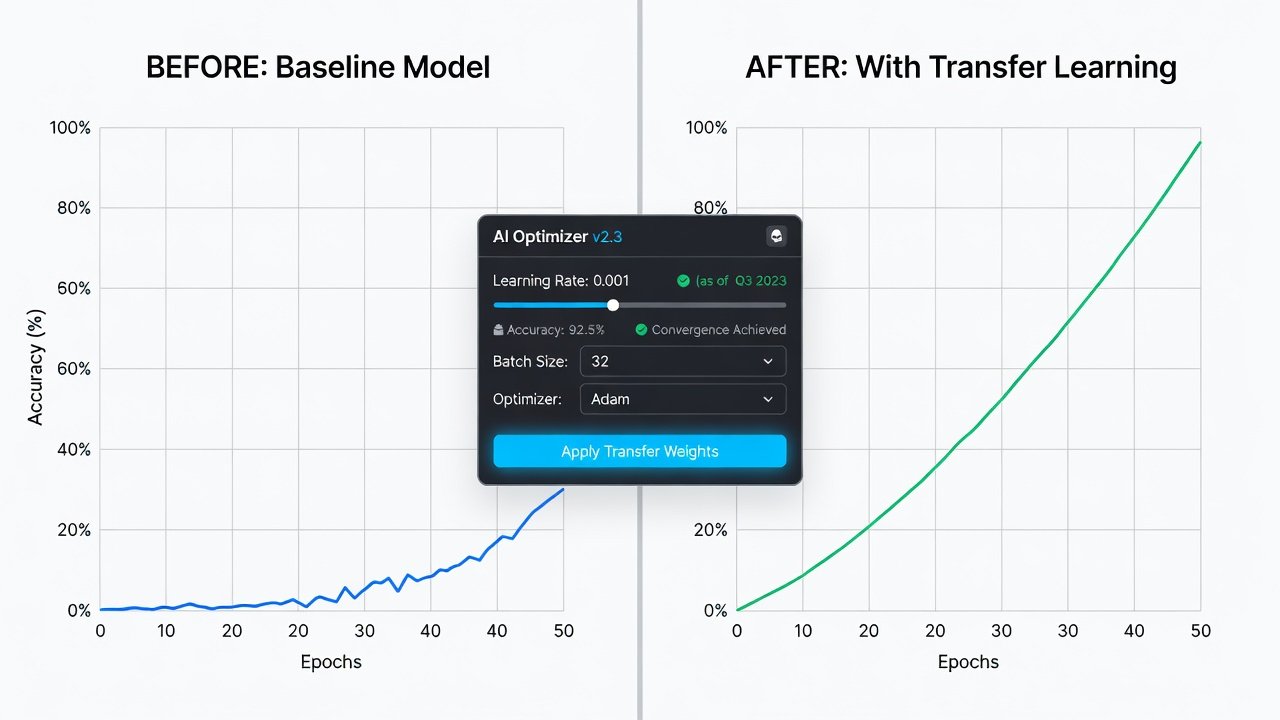
Fine-tuning workflows have evolved with AI-driven optimizers that dynamically adjust learning rates, batch sizes, and regularization parameters. In 2026, platforms incorporate reinforcement learning agents that test configurations in parallel, often converging on superior settings faster than grid search or manual tuning. This approach minimizes the risk of overfitting while maximizing generalization across target domains. Step-by-step implementation example using popular frameworks begins with loading a pre-trained backbone via PyTorch or TensorFlow APIs. Next, wrap the training loop with an AI optimizer that samples from a defined hyperparameter space using Bayesian methods or evolutionary algorithms. Monitor live metrics through integrated dashboards that flag anomalies such as gradient explosions or plateauing validation curves. Apply techniques like gradual unfreezing of layers combined with discriminative learning rates to preserve useful features from the source model. Comparisons show AI-assisted methods achieve 15-25% higher accuracy on cross-domain tasks versus manual approaches, with reduced training epochs needed. Engineers can further enhance results by incorporating data augmentation pipelines that the AI tool suggests based on domain characteristics, such as synthetic oversampling for imbalanced classes.
Real-World Performance Benchmarks
Benchmarks from 2026 highlight efficiency gains across industries. For instance, in natural language processing, tools reduced adaptation time from weeks to days on domain-specific datasets like legal document classification or financial sentiment analysis. Vision models saw similar improvements in medical imaging transfer tasks, where adaptation cycles dropped from 14 days to under 48 hours while maintaining or exceeding baseline F1 scores. Always cross-reference results against official sources such as TensorFlow and PyTorch documentation for reproducible setups. Additional case studies in autonomous driving demonstrate how AI-optimized transfer learning improved object detection mAP by 18% on new sensor types with only 10% of the original labeled data. These benchmarks emphasize the importance of tracking not just accuracy but also inference latency and energy consumption, metrics that modern tools surface automatically during the optimization process.
Step-by-Step Implementation Examples
To illustrate practical application, consider a scenario involving adapting a language model for customer support chatbots in the telecommunications sector. Begin by selecting a base model using an AI recommendation engine. Proceed to configure the optimizer with constraints on GPU memory usage and target training duration. Execute multiple parallel trials, then select the top-performing configuration for final training. Post-training, evaluate on held-out test sets and deploy with monitoring hooks that alert teams to performance drift. Another example involves computer vision for agricultural pest detection, where an AI tool automatically suggests appropriate backbone models pre-trained on ImageNet variants and handles hyperparameter search for learning rate schedulers tailored to small-object detection challenges.
Integration with AI News Feeds for Model Updates
Staying current requires connecting workflows to curated AI news feeds. Many 2026 tools offer API hooks that pull the latest model releases and benchmark reports, automatically suggesting upgrades or patches. This integration ensures practitioners avoid outdated models and capitalize on rapid advancements in areas like efficient transformers and zero-shot adapters. Setting up these feeds involves authenticating with services that aggregate announcements from research labs and open-source communities, then mapping incoming data to your model registry for seamless comparison against currently deployed versions.
Mistakes to Avoid and Expanded FAQ
Common mistakes include neglecting to validate domain similarity before transfer, which can lead to negative transfer and degraded performance. Another pitfall is overlooking hardware constraints during hyperparameter optimization, resulting in out-of-memory errors or excessively long runtimes. Always incorporate early stopping and checkpointing mechanisms recommended by AI tools.
FAQ addressing frequent issues:
- How to avoid negative transfer? Use similarity metrics from selection tools to filter incompatible source models and run small pilot experiments before full-scale fine-tuning.
- What frameworks work best in 2026? Hybrid setups combining PyTorch Lightning with AI optimization plugins deliver the most reliable results across both research and production environments.
- Are manual methods still relevant? Only for very small-scale experiments or when exploring entirely novel architectures; AI tools outperform in most production scenarios involving standard backbones.
- How do AI news feeds integrate technically? Most platforms provide REST endpoints or webhook support that can be scripted into existing CI/CD pipelines for automated model refresh suggestions.
- What evaluation metrics should be prioritized? Beyond accuracy, track domain-specific measures such as calibration error, fairness indicators, and computational efficiency to ensure holistic improvements.
Conclusion
By adopting these AI-enhanced transfer learning practices, ML engineers can accelerate innovation and deliver robust models across domains with greater confidence in 2026 and beyond. The combination of intelligent model selection, automated optimization, and continuous feed integration transforms what was once a time-intensive process into a streamlined, repeatable workflow that scales effectively with organizational needs.
No comments yet. Be the first!