 NeoBit Daily

Introduction: The Shifting Landscape of ML Education
In 2026, machine learning education is evolving rapidly due to the constant flow of AI news. Breakthroughs in generative models, ethical AI frameworks, and new algorithms appear weekly, pressuring educators to keep curricula current. This article explores how AI news updates serve as a catalyst for modernizing ML programs, offering practical guidance for selecting tools, refreshing syllabi, and measuring success. As artificial intelligence continues to transform industries from healthcare to autonomous systems, educational institutions must adapt quickly to ensure students graduate with relevant, up-to-date skills. The integration of real-time developments not only enhances theoretical understanding but also prepares learners for immediate application in professional settings.
Selecting Relevant AI Tools for Classroom Integration
Educators must evaluate tools based on accessibility, relevance to current research, and alignment with learning objectives. Popular choices include platforms like TensorFlow and PyTorch, which frequently release updates highlighted in AI news. When choosing, prioritize open-source options that allow real-time experimentation with the latest models discussed in recent reports. Key criteria include ease of deployment, community support, and compatibility with institutional hardware. Additional considerations involve assessing computational requirements, licensing terms for educational use, and the availability of tutorials or documentation that reflect the newest features.
- Assess tool scalability for large student cohorts and multi-device environments
- Verify integration with existing learning management systems such as Canvas or Moodle
- Review privacy and data security features to comply with institutional policies
- Test for bias detection capabilities in line with emerging regulations from bodies like the National Science Foundation
- Evaluate support for collaborative projects and version control integration
Practical testing often involves pilot programs where instructors trial a tool with a small group before full rollout. This methodical selection process helps avoid common pitfalls such as choosing overly complex software that overwhelms beginners.
Updating Syllabi with Real-Time Breakthroughs
Traditional syllabi often lag behind industry developments by months. AI news enables dynamic updates by incorporating topics such as multimodal AI systems or new reinforcement learning techniques as they emerge. Leading programs now dedicate modules to analyzing primary sources from research announcements, fostering critical evaluation skills. Step-by-step integration involves weekly news scans by teaching assistants, student-led discussions on recent papers, and assignments that apply new concepts immediately. This approach ensures graduates possess skills aligned with 2026 job market demands, where employers increasingly seek familiarity with cutting-edge methodologies.
To implement effectively, instructors can create modular syllabus templates that allow quick swaps of case studies. For example, replacing a static example on convolutional neural networks with analysis of a newly published architecture announced in the prior week. Regular faculty meetings focused on AI news aggregation further streamline this process, turning potential disruption into structured learning opportunities.
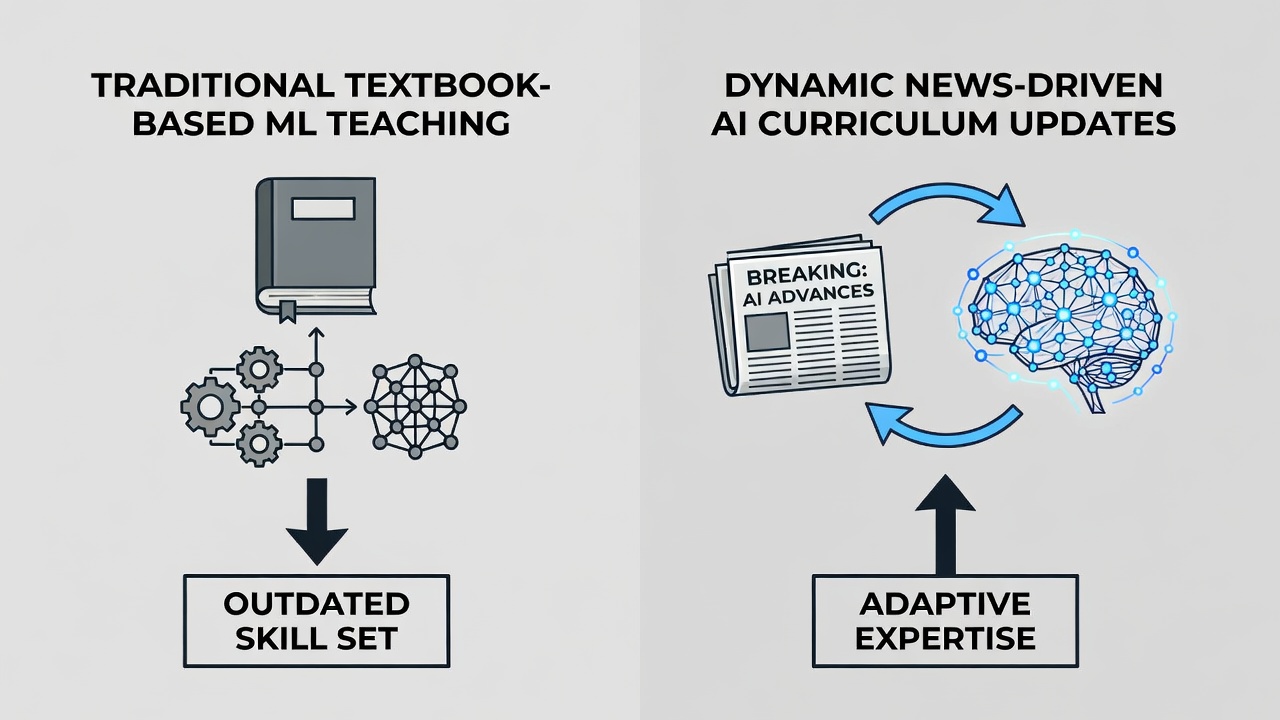
Traditional vs. News-Driven Teaching Approaches
Traditional methods rely on static textbooks and fixed case studies, which can feel outdated within a single academic term. News-driven approaches emphasize adaptability, using live examples to illustrate concepts. For instance, a lesson on neural networks might pivot to a newly released architecture announced days earlier, allowing students to replicate experiments from the original research.
Comparisons show news-driven methods improve retention by connecting theory to timely applications. However, they require more instructor preparation to verify source credibility and contextualize findings. A balanced hybrid model often yields the best results, blending foundational texts with supplementary news modules. Educators report that this combination reduces student disengagement while maintaining academic rigor.
Step-by-Step Examples from Leading Universities
Institutions like MIT have implemented news-responsive modules where students track AI developments and prototype solutions within the same semester. Faculty curate weekly briefings drawn from reputable outlets, then guide groups through rapid prototyping exercises. Similarly, programs at Harvard incorporate monthly curriculum audits based on aggregated news summaries, resulting in targeted additions such as ethics workshops on emerging generative AI risks. These workshops often include guest speakers from industry who discuss real deployment challenges.
Another example comes from Stanford’s approach, blending core theory with bi-weekly news briefings that lead to collaborative projects. Measurable outcomes include a 35% rise in student engagement metrics reported in 2026 internal reviews, alongside increased participation in research competitions. Additional universities such as Carnegie Mellon have adopted similar strategies, using AI news feeds to inform capstone project selections and track emerging ethical concerns in machine learning applications.
Measurable Outcomes and Student Engagement
Programs adopting news-driven strategies report higher participation rates, with students demonstrating stronger problem-solving abilities on capstone projects. Surveys indicate improved confidence in applying cutting-edge techniques, directly translating to better internship placements and research contributions. Quantitative data from recent implementations reveal enhanced performance on standardized assessments and greater retention of complex concepts when tied to current events. Long-term tracking shows graduates from these programs secure positions at leading tech firms at higher rates than peers from traditional curricula.
Practical Challenges and Mitigation Strategies
Implementing news-driven updates presents challenges including time constraints for instructors and the risk of misinformation. Mitigation involves establishing dedicated curation teams, leveraging automated alert systems for key topics, and training students in source evaluation. Institutions that invest in professional development workshops focused on AI news literacy see smoother transitions and sustained program quality over multiple semesters.
FAQ: Common Challenges in Sourcing Credible AI News
How can educators verify the reliability of AI news sources?
Cross-reference announcements with peer-reviewed publications and official institutional releases. Prioritize outlets affiliated with major research bodies and avoid unverified social media claims. Developing a vetted source list at the start of each term provides a reliable foundation for classroom discussions.
What strategies help manage information overload?
Use curated newsletters and academic aggregators to filter content. Assign student teams to summarize key stories relevant to course themes, turning the task into a valuable analytical exercise that builds both research and communication skills.
How frequently should syllabi be updated?
Quarterly reviews supplemented by rapid-response adjustments for major breakthroughs maintain relevance without overwhelming instructors. Creating a shared digital repository of modular lesson plans facilitates quick adaptations across departments.
What role do students play in identifying relevant news?
Encouraging student contributions through structured assignments fosters ownership and exposes the class to diverse perspectives on emerging topics. This participatory model also helps instructors stay informed about developments they might otherwise overlook.
Future Trends in News-Driven ML Education
Looking ahead, the synergy between AI news and education will likely intensify with the rise of personalized learning platforms that automatically surface relevant updates. Virtual collaboration tools may further enable real-time global discussions on breaking developments, enriching the educational experience beyond traditional classroom boundaries.
Conclusion
AI news plays a pivotal role in modernizing ML education by bridging academic content with real-world advancements. By strategically selecting tools, updating materials, and learning from university models, educators can deliver programs that prepare students effectively for 2026 and beyond. The proactive embrace of timely information ensures that machine learning curricula remain vibrant, relevant, and impactful for future generations of innovators.


No comments yet. Be the first!