 NeoBit Daily

Introduction: Preparing ML Strategies for 2027
The rapid evolution of artificial intelligence in 2026 has set the stage for transformative changes in machine learning practices heading into 2027. Forward-thinking organizations are already analyzing recent AI news to refine model architectures, data pipelines, and deployment workflows. This article explores how key developments from 2026 will influence ML design, offering actionable insights for teams aiming to stay ahead. As AI capabilities accelerate, machine learning practitioners must adapt to new paradigms in efficiency, ethics, and scalability. Ignoring these shifts risks falling behind competitors who leverage emerging tools effectively. By examining expert predictions and emerging trends, readers can build proactive strategies that leverage new capabilities while mitigating risks. Whether you lead an ML team at a tech firm or research institution, understanding these shifts is essential for competitive advantage. The following sections break down the most impactful stories from 2026 and translate them into concrete 2027 planning steps.
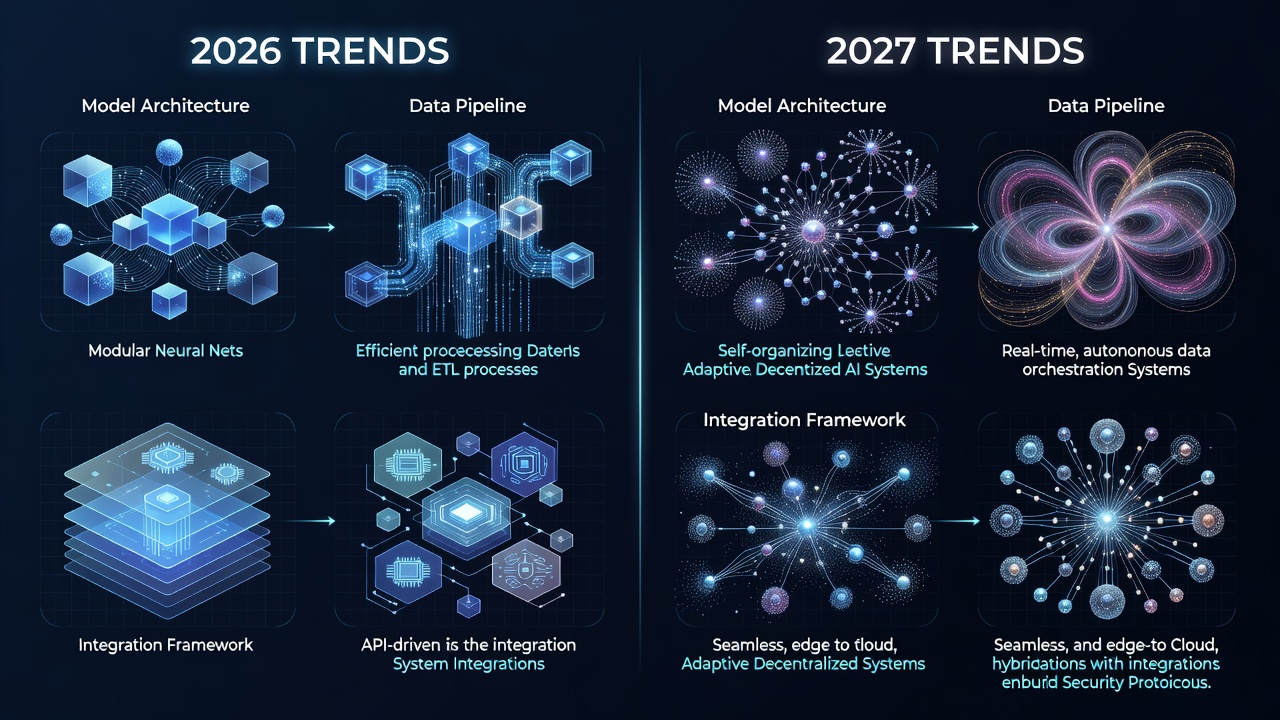
Key 2026 AI News Highlights Shaping 2027
Throughout 2026, breakthroughs in multimodal models and efficient training methods dominated headlines. Developments from major labs highlighted improved reasoning capabilities and reduced computational overhead. These stories underscore a shift toward more sustainable and adaptable ML systems. Notable advancements included enhanced context windows in large language models and better integration of vision-language architectures. News coverage also emphasized the rise of open-source alternatives that lowered barriers for smaller teams. These trends signal a move away from monolithic models toward modular, composable systems that can be customized quickly. Organizations tracking these stories now have a clearer roadmap for updating their technology stacks in the coming year.
Expert Predictions for the Year Ahead
Industry leaders forecast that 2027 will emphasize hybrid human-AI collaboration in model fine-tuning. Predictions include wider adoption of synthetic data generation to address scarcity issues. Analysts at leading research institutions anticipate that regulatory frameworks will mature, influencing how teams handle bias and transparency. Additional forecasts point to increased focus on edge computing for real-time inference and greater emphasis on energy-efficient training protocols. Experts also expect multimodal systems to become standard in enterprise applications, enabling richer interactions across text, image, and audio data. These predictions are grounded in patterns observed throughout 2026 and provide a foundation for strategic roadmaps.
Emerging Data Sources from AI News
New data streams, such as real-time sensor feeds and ethically sourced public datasets, are gaining traction. ML practitioners should monitor sources highlighted in 2026 reports for opportunities to enhance training diversity and accuracy. Examples include curated repositories from academic consortia and anonymized industry datasets released under new governance models. Teams can benefit from incorporating geospatial data, social media archives with consent, and IoT-generated streams. Careful validation remains critical to avoid introducing noise or bias. By diversifying inputs, models become more robust across domains and reduce reliance on single-source training corpora.
Integration Frameworks for Modern ML Pipelines
Successful adoption requires structured frameworks that align new AI tools with existing infrastructure. A recommended approach involves phased integration: assessment, prototyping, scaling, and monitoring. Teams can reference guidelines from authoritative bodies like the National Institute of Standards and Technology for risk management best practices. Additional support comes from resources at IBM, which detail enterprise-grade implementation patterns. Frameworks should also account for version control of models and automated testing suites that verify performance after each update.
Step-by-Step Planning Guide
- Conduct a 2026 trend audit to identify relevant news impacts by reviewing quarterly reports and conference proceedings.
- Map current ML workflows against predicted 2027 requirements, documenting gaps in data handling and compute resources.
- Pilot emerging tools in controlled environments using sandbox datasets to measure latency and accuracy improvements.
- Establish metrics for performance and ethical compliance, including fairness audits and energy consumption tracking.
- Iterate based on feedback loops and new data sources, scheduling quarterly reviews to incorporate fresh insights.
Real-World Case Examples from Leading Labs
Organizations like OpenAI and DeepMind demonstrated practical applications in 2026, including optimized language models that reduced inference costs. These examples illustrate scalable methods for incorporating news-driven insights into production systems. Additional lessons come from enterprise adopters who integrated multimodal capabilities successfully, such as healthcare providers using vision-language models for diagnostic assistance. Manufacturing firms applied sensor-data fusion techniques to predict equipment failures with higher precision. Academic collaborations released benchmarks showing how synthetic data improved model generalization by up to 25 percent in controlled tests. These cases highlight the importance of cross-functional teams and iterative experimentation when translating 2026 developments into operational gains.
Side-by-Side Trend Comparisons
- 2026 Focus: Large-scale pretraining vs. 2027 Emphasis: Efficient fine-tuning and edge deployment.
- Data Handling: Centralized datasets vs. Privacy-preserving federated approaches that comply with emerging regulations.
- Model Evaluation: Accuracy-centric metrics vs. Holistic fairness and robustness assessments that include adversarial testing.
- Deployment Environment: Cloud-dominant infrastructure vs. Hybrid edge-cloud setups for lower latency applications.
Mistakes to Avoid When Updating ML Practices
Common pitfalls include rushing adoption without proper validation, which can lead to degraded performance on real-world data. Another frequent error is neglecting team training on new tools, resulting in underutilization of advanced features. Teams should also avoid ignoring energy and environmental impacts, as sustainability metrics are becoming key evaluation criteria. Over-reliance on a single vendor or data provider creates unnecessary risk; diversification is advisable. Finally, failing to document decision rationales makes future audits and compliance efforts far more difficult.
Conclusion: Building Resilient ML Strategies
As 2027 approaches, synthesizing 2026 AI news into concrete actions will differentiate successful ML teams. By following the frameworks and examples outlined, organizations can navigate emerging challenges with confidence and innovation. Continuous monitoring and flexible planning remain the cornerstones of long-term success in this rapidly changing field.
FAQ: Common Implementation Hurdles for ML Teams
How can teams stay updated on fast-moving AI news? Subscribe to curated newsletters from established research hubs and allocate weekly review sessions to discuss implications for current projects.
What are the biggest risks in adopting new data sources? Focus on validation protocols and compliance with standards from sources like NIST to minimize biases and ensure data quality.
How long does framework integration typically take? Pilot phases often span 4-8 weeks, followed by gradual rollout depending on organizational scale and existing technical debt.
Which metrics matter most when comparing 2026 and 2027 trends? Prioritize a balanced scorecard that includes accuracy, fairness, latency, and energy efficiency rather than accuracy alone.
How should smaller teams approach these changes with limited resources? Start with open-source modular tools and focus on one high-impact use case before expanding across the full pipeline.


No comments yet. Be the first!