 NeoBit Daily

Introduction
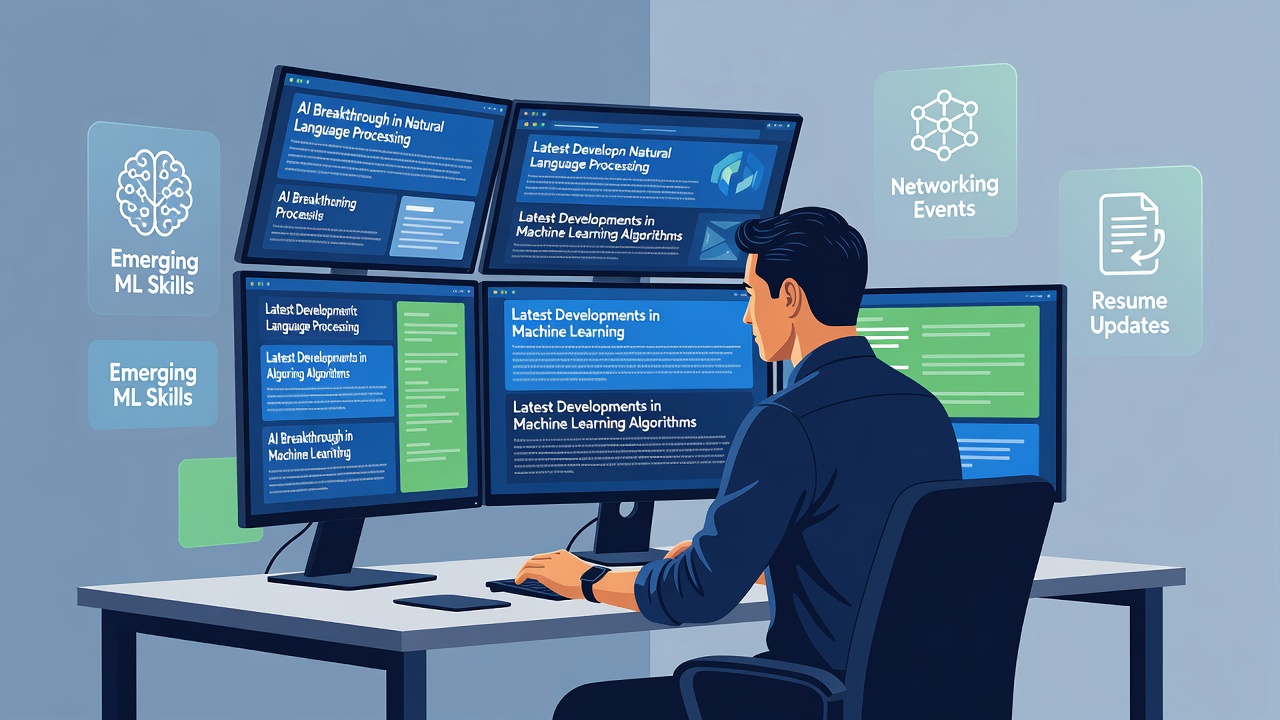
In 2026, machine learning professionals face a rapidly evolving landscape where staying informed through real-time AI news is essential for career advancement. This approach moves beyond traditional education to provide actionable insights that align with industry demands. By monitoring developments in AI, practitioners can identify high-value skills, seize networking opportunities, and refine their professional profiles effectively. The pace of innovation means that what was cutting-edge last quarter may already be standard practice, making continuous news consumption a strategic necessity rather than an optional activity.
Real-time AI news sources deliver updates on breakthroughs, regulatory changes, and market shifts that directly influence hiring trends and skill requirements. Professionals who integrate these insights into their development strategies often experience faster promotions and successful pivots into specialized roles. For example, early awareness of new regulatory requirements around AI transparency can position someone as the go-to expert in compliance-focused teams. This proactive stance helps individuals stand out in competitive job markets where employers seek candidates who demonstrate awareness of the latest developments.
Furthermore, AI news provides context that formal education often lacks, such as real-world deployment challenges and case studies from leading organizations. This bridges the gap between theory and practice, enabling more informed career decisions throughout the year.
Identifying Emerging ML Skills from AI News Sources
AI news frequently highlights new techniques and tools gaining traction. For instance, reports on multimodal models and efficient inference methods signal demand for expertise in areas like model optimization and ethical AI deployment. Reading sources such as research announcements helps practitioners prioritize skills like reinforcement learning from human feedback or federated learning setups. News on agentic AI systems, which can autonomously perform complex tasks, indicates rising interest in orchestration frameworks and multi-agent architectures that professionals should master quickly.
To extract value, focus on recurring themes across multiple outlets. News about regulatory frameworks in the EU or US often points to growing needs for compliance-aware ML engineering. This targeted approach ensures your learning aligns with what employers seek in 2026. Additional skills frequently mentioned include robust evaluation metrics for generative models, privacy-preserving machine learning techniques, and integration of AI with edge computing devices. By tracking these patterns, you can build a personalized learning roadmap that emphasizes high-impact areas over fleeting hype.
Practical Steps for Curating AI News Feeds
- Subscribe to reputable newsletters from organizations like arXiv and major tech labs for daily digests that summarize the most relevant papers and announcements.
- Set up alerts on platforms covering AI policy and enterprise applications to catch early signals about funding trends and regulatory shifts before they become mainstream topics.
- Use RSS aggregators to combine updates from academic, industry, and startup perspectives without information overload, filtering for keywords such as "career," "hiring," and "new skills."
- Schedule weekly reviews to categorize news into skills, tools, and opportunities for immediate application, then document key takeaways in a personal knowledge base.
- Engage with community discussions on emerging platforms to validate interpretations of news items and discover hidden opportunities not covered in mainstream reporting.
These steps create a sustainable habit that keeps your knowledge current without consuming excessive time, allowing you to dedicate the majority of your efforts to hands-on experimentation.
Networking Opportunities Highlighted in Recent Reports
AI news often covers conferences, webinars, and collaborative projects that serve as networking hubs. Reports on events like NeurIPS or industry summits reveal openings for virtual participation and follow-up connections. Engaging in these spaces can lead to mentorships or job referrals that accelerate career trajectories significantly. News about open calls for contributions to collaborative benchmarks or datasets provides concrete entry points for building visibility within the community.
Successful networkers track news about open-source contributions or startup funding rounds, then reach out with relevant insights. This news-driven method builds authentic relationships faster than generic LinkedIn outreach. For instance, commenting thoughtfully on a newly published paper shared in industry roundups can attract attention from authors and recruiters alike.
Adapting Resumes Based on Industry Trends
Translate news insights into resume bullet points by quantifying achievements with trending technologies. For example, mention projects involving the latest efficient transformers if news emphasizes their adoption in production environments. Tailor keywords to match emerging job descriptions influenced by recent breakthroughs, such as incorporating terms like "multimodal integration" or "responsible AI governance."
Update sections on continuous learning to reference specific news-driven experiments, demonstrating proactive adaptation rather than static credentials. Include metrics where possible, such as performance improvements achieved after implementing techniques discussed in recent reports. This approach makes your resume more dynamic and reflective of current industry priorities.
Comparison of Traditional vs. News-Driven Learning Paths
- Traditional Path: Relies on structured courses and degrees, offering foundational depth but slower response to market changes; ideal for building core mathematical understanding yet may lag behind rapid tool evolution.
- News-Driven Path: Incorporates real-time updates for agile skill acquisition, enabling quicker pivots but requiring strong self-discipline to filter noise and distinguish signal from hype.
Many professionals combine both for optimal results, using news to supplement formal training and stay ahead of 2026 trends. This hybrid model maximizes both theoretical rigor and practical relevance.
Examples of Successful Career Pivots
Consider a data analyst who followed news on generative AI applications and transitioned into prompt engineering roles at a fintech firm within six months by building a portfolio of experiments inspired by newly released model architectures. Another example involves a software engineer who used reports on edge AI to pivot into embedded ML positions, securing a role at a hardware company by showcasing self-directed projects inspired by recent publications on efficient inference.
A third case features a research assistant who leveraged coverage of AI safety initiatives to move into governance-focused positions at a policy think tank, using news summaries to prepare targeted presentations for interviews. These cases illustrate how consistent news monitoring creates tangible career momentum through targeted experimentation and visibility.
Mistakes to Avoid When Using AI News for Career Growth
One common pitfall is chasing every new trend without evaluating long-term viability, leading to scattered skill development. Another mistake involves neglecting foundational knowledge in favor of flashy tools highlighted in headlines. Professionals should also avoid passive consumption without applying insights through personal projects or contributions. Finally, failing to verify news claims against primary sources like Nature can result in misinformation that harms credibility during interviews.
FAQs on Common Challenges
How do beginners start without feeling overwhelmed?
Begin with curated daily summaries from established AI outlets and dedicate 20 minutes daily to one actionable takeaway, gradually expanding to deeper dives as familiarity grows.
What about mid-level practitioners facing skill plateaus?
Use news on advanced topics like causal inference or AI safety to identify niche specializations and contribute to related open discussions or benchmark challenges.
How to measure the impact of news-driven strategies?
Track metrics such as new connections made, skills applied in projects, and interview invitations received after implementing insights from sources including arXiv.
Can news-driven learning replace formal education entirely?
While powerful for agility, it works best alongside foundational study to ensure depth and the ability to innovate beyond current trends.
Conclusion
Leveraging 2026 AI news for machine learning career growth requires consistent curation, strategic application, and a balance between traditional foundations and agile learning. By following the outlined steps, avoiding common pitfalls, and drawing from real-world examples, professionals at any stage can accelerate their advancement and remain competitive in this dynamic field. The key lies in treating news not as background noise but as a primary driver of informed, timely career decisions.

No comments yet. Be the first!