 NeoBit Daily

As we approach 2026, artificial intelligence tools are poised to fundamentally reshape machine learning development across industries. This forward-looking analysis draws on recent announcements and expert insights to help organizations prepare strategic ML roadmaps that anticipate rapid technological change. Machine learning practitioners and business leaders alike must understand these shifts to maintain competitive advantage in an era where AI capabilities evolve at an unprecedented pace.
The Current Landscape of AI in Machine Learning
Today, machine learning relies heavily on frameworks like TensorFlow and PyTorch, combined with cloud platforms for training and deployment. While powerful, these tools often require significant manual tuning and expertise from data scientists. Early adopters in sectors such as healthcare and finance are already experimenting with automated feature engineering, setting the stage for broader transformation. Current limitations include lengthy experimentation cycles, challenges with data quality, and difficulties scaling models to production environments without extensive engineering support. Many organizations still depend on specialized teams to handle everything from data preprocessing to model monitoring, creating bottlenecks that slow innovation.
Key Predictions for 2026
Experts anticipate several major shifts that will redefine how machine learning projects are executed. First, hyper-automated ML pipelines will reduce the need for extensive coding by introducing intelligent agents that handle repetitive tasks autonomously. Second, multimodal models will become standard, processing text, images, and sensor data simultaneously to deliver richer insights. Third, edge-optimized AI tools will enable real-time inference on devices with limited connectivity, moving computation closer to data sources. Additional forecasts include the rise of self-optimizing systems that adapt to changing data patterns without human intervention and the integration of generative capabilities directly into core ML workflows for creating synthetic training datasets on demand.
- Automation of model selection and hyperparameter tuning reaching near full autonomy, allowing teams to focus on strategic objectives rather than technical minutiae
- Seamless integration of generative AI for synthetic data creation, addressing privacy concerns while expanding dataset diversity
- Enhanced explainability features built directly into core platforms, making complex models more transparent to non-technical stakeholders
- Widespread adoption of collaborative AI agents that partner with human experts throughout the development lifecycle
Integration Challenges Ahead
Despite the promise, teams will face hurdles including data privacy compliance, legacy system compatibility, and the persistent skills gap in AI talent. Organizations must invest in upskilling programs while navigating evolving regulations around AI governance. Integration with existing infrastructure often reveals hidden complexities, such as incompatible data formats or security protocols that demand custom solutions. Furthermore, ensuring ethical use of automated systems requires new oversight mechanisms that many companies have yet to establish. Addressing these challenges early through pilot programs and cross-departmental collaboration will be essential for smooth transitions.
New Capabilities on the Horizon
Predicted advancements include self-healing models that automatically detect and correct drift, as well as collaborative AI agents that work alongside human data scientists. These capabilities will accelerate innovation cycles dramatically by reducing downtime and enabling continuous improvement. Additional emerging features encompass real-time bias detection during training, automated compliance checking against industry standards, and advanced simulation environments that allow teams to test models under thousands of hypothetical scenarios before deployment. Such tools promise to elevate machine learning from a specialized discipline to a more accessible and reliable business function.
Current Tools vs. 2026 Advancements
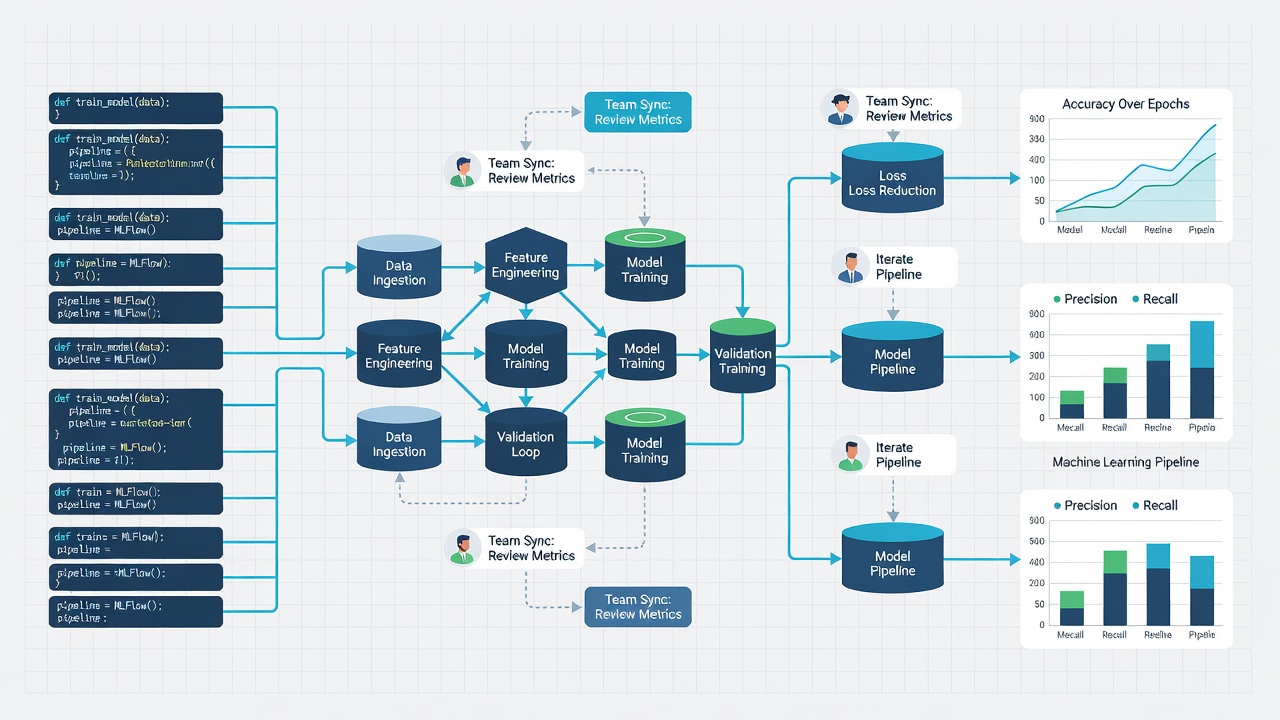
Compared to today’s manual workflows, 2026 tools are expected to deliver end-to-end automation with minimal intervention. For example, what now takes weeks of experimentation may compress into hours through intelligent orchestration layers. Current platforms require constant human oversight for tasks like feature selection and performance tuning, whereas future iterations will incorporate proactive recommendations powered by meta-learning algorithms. The gap between early-stage prototyping and production deployment will narrow significantly, democratizing access to sophisticated ML techniques for smaller organizations that previously lacked resources.
Real-World Early Adopters
Leading technology companies such as those using OpenAI platforms are already piloting predictive maintenance models that forecast equipment failures with high accuracy. Similarly, research institutions leveraging Google AI resources demonstrate faster iteration on climate modeling projects, achieving breakthroughs in predictive accuracy. Manufacturing firms adopting IBM Watson solutions report improved anomaly detection rates, leading to reduced downtime and cost savings. Healthcare providers experimenting with multimodal AI systems have begun integrating patient records with imaging data to support more precise diagnostic tools, illustrating the practical benefits of these emerging technologies in high-stakes environments.
Practical Steps for Teams to Evaluate Tools
To prepare effectively, organizations should follow a structured evaluation process. Begin by conducting an internal audit of current ML workflows and identify automation gaps that could benefit most from new tools. Next, pilot emerging tools in controlled environments with clear success metrics such as reduced development time or improved model accuracy. Establish cross-functional teams including ethics and compliance experts to review potential risks throughout testing phases. Monitor industry benchmarks from authoritative sources and adjust roadmaps quarterly to stay aligned with technological progress. Additionally, invest in training sessions that familiarize staff with upcoming interfaces and encourage knowledge sharing across departments. Document lessons learned from each pilot to build an internal repository of best practices that informs future decisions.
Potential Risks and Mitigation Strategies
While the benefits are substantial, risks such as model opacity, data security vulnerabilities, and over-dependence on vendor ecosystems must be managed proactively. Mitigation involves implementing robust auditing frameworks, maintaining hybrid human-AI oversight during critical phases, and diversifying tool selections to avoid single points of failure. Regular scenario planning exercises can help teams anticipate edge cases where automated systems might underperform.
FAQ
When will most organizations adopt these AI tools?
Adoption timelines vary, but leading enterprises are expected to integrate core capabilities by mid-2026, with broader rollout following shortly after as tools mature and case studies proliferate across sectors.
What are the primary risks of early adoption?
Key risks include over-reliance on unproven automation, potential bias amplification in training data, and increased computational costs during transition periods that may strain budgets initially.
How can smaller teams stay competitive?
Smaller teams should focus on open-source ecosystems and cloud-based managed services to access advanced features without heavy infrastructure investment, while prioritizing targeted upskilling initiatives.
Will these changes eliminate the need for human data scientists?
No, human expertise will remain vital for interpreting results, defining business objectives, and ensuring ethical alignment, even as routine tasks become increasingly automated.
Conclusion
The evolution of AI tools in 2026 promises unprecedented efficiency and creativity in machine learning. By understanding these trends and taking proactive steps, organizations can position themselves for success in an increasingly intelligent technological landscape while mitigating associated risks through careful planning and continuous evaluation.

No comments yet. Be the first!