 NeoBit Daily
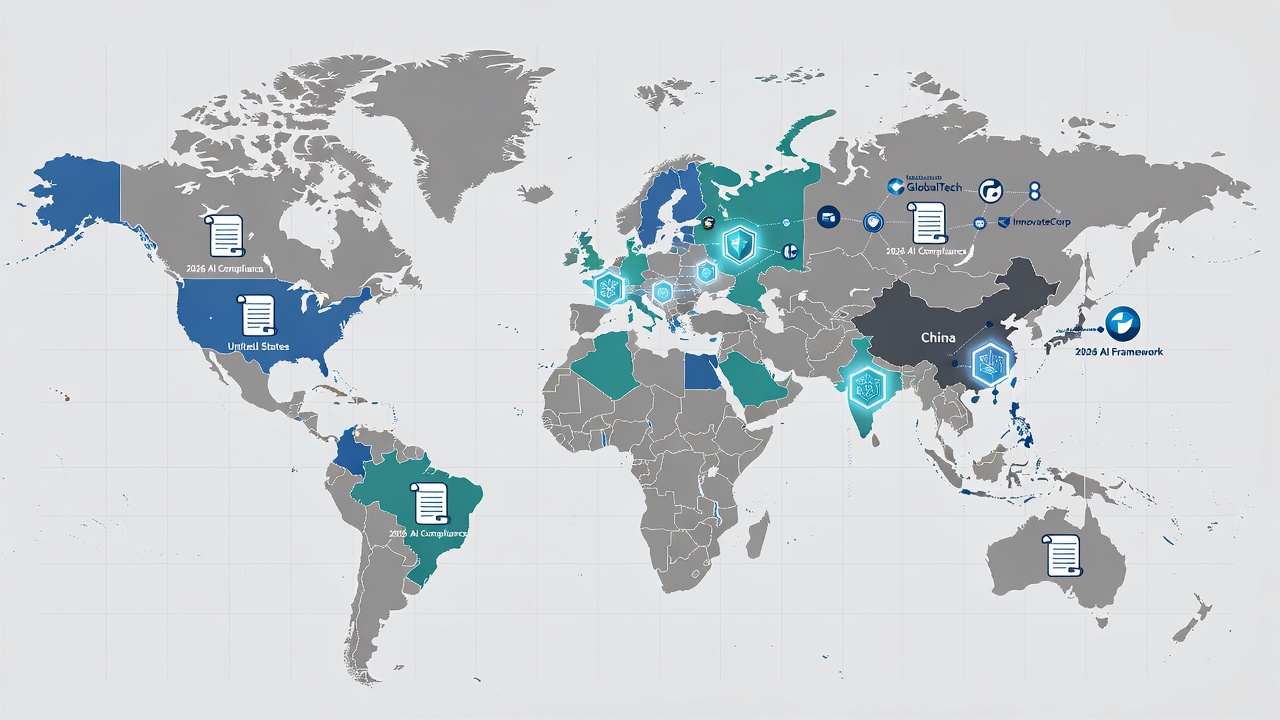
Introduction to 2026 AI Regulatory Landscape
The year 2026 marks a pivotal shift in artificial intelligence governance, with major economies implementing comprehensive frameworks that directly influence how tech companies develop, deploy, and scale AI solutions. These regulations aim to balance innovation with ethical considerations, data privacy, and public safety. Businesses must navigate varying compliance requirements across regions to maintain market access and competitive advantage. As AI technologies become more embedded in everyday applications from healthcare diagnostics to financial services, regulators are responding with rules that demand greater accountability from developers and deployers alike. This evolving landscape requires companies to rethink product roadmaps, invest in legal expertise, and foster cross-border collaboration to avoid costly disruptions.
This article examines key policies from the United States, European Union, and Asia, compares their approaches, and provides real-world examples of corporate adaptation. It also covers impacts on innovation, market barriers, and consumer protections, along with actionable preparation steps and upcoming deadlines. By understanding these shifts in depth, organizations can position themselves not only for compliance but also for sustainable growth in a regulated environment.
Key Policies Across Major Regions
United States: Sectoral and Executive-Driven Approach
The US continues to favor a sectoral regulatory model supplemented by executive orders. In early 2026, updates to the AI Risk Management Framework emphasize transparency in high-risk applications such as healthcare and autonomous systems. Federal agencies like the FTC and NIST enforce guidelines on algorithmic bias and data usage. White House AI initiatives promote voluntary standards while pushing for legislation on national security implications. Additional focus areas include requirements for federal contractors to disclose AI usage in procurement processes and emerging state-level laws in California and New York that address automated decision-making in employment and lending. Companies operating across states must reconcile these overlapping rules with federal guidance to prevent enforcement actions.
European Union: The AI Act Implementation
The EU's AI Act, fully phased in during 2026, classifies AI systems by risk levels with strict obligations for prohibited, high-risk, and limited-risk categories. Companies must conduct conformity assessments, maintain technical documentation, and ensure human oversight. Fines can reach up to 6% of global turnover for violations. This creates a harmonized market but raises entry barriers for smaller innovators. The regulation also introduces obligations for general-purpose AI models, requiring providers to document training data summaries and implement copyright protections. Organizations are now required to appoint AI compliance officers and conduct regular impact assessments, particularly when deploying systems that interact directly with EU citizens.
Asia: Diverse National Strategies
Asia presents a patchwork of regulations. China's 2026 AI Safety Regulations focus on content moderation and algorithmic recommendation transparency. Japan's updated AI Guidelines encourage ethical AI through industry self-regulation, while Singapore strengthens its Model AI Governance Framework with mandatory audits for public sector deployments. OECD AI Policy Observatory tracks these developments across the region. In India, draft rules emphasize data localization for AI training datasets, while South Korea has introduced incentives for companies that voluntarily adopt ethical AI certifications. This diversity means multinational firms must tailor their strategies country-by-country rather than applying a single regional template.
Comparing Compliance Requirements
US requirements prioritize risk assessments and sector-specific rules, offering more flexibility but less uniformity. The EU demands rigorous documentation and third-party audits, making compliance resource-intensive. Asian frameworks range from prescriptive (China) to collaborative (Japan), often tying compliance to data localization and national security reviews. Common threads include bias mitigation, transparency reporting, and accountability mechanisms. A detailed comparison reveals that while the EU focuses on pre-market approvals for high-risk systems, the US emphasizes post-deployment monitoring. Asian approaches frequently incorporate cultural and national security considerations, such as restrictions on foreign data transfers. Businesses benefit from mapping these differences early to create unified compliance playbooks that can be adapted regionally.
Case Studies of Corporate Adaptation
Leading firms are proactively adjusting. A major US cloud provider redesigned its generative AI tools to include built-in audit logs and user consent flows to meet EU standards. An Asian e-commerce giant implemented region-specific model training protocols to comply with China's content rules while expanding into European markets. These adaptations involved cross-functional teams of legal, engineering, and ethics experts. Another example comes from a European fintech company that partnered with local regulators to pilot a sandbox environment for testing AI credit-scoring models, resulting in faster approvals and reduced legal risks. A global semiconductor firm established dedicated AI ethics boards in each major market to oversee product development, ensuring alignment with local transparency mandates. These cases illustrate how early investment in governance structures can turn regulatory challenges into competitive differentiators.

Impacts on Innovation, Market Entry, and Data Protection
Stricter rules are slowing time-to-market for experimental AI features, particularly in high-risk sectors. Market entry barriers have risen for startups lacking compliance budgets, favoring established players. Consumer data protections have strengthened through mandatory privacy-by-design principles, reducing unauthorized data scraping and enhancing user rights to explanation and opt-out. Innovation is shifting toward safer, more explainable AI models, with increased collaboration between academia and industry on responsible development practices. Smaller companies are exploring open-source compliance toolkits to lower costs, while larger enterprises are acquiring specialized startups focused on regulatory technology. Data protection enhancements include stricter consent mechanisms and requirements for data minimization, leading to more trustworthy consumer experiences but also higher operational overhead for data management teams.
Practical Insights: Deadlines and Preparation Steps
Organizations should treat regulatory readiness as an ongoing program rather than a one-time project. Key actions include:
- Monitor Q3 2026 deadlines for EU high-risk system registrations and prepare detailed technical files well in advance.
- Conduct internal AI audits using frameworks from NIST and OECD to identify gaps in bias detection and documentation practices.
- Invest in scalable compliance tooling and staff training programs that cover both technical and legal aspects of AI deployment.
- Establish regional legal review boards for product launches to ensure timely adaptation to new guidance.
- Engage with regulators through public consultations to shape evolving rules and gain early insights into enforcement priorities.
- Develop incident response plans specifically tailored to AI-related compliance breaches, including notification timelines and remediation protocols.
Additional preparation involves scenario planning for potential regulatory changes and building relationships with third-party auditors who specialize in AI assessments.
Conclusion
2026 AI regulations are fundamentally reshaping global tech standards, requiring strategic foresight from developers and executives alike. Companies that prioritize proactive compliance will not only avoid penalties but also build greater trust with consumers and partners. By integrating regulatory considerations into core business processes, organizations can navigate this complex environment while continuing to drive meaningful innovation.
FAQs
What are the biggest compliance challenges for AI developers?
Navigating differing risk classifications and documentation standards across jurisdictions remains the primary hurdle, often requiring significant investment in specialized legal and technical resources.
How will these rules affect smaller AI startups?
Startups may face higher costs, potentially leading to consolidation or partnerships with larger firms that have compliance infrastructure already in place.
Are there resources for staying updated on deadlines?
Official government portals and international bodies like the OECD provide regular updates on policy timelines and offer guidance documents for businesses.
What role does data localization play in Asian regulations?
Many Asian jurisdictions require that AI training data be stored domestically, which can increase infrastructure costs and complicate global model development efforts.
How can executives measure regulatory readiness?
Executives should track metrics such as audit completion rates, employee training completion, and the number of products reviewed by internal compliance teams on a quarterly basis.


No comments yet. Be the first!