 NeoBit Daily

Introduction to Real-World Accuracy Testing for Runners
In 2026, runners demand more than basic step counts from their wearables. Accurate GPS tracking, reliable heart rate monitoring, and meaningful recovery insights can make or break training plans. This guide delivers proven field protocols tailored for runners to validate device performance under real conditions like interval sessions and long runs. Field testing goes beyond manufacturer claims by accounting for variables such as uneven terrain, changing weather, and individual running mechanics that lab environments simply cannot replicate. Whether training for a marathon or improving 5K times, trustworthy data empowers better decisions about pacing, intensity, and rest.
Many runners rely on smartwatches and fitness bands without questioning their readings until inconsistencies appear during races. By implementing structured protocols, you can quantify accuracy and identify the best device for your specific needs. These methods draw from established practices in sports science and have been refined for modern 2026 hardware featuring multi-band GNSS and advanced optical sensors.
Core Metrics to Evaluate: GPS, Heart Rate, and Recovery
GPS accuracy determines pace and distance reliability, especially on winding trails where satellite visibility fluctuates. Heart rate sensors must handle motion artifacts during high-intensity efforts without dropping or spiking erroneously. Recovery metrics, often derived from heart rate variability and sleep data, guide rest days and prevent overtraining by estimating readiness for subsequent workouts.
Start by establishing a baseline route: a 5 km loop with known distances verified via GPS.gov. Repeat tests across multiple devices on the same day to minimize variables like satellite constellation changes. Additional metrics worth tracking include cadence consistency and elevation gain, as these influence overall training load calculations.
Understanding the Technology Behind 2026 Wearables
Modern devices combine dual-frequency GPS with inertial measurement units to reduce drift in challenging environments. Optical heart rate sensors use multiple LEDs and photodiodes to penetrate deeper into skin tissue, improving signal quality during dynamic movements. Recovery algorithms integrate these inputs with machine learning models trained on large athlete datasets, but individual physiological differences can still introduce variance. Understanding these components helps explain why one watch excels in open-road intervals while another performs better on technical trails.
Step-by-Step Field Protocols for Interval Sessions
- Choose a flat 400-meter track or measured road segment free of overhead obstructions.
- Warm up for 10 minutes at easy pace while allowing full GPS satellite acquisition.
- Perform 6 x 400m intervals at 5K race pace with 2-minute recoveries, maintaining consistent effort.
- Record GPS distance, average pace, and heart rate zones for each repeat, noting any signal loss.
- Compare device readings against a calibrated measuring wheel or trusted reference device after each set.
- Repeat the full protocol three times over different days and weather conditions to assess consistency under varied loads.
During these sessions, pay close attention to pace drift in later intervals, which often signals GPS multipath issues. Top devices in recent tests show GPS errors under 2% on open terrain, but urban or forested areas can double that deviation. Example: a runner completing intervals on a standard track might see one device report 398 meters while another reads 412 meters, highlighting the need for calibration adjustments.
Protocols for Long Runs and Endurance Testing
Long runs expose cumulative drift in GPS and battery-related sensor degradation over time. Select a 15-20 km route mixing roads and trails with varied elevation. Enable all metrics including cadence, stride length, and elevation. Mark checkpoints every 5 km using physical landmarks or a secondary GPS app for reference. At each point, note manual splits using a reliable timer app. Post-run, analyze total distance error, heart rate drift patterns, and how recovery scores align with subjective fatigue logged in a training diary. This extended testing reveals whether a device maintains accuracy after two hours of continuous use.
Side-by-Side Device Comparisons
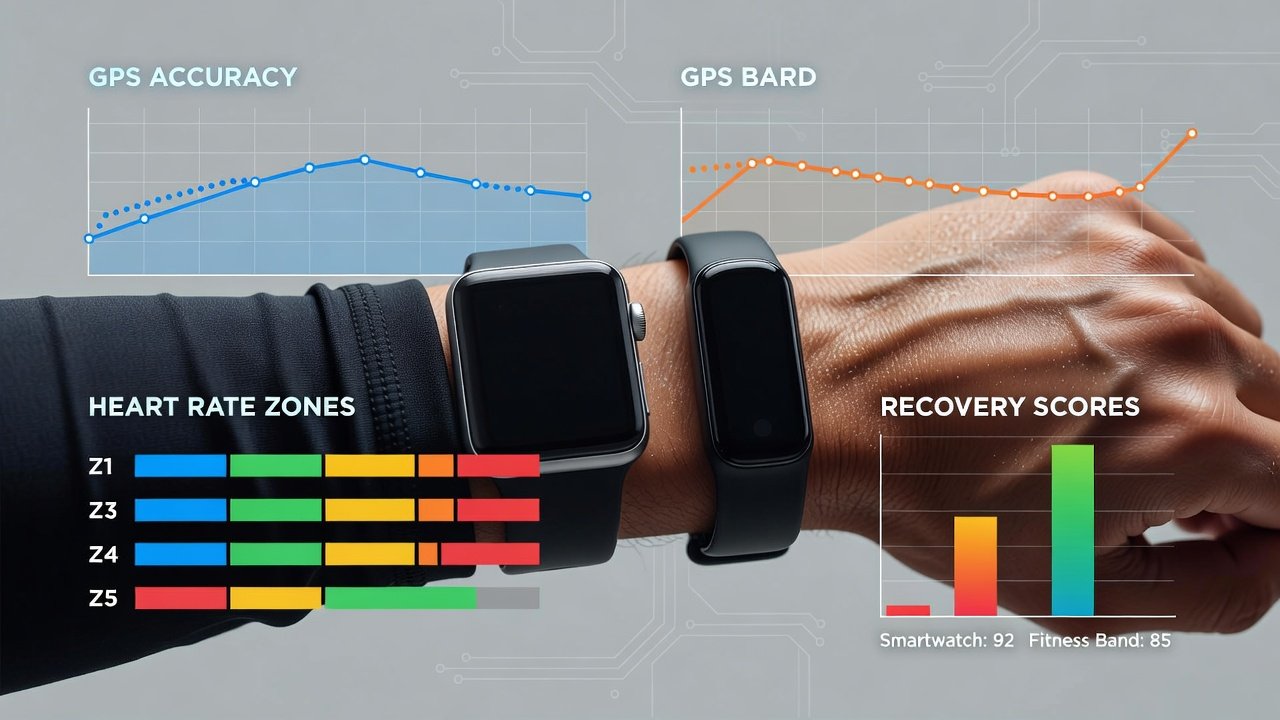
During interval sessions, devices like the latest Garmin and Apple models often lead in GPS lock speed and minimal pace variance, while budget bands lag in heart rate accuracy during sprints due to poorer sensor placement. On long runs, premium watches maintain better elevation data thanks to multi-band GPS and barometric altimeters. Cross-reference heart rate zones with American Heart Association guidelines for zone training to ensure physiological validity. Real-world examples show certain 2026 flagships reducing distance error by up to 1.5% compared to single-band predecessors when tested on the same route.
Data Export Tips and Integration
Export raw data via manufacturer apps or third-party platforms for deeper analysis. Use formats like FIT or GPX for detailed review in tools such as TrainingPeaks or GoldenCheetah. Enable automatic cloud sync to preserve sessions across devices. Check for firmware updates monthly, as these frequently refine sensor fusion algorithms and improve recovery predictions. Advanced users can import data into spreadsheets to calculate custom error percentages across multiple activities.
Common Calibration Errors to Avoid
- Skipping a proper GPS lock before starting activity, leading to initial distance inaccuracies.
- Wearing the device too loosely, causing heart rate dropouts during high-cadence efforts.
- Ignoring firmware updates that refine sensor fusion algorithms and correct known bugs.
- Testing only in ideal conditions without accounting for tree cover, urban canyons, or temperature extremes.
- Failing to reset baseline metrics after software updates, which can skew recovery trend analysis.
- Over-relying on auto-calibration features without manual verification against known distances.
Practical Checklists for Immediate Use
Pre-Run Checklist
- Charge device to 100% and confirm latest firmware version is installed.
- Calibrate compass and altimeter if the model supports manual adjustment.
- Secure strap snugly two fingers above the wrist bone for optimal sensor contact.
- Enable multi-band GPS, optical heart rate, and any additional sensors required.
- Review recent activity history to ensure no lingering calibration offsets remain.
Post-Run Checklist
- Verify total distance against known route measurements immediately after finishing.
- Export session files within 24 hours to prevent data loss from device resets.
- Compare recovery score with subjective fatigue rating noted in a training log.
- Note any anomalies such as sudden heart rate spikes or GPS jumps in a dedicated spreadsheet.
- Cross-check elevation gain against topographic maps for additional validation.
FAQ: Altitude and Weather Impacts
How does altitude affect GPS accuracy? Higher elevations can weaken satellite signals and increase multipath errors from surrounding peaks. Test at varying altitudes and allow extra lock time before beginning activities.
Do extreme temperatures impact heart rate readings? Cold weather may reduce skin contact conductivity and blood flow to extremities. Wear a thin base layer or warm the wrist beforehand. Hot conditions increase sweat interference, so clean sensors regularly with a soft cloth.
Can rain or snow degrade recovery metrics? Moisture rarely affects optical sensors directly, but wet conditions may alter running form and thus introduce indirect data variance. Cross-check with perceived exertion from World Health Organization activity guidelines for context.
What about battery life during extended tests? Prolonged runs in cold weather drain batteries faster, potentially affecting sensor sampling rates and overall accuracy in later miles.
Conclusion
Implementing these runner-specific protocols transforms generic wearable reviews into personalized accuracy audits. By focusing on field tests, detailed comparisons, error avoidance strategies, and thorough data practices, you gain confidence in your 2026 device's readings for smarter training decisions. Start with one protocol this week, document your findings, and iterate as you incorporate new devices or routes. Consistent application of these methods ensures your metrics remain reliable throughout the season.

No comments yet. Be the first!