 NeoBit Daily

Introduction: Why Accuracy Matters for Digital Nomads
Digital nomads depend on wearables to manage navigation, track fitness metrics, maintain productivity schedules, and ensure personal safety while moving between countries. Inaccurate GPS readings or rapid battery drain can lead to missed connections, lost productivity in co-working spaces, or even safety risks in unfamiliar regions. This comprehensive guide expands on proven traveler testing methods with detailed protocols specifically designed for 2026 international lifestyles. It covers real-world evaluations of GPS drift during border crossings, offline mapping reliability without Wi-Fi, multi-day battery endurance under flight and desk conditions, and consistent heart-rate monitoring amid varying stress levels. Focus remains on practical side-by-side comparisons of Garmin, Apple Watch, and Samsung Galaxy Watch models, plus strategies for seamless data syncing in connectivity-challenged environments. By following these methods, nomads can make informed device selections and optimize performance for long-term travel.
The testing approach emphasizes repeatable, border-agnostic steps that simulate actual nomadic routines rather than controlled lab environments. Examples include walking through crowded markets in Southeast Asia or hiking remote trails in South America while logging deviations. These protocols help identify which devices maintain precision when satellite signals weaken due to urban canyons or high-altitude flights.
Core Testing Protocols for GPS and Battery
Establish baselines before departure by performing initial measurements in a familiar home location. Use a secondary smartphone GPS application for cross-verification and record environmental factors like weather and terrain. This foundation allows accurate comparison once travel begins.
Measuring GPS Drift Step by Step
Start each test by acquiring a satellite lock and noting initial coordinates. Walk or travel a predetermined route of at least 10 kilometers, marking checkpoints every two kilometers. Upon completion, calculate positional drift by comparing wearable data against verified landmarks sourced from official GPS resources. Repeat the process across different time zones to evaluate how quickly devices reacquire signals after airplane mode sessions. Common pitfalls include failing to disable location spoofing apps or neglecting to account for multipath interference from tall buildings.
Offline Mapping Evaluation in Detail
Pre-download regional maps while connected to stable Wi-Fi. Then disable all network connections and navigate a 50-kilometer loop that includes both city streets and rural paths. Document any instances where the device suggests incorrect turns or fails to update position in real time. Test rerouting during unexpected detours, such as road closures common in developing regions.
Multi-Day Battery Performance Assessment
Fully charge the wearable and activate standard features including continuous heart-rate tracking, GPS for activity sessions, and always-on display where available. Log battery percentage at the start of each day and after key activities like a 12-hour flight or eight-hour co-working block. Extend testing to 72 hours minimum to mirror typical nomad itineraries involving layovers and remote work. Note how features like sleep tracking or notifications impact overall endurance.
Side-by-Side Device Tests and Comparisons
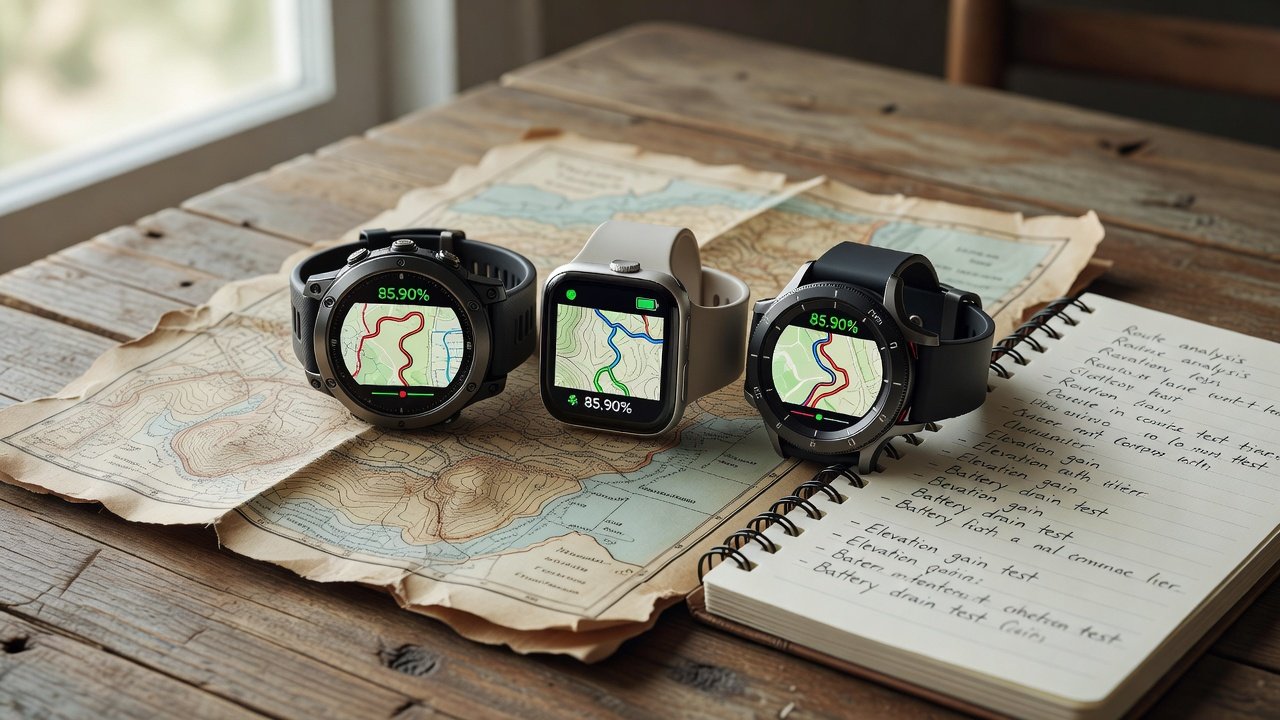
Three flagship wearables underwent identical 2026 travel simulations involving flights, urban exploration, and stationary work periods. Garmin Fenix models demonstrated superior multi-day battery retention, sustaining mixed GPS and sensor use for up to two weeks in extended trials. Heart-rate consistency remained high during co-working sessions with minimal deviation from chest-strap references.
Apple Watch Ultra performed reliably for heart-rate tracking during altitude changes on flights but required more frequent charging, often every 24 to 36 hours under heavy use. Its offline map integration proved intuitive for city navigation yet showed occasional lag in rural areas.
Samsung Galaxy Watch delivered balanced results with strong offline mapping capabilities but exhibited slight GPS drift in dense urban environments. Battery life averaged five to seven days depending on feature activation. Direct comparisons revealed Garmin as the choice for extended off-grid adventures, while Apple excelled in ecosystem integration for users already invested in iOS devices. Samsung offered competitive value for Android users needing robust mapping features.
Additional tests included heart-rate monitoring during high-stress co-working scenarios and recovery tracking post-flight. Mistakes to avoid include ignoring firmware updates before travel, which can affect accuracy algorithms.
Data Syncing Without Local Wi-Fi
Many nomad destinations lack dependable public Wi-Fi, making offline syncing essential. Pair wearables via Bluetooth to a smartphone and enable automatic data caching within native apps. Once a mobile hotspot becomes available, uploads occur seamlessly to cloud services. Garmin Connect supports robust offline storage, while Apple Health provides similar functionality across ecosystems. Samsung users benefit from the Galaxy Wearable app's caching options. Troubleshooting common issues involves clearing Bluetooth caches or restarting devices when sync stalls after international flights.
Traveler Case Studies with Practical Insights
Case 1: A freelance graphic designer tested devices across multiple Southeast Asian islands. Garmin maintained precise GPS tracking during inter-island ferry journeys where signals fluctuated, allowing accurate distance logging for client project timelines. Battery lasted the full two-week trip without recharging.
Case 2: A software developer relied on an Apple Watch during a 14-hour transatlantic flight followed by immediate co-working. Heart-rate data remained consistent despite cabin pressure changes, though battery prompted a recharge within 30 hours. Data exported smoothly to productivity tools once Wi-Fi resumed.
Case 3: A content creator using a Samsung Galaxy Watch navigated dense South American cities. Offline maps prevented disorientation during market visits, but minor GPS drift required manual corrections. Battery performance supported daily 10-kilometer walks plus evening reviews.
Case 4: A digital marketer combined all three devices in a hybrid test across Europe, confirming Garmin for long-haul reliability, Apple for quick health insights, and Samsung for mapping depth.
Printable Accuracy Checklist
- Confirm GPS satellite lock within 30 seconds of device startup in open areas.
- Record battery levels at 24-hour intervals during mixed activity days.
- Validate heart-rate readings against a secondary monitor during varied exertion.
- Verify full offline map functionality over routes exceeding 50 kilometers.
- Execute Bluetooth-only data syncs and confirm successful cloud uploads later.
- Test signal reacquisition after simulated flight conditions using airplane mode.
- Document any drift exceeding 50 meters from known checkpoints.
Common Accuracy Complaints and Expanded FAQ
How do I reduce GPS drift during long flights?
Activate airplane mode while keeping Bluetooth enabled for sensor continuity, then recalibrate the device indoors immediately after landing to reset satellite references.
Which wearable provides the longest battery for multi-country trips?
Garmin Fenix series consistently leads in endurance tests spanning multiple days of intermittent GPS and continuous monitoring.
Can data sync reliably across borders without Wi-Fi?
Yes, through smartphone Bluetooth pairing and app caching, followed by hotspot uploads; refer to Samsung support resources for model-specific guidance.
What causes heart-rate inconsistencies in co-working environments?
Movement artifacts from typing or stress-induced variations often skew readings; cross-reference with resting periods and firmware updates to improve consistency.
How should nomads prepare devices for varying climates?
Adjust power-saving modes based on temperature extremes and test battery drain in both hot and cold conditions prior to departure.
Conclusion
Applying these expanded testing protocols and insights equips digital nomads with dependable wearable performance regardless of destination. Regular calibration, careful feature management, and strategic syncing ensure devices support rather than hinder mobile professional workflows. Review results periodically as firmware evolves to maintain optimal accuracy throughout 2026 travels.

No comments yet. Be the first!