 NeoBit Daily
Introduction to Quantum Threats in Immersive Retail
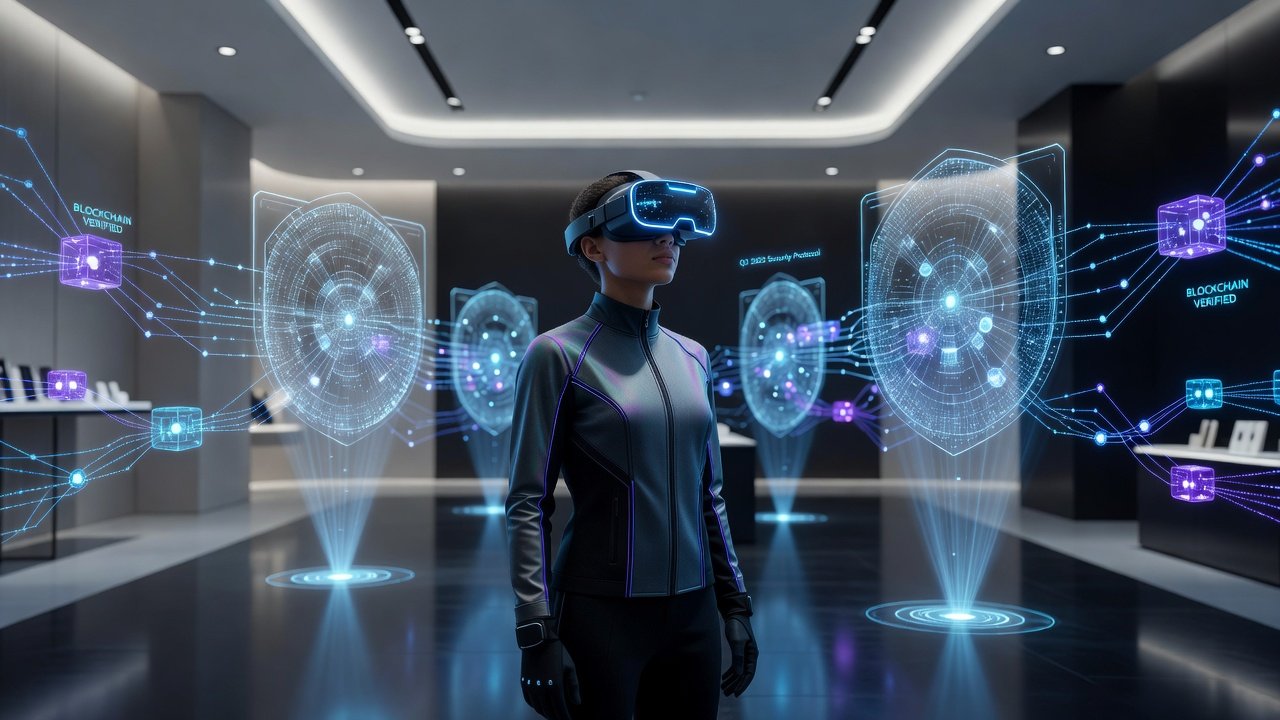
Virtual and augmented reality platforms are transforming retail by enabling immersive shopping experiences like virtual try-ons and interactive showrooms. However, the rise of quantum computing poses significant risks to traditional encryption methods used in these environments. By 2026, retailers must adopt quantum-resistant security measures to protect user data and transactions. This guide provides practical steps for developers and enterprise teams to integrate post-quantum cryptography with blockchain ledgers in VR retail systems. Quantum computers threaten to break widely used algorithms, potentially exposing sensitive customer information collected during virtual interactions such as body measurements, payment credentials, and browsing histories in simulated stores.
Understanding the Need for Quantum-Resistant Encryption
Quantum computers threaten current public-key cryptography standards such as RSA and ECC. In VR retail, this vulnerability could expose customer biometrics, payment details, and personalized shopping data collected during virtual sessions. Post-quantum algorithms like lattice-based and hash-based schemes offer resistance while maintaining performance in resource-intensive immersive environments. Retailers adopting VR must consider how quantum attacks could compromise entire platforms, leading to data breaches that erode consumer trust. For instance, a single compromised session in a virtual fitting room could reveal private preferences and financial details across thousands of users simultaneously.
Integrating Quantum-Resistant Encryption with Blockchain Ledgers
Blockchain provides immutable transaction records ideal for VR commerce. Combining it with quantum-resistant encryption ensures data integrity even against future quantum attacks. Start by selecting hybrid schemes that layer classical and post-quantum methods for backward compatibility. Authoritative resources such as NIST outline standardized approaches for these integrations. Developers should map blockchain smart contracts to handle encrypted payloads from VR headsets, ensuring every transaction—from virtual item purchases to avatar customizations—is logged with quantum-safe signatures. This hybrid approach allows gradual migration without disrupting live retail operations.
Step-by-Step Setup for Secure Virtual Try-Ons
Follow this actionable checklist to implement secure virtual try-ons:
- Assess current VR platform architecture for encryption endpoints and identify all data flows involving user avatars and payment gateways.
- Select and integrate a post-quantum library such as liboqs, testing compatibility with Unity or Unreal Engine rendering pipelines.
- Configure blockchain nodes with quantum-resistant key generation, deploying testnets that simulate high-traffic shopping events.
- Test latency on sample virtual try-on sessions by measuring frame rates before and after encryption overhead is added.
- Deploy monitoring for real-time anomaly detection using AI-driven tools that flag unusual data patterns in immersive sessions.
- Conduct penetration testing focused on quantum simulation attacks to validate resilience.
Ensure all user sessions use end-to-end encrypted channels before rendering 3D models. In practice, this means wrapping every API call between the VR client and backend servers with post-quantum key exchange protocols.
Comparing Post-Quantum Algorithms Suitable for VR
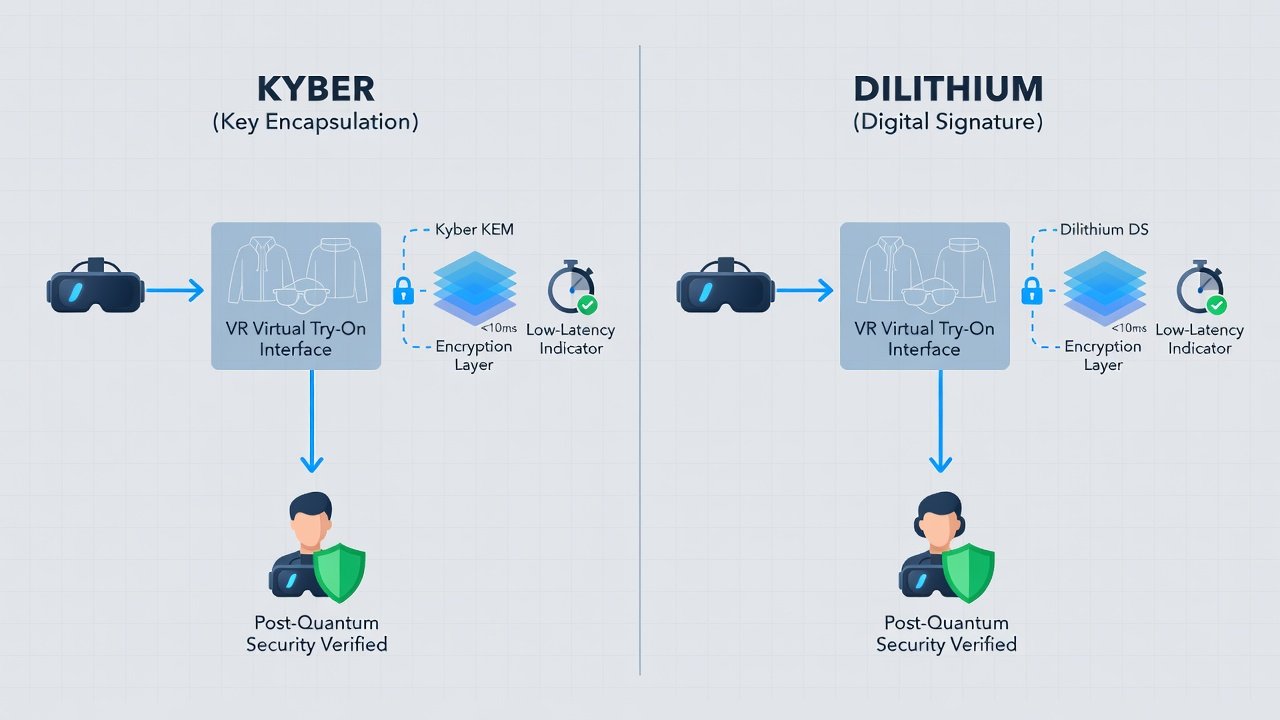
Key options include Kyber for key encapsulation and Dilithium for digital signatures. Kyber offers strong security with moderate computational overhead suitable for VR headsets, while Dilithium provides efficient signature verification that fits within tight frame budgets. Other candidates like Falcon emphasize smaller signature sizes but may require more processing power on edge devices. Compare performance metrics across algorithms to balance security and immersion. NIST post-quantum projects provide detailed benchmarks updated as of late 2026. When evaluating for VR, prioritize algorithms with low memory footprints to avoid headset overheating during extended shopping sessions. Real-world testing often reveals that Kyber-768 strikes an optimal balance for retail applications handling frequent small transactions.
Real-World Case Studies from 2026 Adopters
Major retailers like virtual fashion platforms have piloted these systems in 2026, reporting reduced breach risks during high-traffic events. One enterprise integrated Dilithium signatures into their blockchain ledger, achieving seamless transaction verification in AR environments without noticeable delays. Another case involved a global sportswear brand that layered Kyber encryption over existing VR try-on features, resulting in protected biometric data flows across distributed cloud nodes. These implementations demonstrated that early adopters could maintain 95 percent user retention rates by visibly communicating enhanced privacy protections to customers.
Optimization Tips for Low-Latency Performance
Minimize overhead by using hardware acceleration for lattice operations on compatible GPUs. Cache frequently used keys locally on edge servers and prioritize algorithms with smaller key sizes during peak hours. Regular profiling helps maintain frame rates above 90 FPS critical for VR comfort. Additional techniques include batching encryption operations during non-critical background tasks and employing asynchronous blockchain writes that do not block the main rendering thread. Retailers should also monitor network conditions in real time, dynamically switching between algorithm parameter sets when latency spikes occur.
Common Pitfalls to Avoid
- Overlooking hybrid encryption during transition phases, which leaves systems exposed to both classical and quantum threats.
- Ignoring device-specific constraints in VR hardware such as limited battery life and thermal limits on mobile headsets.
- Failing to update blockchain consensus protocols for quantum resistance, leading to eventual ledger vulnerabilities.
- Neglecting user education on new security indicators within the VR interface.
FAQ on Enterprise Scalability
How does this scale for large user bases? Modular implementations allow horizontal scaling via cloud-based quantum-resistant services that distribute key management across regions.
What training is required for teams? Developers benefit from NIST guidelines and targeted workshops on post-quantum libraries to ensure smooth adoption.
Are there regulatory considerations? Compliance with emerging standards from bodies like NIST ensures future-proofing against evolving global data protection laws.
How do costs compare to traditional setups? Initial integration adds moderate development time but delivers long-term savings through reduced breach remediation expenses.
Conclusion
Adopting quantum-resistant security prepares VR retail platforms for evolving threats while enhancing trust in immersive shopping. Implement these strategies methodically to achieve secure, scalable solutions in 2026 and beyond. By combining detailed planning with ongoing optimization, retailers can deliver safe virtual experiences that meet both technical and consumer expectations.

No comments yet. Be the first!