 NeoBit Daily
Introduction to Quantum's Blockchain Revolution
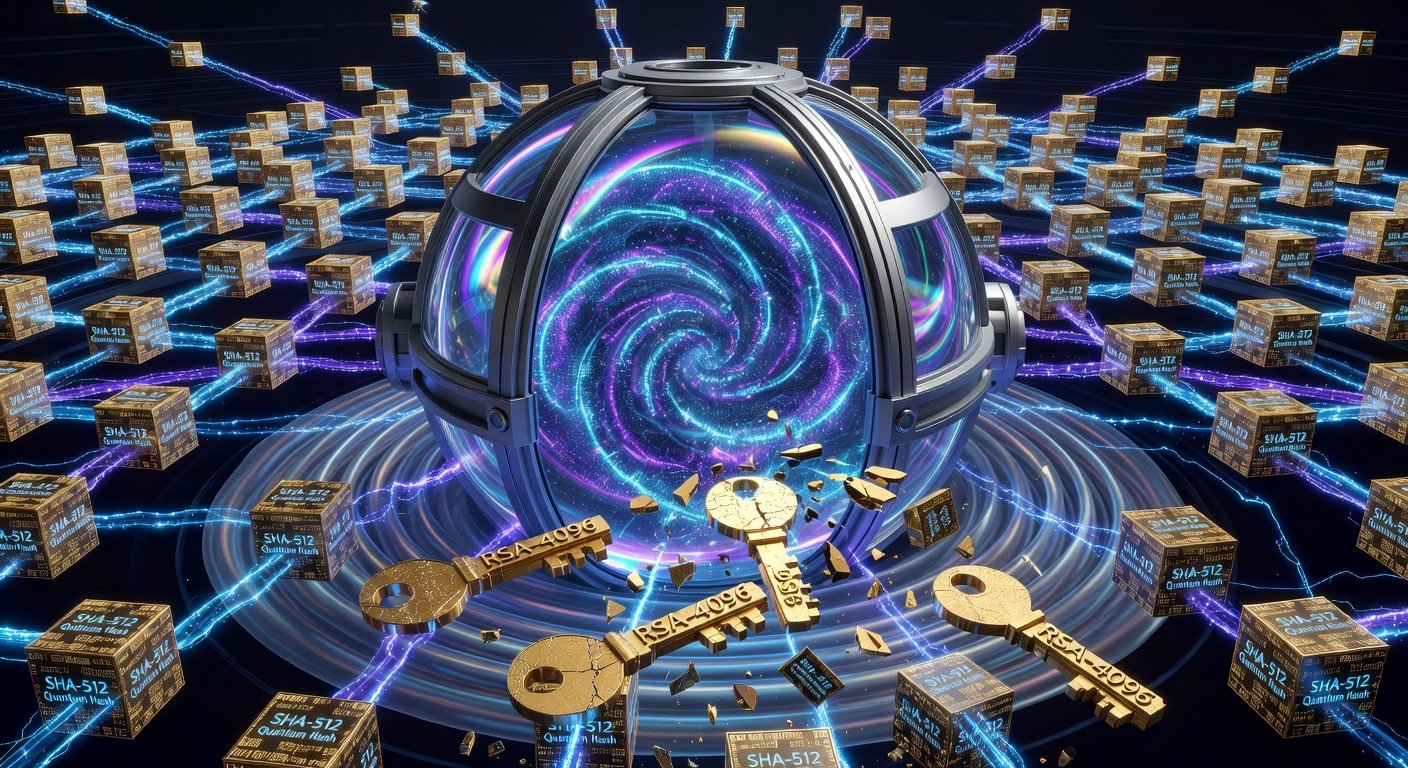
Quantum computing is no longer science fiction—it's the next frontier poised to disrupt blockchain technology. Algorithms like Shor's and Grover's promise to shatter current cryptographic foundations while unlocking unprecedented scalability. As we eye 2026, decentralized finance (DeFi) and supply chains stand to transform radically. This article dives into these quantum powerhouses, their implications, real-world applications, developer tips, and code examples to prepare you for the quantum-blockchain era.
Traditional blockchains rely on elliptic curve cryptography (ECDSA) and SHA-256 hashing, vulnerable to quantum attacks. Shor's algorithm could factor large primes exponentially faster, breaking public-key systems. Grover's offers quadratic speedup for unstructured searches, threatening brute-force protections. Yet, quantum tech also enhances optimization and verification, supercharging scalability.
Shor's Algorithm: Cracking the Crypto Code
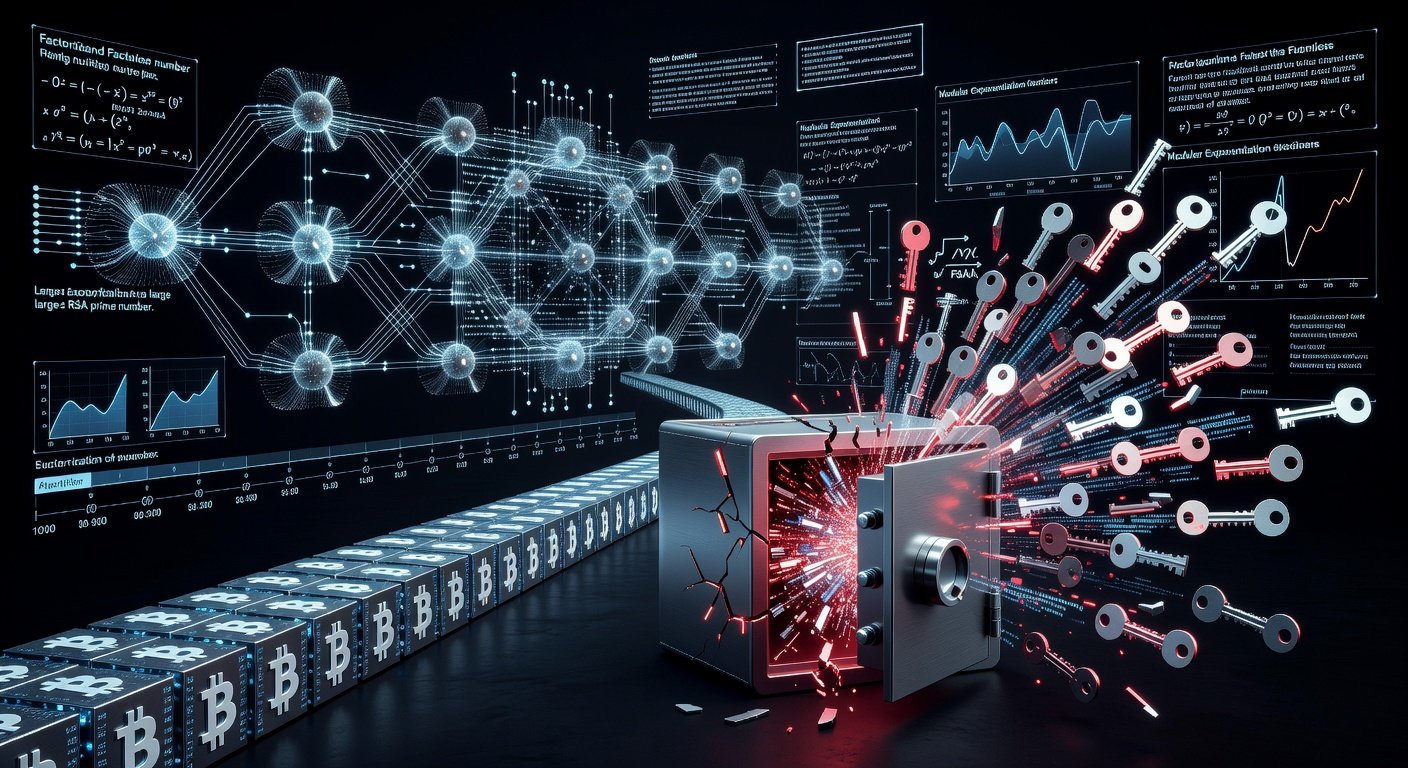
Developed by Peter Shor in 1994, Shor's algorithm exploits quantum superposition and entanglement to factor integers in polynomial time—a task infeasibly slow on classical computers. For blockchain, this means RSA and ECDSA signatures could be forged, enabling fake transactions or wallet drains.
Imagine a quantum adversary running Shor's on a 2048-bit key: minutes instead of billions of years. Blockchains like Bitcoin and Ethereum must migrate to post-quantum cryptography (PQC). NIST is leading standardization efforts for quantum-resistant algorithms like lattice-based Kyber and Dilithium. Check the latest at the NIST PQC project homepage.
Grover's Algorithm: The Search Accelerator
Lov Grover's 1996 algorithm provides a quadratic speedup for database searches. Classically, finding an item in an unsorted list of N items takes O(N) time; Grover's reduces it to O(√N). In blockchain, this impacts proof-of-work mining (faster nonce searches) and symmetric key cracking (e.g., AES-128 becomes like 64-bit security).
While not existential like Shor's, Grover's amplifies scalability threats in high-volume verification. Conversely, it enables faster oracle queries in zero-knowledge proofs, boosting DeFi throughput.
Quantum Threats and Defenses for Blockchain Security
By 2026, "harvest now, decrypt later" attacks loom: adversaries store encrypted blockchain data today for future quantum decryption. Ethereum's roadmap includes PQC upgrades via hard forks.
- Key Vulnerabilities: Transaction malleability, replay attacks on quantum-broken signatures.
- Defenses: Hybrid classical-quantum signatures, quantum key distribution (QKD).
IBM's quantum roadmap highlights scalable error-corrected qubits needed for these attacks—still years away but accelerating. Explore resources at IBM Quantum.
Quantum Boost for Blockchain Scalability
Beyond threats, quantum algorithms enhance performance. Grover's optimizes smart contract execution by speeding up exhaustive searches in decentralized apps. Quantum approximate optimization (QAOA) variants tackle NP-hard routing in sharded blockchains.
In layer-2 solutions, quantum-enhanced zk-SNARKs could verify massive proofs instantly, pushing TPS from thousands to millions. Ethereum's ecosystem is experimenting with quantum simulators for this.
Real-World Applications in 2026: DeFi and Supply Chains
DeFi: Quantum-resistant lending protocols on platforms like Aave or Compound will use lattice crypto. Grover-accelerated liquidations prevent cascading failures during volatility. By 2026, quantum oracles fetch real-time prices unforgeably via QKD.
Supply Chains: IBM Food Trust evolves with quantum-secured ledgers tracking provenance. Shor's threats demand PQC for IoT device signatures; Grover's optimizes global routing, reducing latency in hyperledger fabrics. Projects like VeChain integrate quantum simulations for tamper-proof audits.
Visit Ethereum.org for DeFi scaling insights.
Developer Tips and Code Examples
Start with Qiskit for quantum simulations. Install via pip install qiskit. Here's a basic Grover's search for a 2-qubit oracle (marks |11>):
from qiskit import QuantumCircuit, Aer, execute
import numpy as np

# 2-qubit Grover's
qc = QuantumCircuit(2, 2)
qc.h([0,1])  # Superposition
qc.cz(0,1)   # Oracle for |11>
qc.h([0,1])
qc.cz(0,1)
qc.h([0,1])  # Diffusion
qc.measure([0,1], [0,1])

simulator = Aer.get_backend('qasm_simulator')
result = execute(qc, simulator, shots=1024).result()
counts = result.get_counts(qc)
print(counts)  # Peaks at '11'
For blockchain integration, use pqcrypto libs like OQS for Kyber signatures in Solidity wrappers. Tip: Simulate Shor's on small numbers (<15) to grasp periodicity finding. Migrate wallets early—testnet PQC forks incoming.
- Profile classical code for Grover-vulnerable searches.
- Hybridize: Classical for now, quantum-ready APIs.
- Monitor qubit milestones (1000+ logical qubits by 2026?).
Future Implications for Tech Landscapes
By 2030, quantum-blockchain hybrids dominate: Fully homomorphic encryption (FHE) + quantum for private DeFi computations. Supply chains achieve end-to-end verifiability, combating counterfeits. Regulatory shifts, like EU's quantum sandbox, will standardize adoption.
Challenges remain: Error rates, qubit coherence. But winners will be agile—forking to PQC now ensures survival. The quantum race redefines trustless systems, blending superposition with decentralization for a hyper-secure, scalable future.
No comments yet. Be the first!