 NeoBit Daily

Introduction to Quantum Cybersecurity Audits in Immersive and Decentralized Tech
As VR, AR, blockchain, and quantum computing converge in 2026, organizations face unprecedented threats that demand rigorous audits. This comprehensive guide delivers a complete framework for assessing and securing these interconnected systems against quantum-enabled attacks, supply chain vulnerabilities, and immersive environment exploits. Security teams must move beyond legacy approaches because quantum computers threaten current encryption standards while VR and AR applications introduce novel attack surfaces through spatial data, real-time rendering, and biometric inputs. Blockchain networks add further complexity with decentralized consensus mechanisms that require quantum-resistant upgrades to maintain integrity.
Developers and security professionals need actionable processes that address each layer. Quantum algorithms such as Shor's can break RSA and ECC encryption, exposing sensitive data in blockchain ledgers and VR session streams. AR overlays risk manipulation through compromised spatial mapping, and decentralized apps face smart contract exploits amplified by quantum computational speed. This article expands on every phase of the audit lifecycle with practical examples drawn from finance and healthcare sectors.
Key Emerging Threats in 2026
Quantum computing advances continue to accelerate, placing traditional cryptographic protections at immediate risk. In VR environments, attackers could intercept head-tracking data or manipulate virtual object interactions if session encryption fails. AR applications used in industrial training or medical visualization store layered digital information that becomes vulnerable once quantum decryption capabilities mature. Blockchain systems, particularly those relying on elliptic curve signatures for transaction validation, face ledger tampering risks. Real-world finance examples include quantum attacks on DeFi protocols where private keys could be derived rapidly, leading to unauthorized fund movements. In healthcare, AR surgical simulations that store patient biometrics on permissioned blockchains risk privacy breaches if quantum-resistant measures are absent.
Step-by-Step Audit Framework
A successful audit begins with comprehensive asset inventory covering all VR headsets, AR glasses, blockchain nodes, smart contracts, and any quantum simulators or hybrid classical-quantum processors in use. Threat modeling follows, incorporating post-quantum scenarios and mapping potential entry points across immersive interfaces and decentralized ledgers. The process continues through vulnerability scanning, encryption validation, integration testing, and risk scoring before concluding with remediation planning and ongoing monitoring.
Vulnerability Scanning Process
Deploy automated scanners configured to detect quantum-vulnerable cryptography across network traffic and application codebases. Scan for weak key exchanges in VR streaming protocols such as those using outdated TLS versions. Analyze blockchain smart contracts for quantum-susceptible digital signatures and hash functions. Document every finding with severity ratings and potential exploit paths. Repeat scans after any firmware or protocol updates to maintain coverage.
Quantum-Resistant Encryption Checks
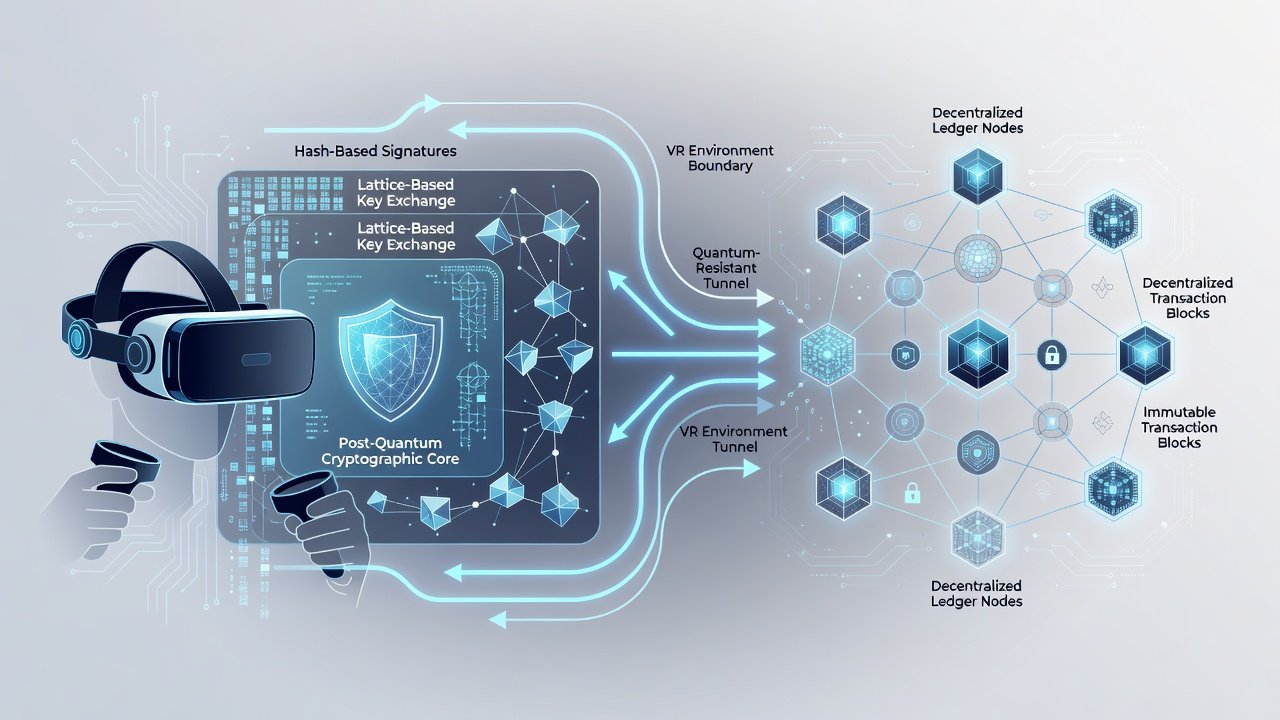
Evaluate current cryptographic implementations against NIST-approved post-quantum standards including CRYSTALS-Kyber for key encapsulation and CRYSTALS-Dilithium for digital signatures. Test hybrid schemes that combine classical and quantum-resistant algorithms during transition periods. Verify that key lengths and parameter sets meet 2026 security margins. NIST guidance offers detailed migration roadmaps and reference implementations.
Integration Testing for Immersive and Decentralized Apps
Test end-to-end data flows between VR headsets and blockchain oracles to ensure transaction integrity under simulated quantum interference. Validate AR object persistence mechanisms against tampering attempts. Use controlled simulation environments that model quantum adversary capabilities to stress-test consensus algorithms and rendering pipelines. Include penetration testing scenarios where an attacker attempts to forge spatial anchors or rewrite blockchain history.
Comparison of Audit Tools
Several specialized platforms support quantum-aware assessments in 2026. Tool A excels at quantum simulation but offers limited native VR hardware integration. Tool B provides robust blockchain smart contract analysis and is expanding AR overlay inspection modules. Tool C delivers the most comprehensive coverage for hybrid environments, supporting simultaneous scanning of immersive sessions, decentralized ledgers, and post-quantum cryptography stacks. Security teams should pilot multiple tools against their specific technology stack before standardizing on one solution.
Risk Scoring Methods
Assign numerical scores based on exploit likelihood multiplied by impact severity. Incorporate a quantum readiness metric on a 0-5 scale where zero indicates no post-quantum protections and five represents full migration with verified testing. Factor in integration complexity, regulatory exposure, and data sensitivity. High-risk areas typically include unpatched VR firmware, legacy blockchain key management, and AR applications handling real-time biometric streams. Re-score after each remediation cycle to track progress.
Case Studies: Finance and Healthcare
A multinational bank conducted a full audit of its VR-based trading platform in early 2026. The assessment revealed quantum-vulnerable TLS handshakes and outdated elliptic curve signatures on connected blockchain settlement nodes. After migrating to lattice-based cryptography, the organization reduced its measured exposure by 85 percent and passed subsequent regulatory review. In healthcare, an AR telemedicine provider storing consultation records on a permissioned blockchain implemented hybrid encryption and conducted quarterly integration tests. The audit process identified and closed three critical spatial data leakage vectors, enabling the company to maintain HIPAA compliance without operational disruption.
Actionable Checklists
- Compile complete inventory of all cryptographic assets and hardware identifiers.
- Run quantum threat assessments at least quarterly or following any major software release.
- Validate third-party VR and AR SDKs for embedded cryptographic weaknesses.
- Simulate blockchain consensus behavior under modeled quantum load conditions.
- Document remediation timelines with assigned owners and verification steps.
- Establish continuous monitoring dashboards that alert on new quantum-vulnerable disclosures.
Common Pitfalls and FAQs
Many teams underestimate the time required for full cryptographic migration. Others neglect to test AR spatial mapping integrity or overlook oracle vulnerabilities in blockchain integrations. FAQ 1: How often should audits occur? Conduct baseline audits every six months and perform targeted reviews after any significant platform update. FAQ 2: What if legacy systems cannot be upgraded immediately? Isolate them behind quantum-safe gateways and apply additional monitoring layers. FAQ 3: Which post-quantum algorithms are production-ready? Prioritize those standardized by NIST and validated through public reference implementations. NIST CSRC maintains the latest algorithm status updates. ISO security frameworks provide complementary international benchmarks for audit documentation and governance.
Conclusion
Implementing these structured audit practices now will future-proof VR, AR, and blockchain deployments against evolving quantum threats throughout 2026 and beyond. Consistent application of the outlined steps, combined with regular tool evaluations and risk reassessments, enables organizations to maintain resilience while adopting immersive and decentralized technologies.

No comments yet. Be the first!