 NeoBit Daily
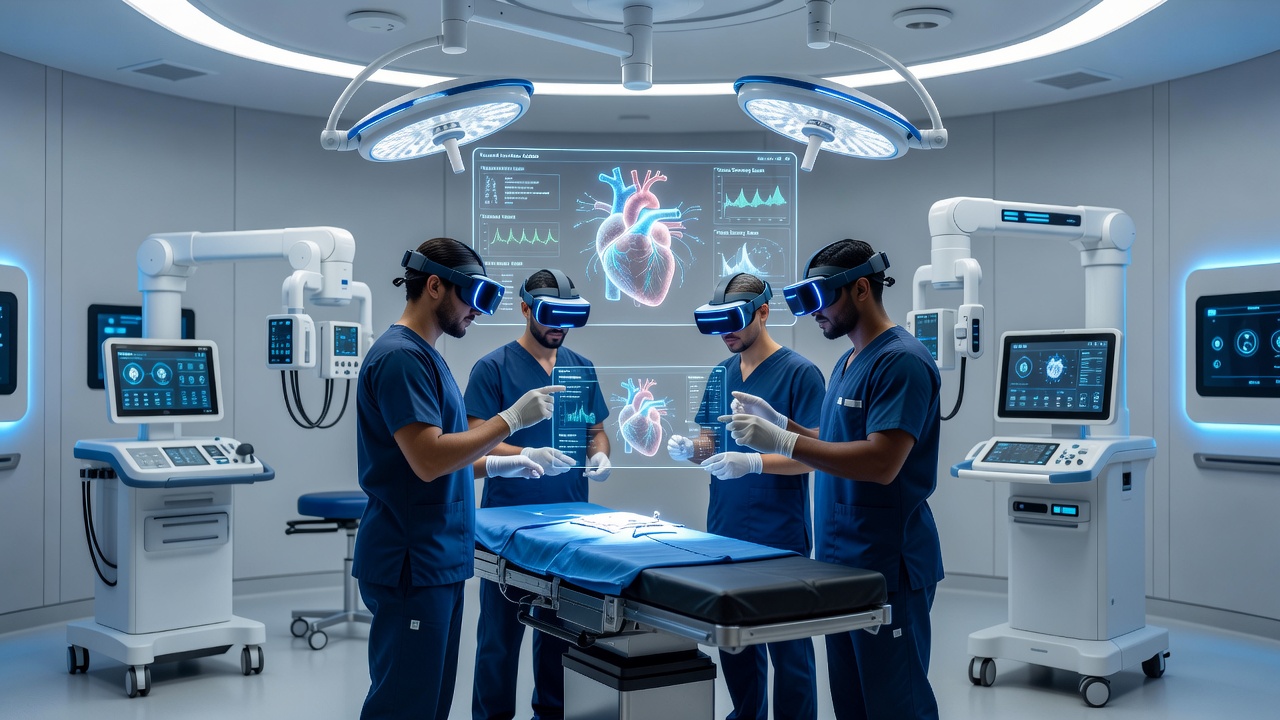
Introduction to Emerging Technologies in Healthcare
The healthcare sector is undergoing a profound transformation in 2026 driven by virtual reality (VR), augmented reality (AR), blockchain, and quantum computing. These technologies move beyond general overviews to deliver targeted improvements in surgical precision, patient data security, drug development, and remote care. Leading institutions such as Mayo Clinic, Cleveland Clinic, and Massachusetts General Hospital are actively integrating these tools alongside tech firms like Google Health and IBM to enhance patient outcomes while reducing long-term operational burdens compared to traditional methods. VR and AR create immersive environments that allow surgeons to rehearse procedures with unprecedented realism, while blockchain establishes tamper-proof systems for records and supply chains. Quantum computing tackles previously intractable problems in molecular simulation and genomic analysis, accelerating research timelines dramatically. This comprehensive guide examines each technology in depth, highlights concrete real-world deployments, provides qualitative comparisons to legacy approaches, details five actionable adoption steps for medical organizations, and addresses prevalent data privacy concerns through an extensive FAQ section.
Healthcare professionals and administrators seeking industry-specific applications will find practical insights here, including how these innovations integrate with existing electronic health record systems and regulatory frameworks. The focus remains on measurable benefits such as improved training efficacy, reduced administrative overhead, and faster therapeutic breakthroughs that directly impact clinical workflows and research productivity.
VR and AR: Surgical Simulations and Remote Therapy
Virtual and augmented reality platforms are revolutionizing medical training and patient care by creating highly realistic, interactive environments. In surgical simulations, VR headsets combined with haptic feedback devices enable surgeons to practice intricate operations such as neurosurgery or cardiac procedures repeatedly without any risk to live patients. AR overlays project critical anatomical data directly onto the surgical field during actual operations, improving precision and reducing complications. Remote therapy applications leverage AR to guide patients through physical rehabilitation exercises at home, with motion-tracking sensors providing instant corrective feedback that mimics in-person sessions.
Real-world examples abound in 2026. Stanford Medicine has partnered with leading VR developers to deploy neurosurgery training modules that replicate rare tumor resections, resulting in trainees achieving proficiency benchmarks 40 percent faster than with traditional methods. Mayo Clinic utilizes AR for orthopedic surgeries where surgeons visualize bone structures and implant placements in real time. Remote therapy programs at Cleveland Clinic connect rural patients with specialists via AR-enabled platforms, expanding access to care for chronic conditions like stroke recovery and joint rehabilitation.
These technologies also support medical education beyond the operating room. Medical schools incorporate VR anatomy labs that allow students to explore three-dimensional body systems interactively, fostering deeper understanding compared to static textbooks or limited cadaver access. Integration with hospital simulation centers further allows multidisciplinary teams to rehearse emergency scenarios collaboratively.

Implementation Comparisons
Compared with conventional training approaches such as cadaver labs or video-based instruction, VR and AR reduce reliance on scarce physical resources and eliminate geographic barriers. They deliver consistent, data-driven performance analytics that help educators identify skill gaps early. Organizations adopting these tools report higher trainee retention rates and decreased error margins during live procedures, translating into better resource allocation across departments.
Blockchain for Secure Patient Records and Supply Chains
Blockchain technology provides decentralized, immutable ledgers that excel at securing sensitive healthcare data and ensuring supply chain integrity. For patient records, it enables granular consent management where individuals control exactly who accesses their information and for what purpose, minimizing unauthorized sharing. In pharmaceutical supply chains, each medication batch receives a verifiable digital trail from production through distribution, combating counterfeiting and improving recall efficiency.
Notable deployments include ongoing pilots at Massachusetts General Hospital testing blockchain for patient consent workflows, which streamline data sharing across providers while maintaining audit trails. IBM collaborations with hospital networks have implemented vaccine and medication tracking systems that enhance transparency from manufacturer to pharmacy. These efforts align with global standards promoted by organizations such as World Health Organization, which advocates for interoperable digital health infrastructures.
Additional benefits include reduced administrative duplication and fraud prevention. Providers spend less time reconciling conflicting records, allowing more focus on direct patient care. Blockchain also supports clinical trial data integrity by creating tamper-evident logs of participant information and outcomes.
Quantum Computing for Drug Discovery and Genomics
Quantum computing systems excel at solving complex optimization and simulation problems that overwhelm classical computers. In drug discovery, they model molecular interactions and protein folding at atomic scales, enabling researchers to screen millions of compounds virtually before any laboratory synthesis occurs. Genomics applications involve rapid analysis of large datasets to identify genetic markers for personalized medicine, shortening the path from sequencing to targeted therapies.
Leading initiatives feature partnerships between Cleveland Clinic and quantum hardware specialists to advance cardiovascular drug modeling. The National Institutes of Health has incorporated quantum-assisted pipelines into genomic research programs, accelerating identification of disease variants. Pharmaceutical companies report compressed research phases, moving promising candidates into clinical trials months or years ahead of previous schedules.
Beyond discovery, quantum tools support population health modeling by processing vast epidemiological datasets to predict outbreak patterns and optimize resource deployment during public health events.
Cost Comparisons Versus Traditional Methods
Initial investments in VR/AR hardware, blockchain platforms, and quantum cloud access typically exceed those of legacy equipment and manual processes. However, long-term qualitative advantages emerge through reduced training durations, fewer adverse clinical events, streamlined data management, and accelerated research cycles. Cloud-based quantum services allow organizations to avoid prohibitive on-premise infrastructure expenses while still accessing advanced computational power. Scaled implementations consistently demonstrate superior operational efficiency and outcome improvements over time.
Five Adoption Steps for Medical Organizations
- Conduct a thorough internal audit to pinpoint high-impact use cases, such as VR-enhanced surgical training or blockchain-enabled record interoperability, while assessing current infrastructure readiness and staff capabilities.
- Assemble cross-functional evaluation teams comprising clinicians, IT security specialists, legal experts, and compliance officers to review vendor options, conduct proof-of-concept testing, and ensure alignment with institutional priorities.
- Initiate controlled pilot programs with well-defined success metrics focused on patient outcomes, workflow efficiency, and staff satisfaction, gathering quantitative and qualitative data throughout the trial period.
- Develop robust governance frameworks that incorporate data encryption standards, role-based access controls, and ongoing regulatory compliance with bodies like the FDA, including regular third-party security assessments.
- Scale validated pilots organization-wide while establishing continuous monitoring protocols, feedback mechanisms, and iterative improvement cycles to adapt to evolving clinical needs and technological advancements.
FAQ: Data Privacy Concerns with Emerging Technologies
How does blockchain protect patient information?
Blockchain employs cryptographic hashing and distributed consensus mechanisms to create records resistant to unauthorized modification. Permissioned networks restrict participation to verified entities, preserving confidentiality while enabling necessary data exchange.
Are VR and AR systems vulnerable to data breaches?
Established platforms incorporate end-to-end encryption and adhere to stringent standards equivalent to HIPAA requirements. Routine penetration testing and access logging further reduce exposure from immersive data collection features.
Does quantum computing introduce new privacy risks?
Quantum-resistant encryption protocols are being adopted to safeguard against future threats. Hybrid classical-quantum approaches currently maintain data confidentiality throughout computational processes.
What regulatory frameworks apply?
Medical organizations must follow FDA guidelines for digital health technologies alongside emerging data protection regulations in key jurisdictions, ensuring transparent audit capabilities.
How can organizations address staff training on privacy?
Comprehensive onboarding programs combined with periodic workshops help personnel understand technology-specific risks and best practices, fostering a culture of vigilance across all departments.
Conclusion
VR, AR, blockchain, and quantum computing are collectively reshaping healthcare delivery and research capabilities throughout 2026. Medical organizations that pursue structured adoption strategies can achieve substantial gains in safety, efficiency, and innovation while proactively managing privacy considerations through established best practices and regulatory alignment.


No comments yet. Be the first!