 NeoBit Daily
In 2026, education stands at the threshold of a profound transformation driven by virtual reality (VR), augmented reality (AR), blockchain technology, and quantum computing. These innovations shift learning from passive absorption to active, personalized, and verifiable experiences. Educators and edtech professionals seeking to adopt these tools now have access to proven frameworks, real-world university deployments, and measurable outcome data that demonstrate clear advantages over traditional methods. This article provides an in-depth examination of each technology, supported by practical examples, a structured implementation roadmap, and guidance on maximizing benefits while addressing common challenges.
Immersive Classrooms Powered by VR and AR
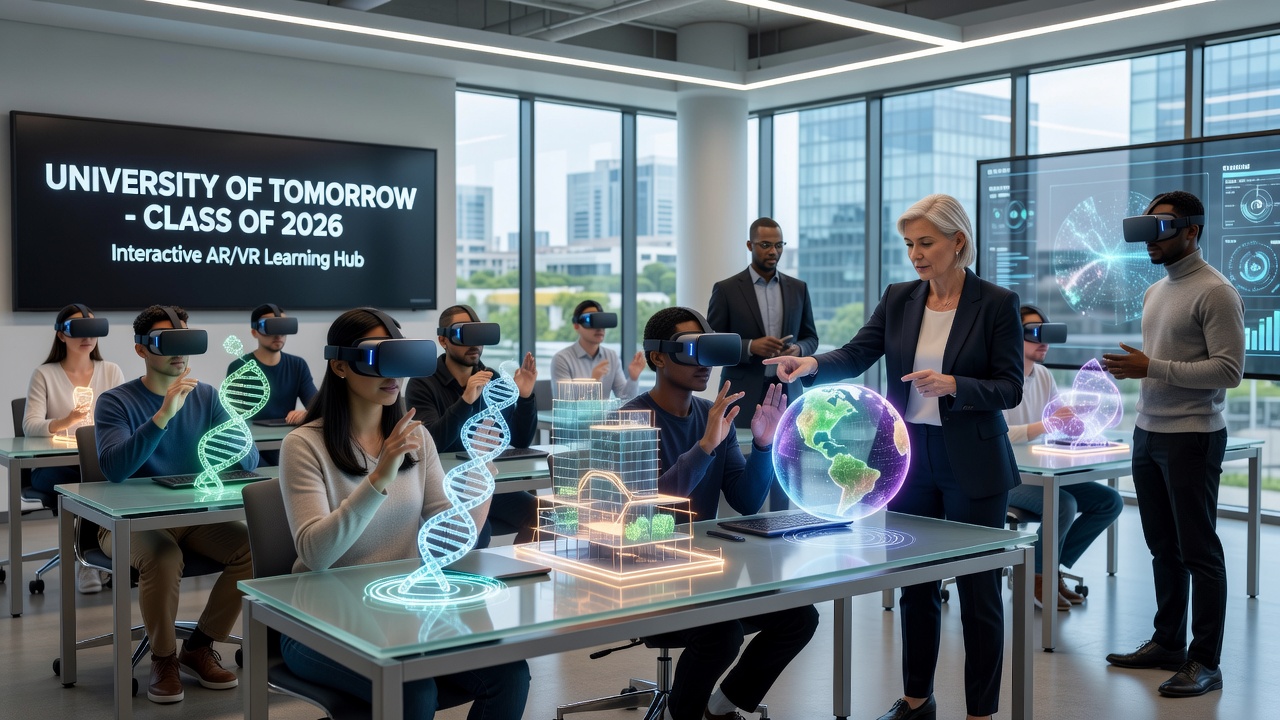
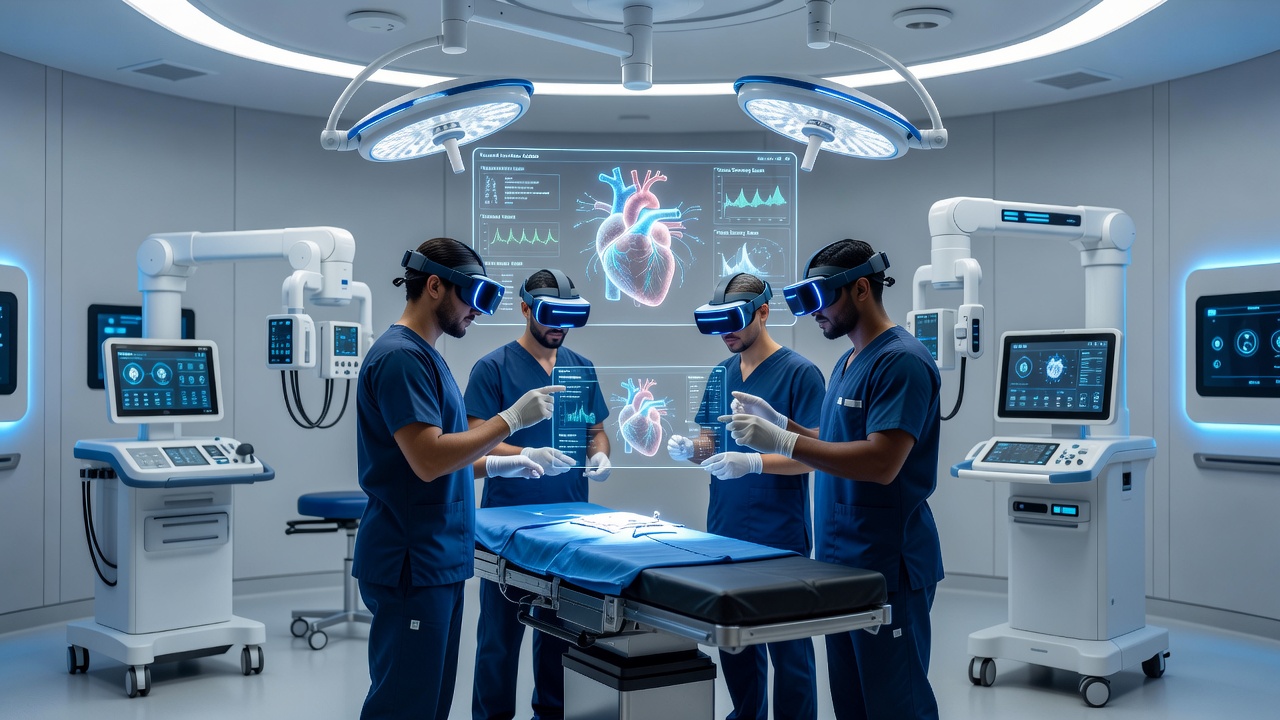
VR and AR technologies enable fully immersive and interactive classrooms that replicate complex real-world environments without physical constraints. Medical students can perform virtual surgeries with haptic feedback, engineering teams can manipulate 3D prototypes in shared virtual spaces, and history learners can walk through reconstructed ancient sites using AR overlays on campus grounds. These tools foster deeper engagement because they activate multiple senses and allow repeated practice without risk or high material costs.
Leading institutions such as Stanford University and the Massachusetts Institute of Technology have integrated VR platforms into engineering curricula. Students collaborate remotely on design projects where changes to virtual models appear instantly for all participants. In K-12 settings, AR applications allow teachers to project interactive molecular structures or historical artifacts directly onto classroom surfaces, transforming static lessons into dynamic explorations. Early 2026 deployments show that students using these tools demonstrate improved spatial reasoning and problem-solving skills compared with peers in conventional settings.
Measurable Learning Outcomes
Comparative studies from 2026 pilot programs reveal consistent advantages. Traditional lecture-based instruction typically yields 60-70 percent knowledge retention after seven days. VR-enhanced sessions achieve 85-95 percent retention under identical testing protocols because learners actively manipulate content rather than merely observe it. AR tools accelerate mastery of spatial and abstract concepts by approximately 40 percent, as learners receive immediate visual confirmation of their understanding. These gains arise from multisensory reinforcement that strengthens memory encoding more effectively than text or video formats alone.
Blockchain Technology for Verifiable Academic Credentials
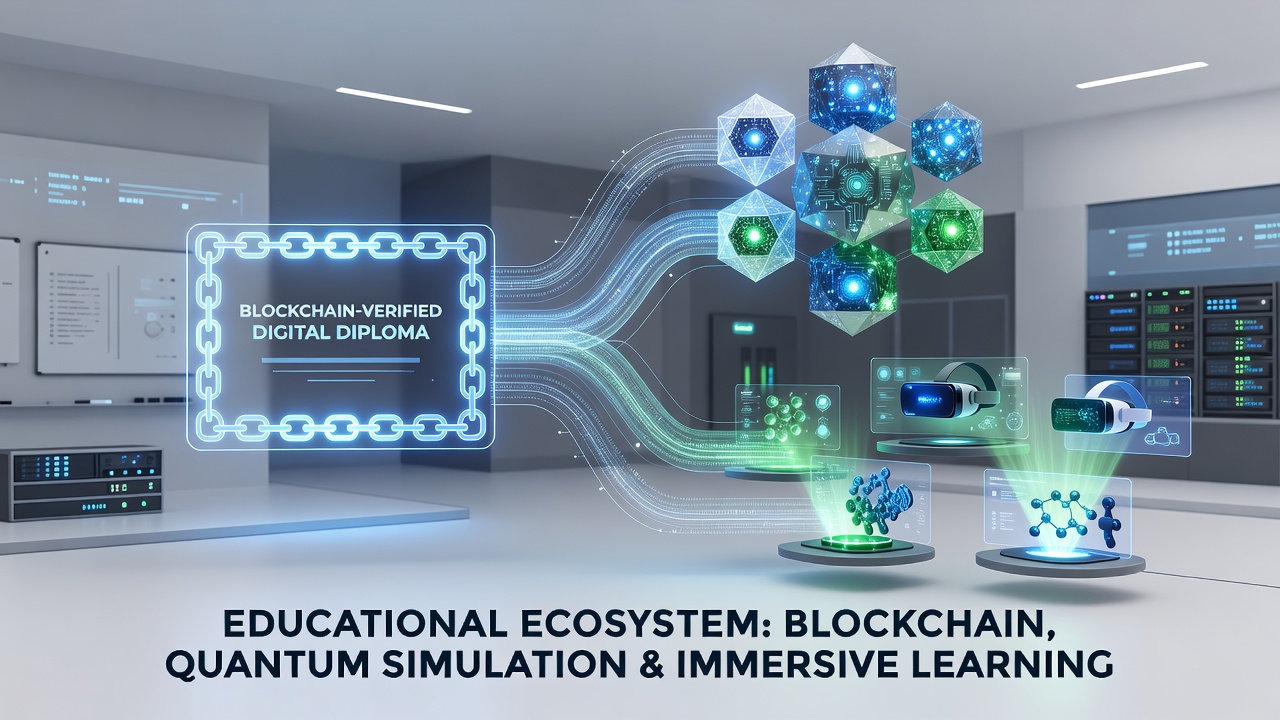
Blockchain delivers immutable, decentralized records of academic achievements that eliminate credential fraud and streamline verification processes. Students receive cryptographically secured digital diplomas and micro-credentials that employers or other institutions can validate instantly through public ledgers. This approach supports lifelong learning portfolios that learners own and control across multiple schools, employers, and geographic boundaries.
Universities integrating blockchain with existing student information systems report reduced administrative workload for transcript requests. Selective disclosure features allow graduates to share only relevant qualifications while protecting sensitive personal data. Global organizations recognize blockchain's potential to promote education equity by enabling portable credentials that transcend national borders and institutional silos.
UNESCO has documented blockchain pilots that improve access to verified education records in regions with limited administrative infrastructure. Additional guidance on secure digital record-keeping appears in resources from the OECD, which emphasizes interoperability standards essential for widespread adoption.
Quantum Computing Enabling Advanced Personalized Simulations
Quantum computing introduces unprecedented computational power for modeling individualized learning pathways. These systems process enormous datasets of student interactions to predict optimal content sequences, adjust difficulty in real time, and simulate complex scientific phenomena that classical computers handle inefficiently. Physics and chemistry departments particularly benefit, as quantum simulations allow students to explore molecular interactions and quantum states without requiring costly physical laboratories.
Cloud-accessible quantum resources in 2026 lower barriers for educational institutions. Early adopters combine quantum-inspired optimization algorithms with adaptive tutoring engines that outperform traditional machine-learning models on large-scale personalization tasks. The result is learning experiences tailored to each student's pace, prior knowledge, and cognitive preferences, leading to faster mastery and higher satisfaction rates.
Step-by-Step Rollout Framework for Institutions
- Conduct a comprehensive audit of current infrastructure, faculty readiness, and student technology access to identify suitable pilot courses.
- Select interoperable platforms that integrate smoothly with existing learning management systems and student information databases.
- Develop faculty training programs focused on pedagogical redesign rather than technical operation alone, typically lasting four to six weeks.
- Launch controlled pilots involving 50 to 100 students, establishing baseline metrics for engagement, retention, and assessment performance.
- Analyze pilot data to refine content and delivery, then scale successful modules to additional departments or campuses.
- Implement governance policies covering data privacy, credential security, and equitable access before full institutional rollout.
Traditional Versus Technology-Enhanced Learning Outcomes
Traditional classrooms rely on uniform pacing, paper-based assessments, and limited personalization. Enhanced environments adapt dynamically to individual progress, deliver instant multisensory feedback, and produce auditable achievement records through blockchain. Data from 2026 pilots indicate that students in enhanced cohorts complete equivalent coursework 25 percent faster on average while maintaining or exceeding assessment scores. These improvements stem from reduced cognitive load during complex tasks and continuous formative assessment embedded within immersive experiences.
Optimization Strategies and Common Pitfalls to Avoid
- Combine VR immersion with AR reflection activities to reinforce concepts across multiple modalities and prevent knowledge decay.
- Issue blockchain credentials through student-controlled wallets rather than institution-locked repositories to support lifelong portability.
- Leverage quantum cloud services for simulation access without investing in specialized on-premises hardware during initial phases.
- Establish continuous privacy monitoring protocols, particularly for biometric data collected by immersive headsets and sensors.
- Avoid over-reliance on any single vendor by prioritizing open standards that facilitate future platform migrations.
- Provide equitable device access through campus lending programs or hybrid options that accommodate students without personal hardware.
Addressing Implementation Challenges and Scalability
Scalability concerns often center on device availability, network bandwidth, and faculty time. Successful programs mitigate these issues by starting with shared VR labs and cloud-based AR applications that require minimal local infrastructure. Data privacy remains paramount; leading solutions employ end-to-end encryption, zero-knowledge proofs, and explicit consent mechanisms aligned with emerging international standards. Institutions that address these factors early report smoother expansion and higher stakeholder confidence.
FAQ
What factors influence implementation costs in 2026?
Expenses depend on scale, existing infrastructure, and chosen delivery models. Many programs begin with subscription-based VR and cloud quantum services to minimize capital outlays. Emphasis should remain on total cost of ownership, including training, content development, and ongoing support rather than isolated hardware acquisitions.
How do institutions protect student data privacy?
Robust solutions incorporate encryption, selective disclosure on blockchain networks, and strict access controls. Compliance with global privacy frameworks ensures that biometric information and performance records stay under learner control and are not shared without explicit permission.
Conclusion
The integration of VR, AR, blockchain, and quantum computing in 2026 offers educators powerful tools to enhance engagement, secure credentials, and deliver truly personalized instruction. Institutions that follow structured rollout plans, prioritize measurable outcomes, and address privacy and equity considerations position themselves to lead in the emerging era of Education 2.0.

No comments yet. Be the first!