 NeoBit Daily
Introduction to AI-Driven Predictive Maintenance in 2026
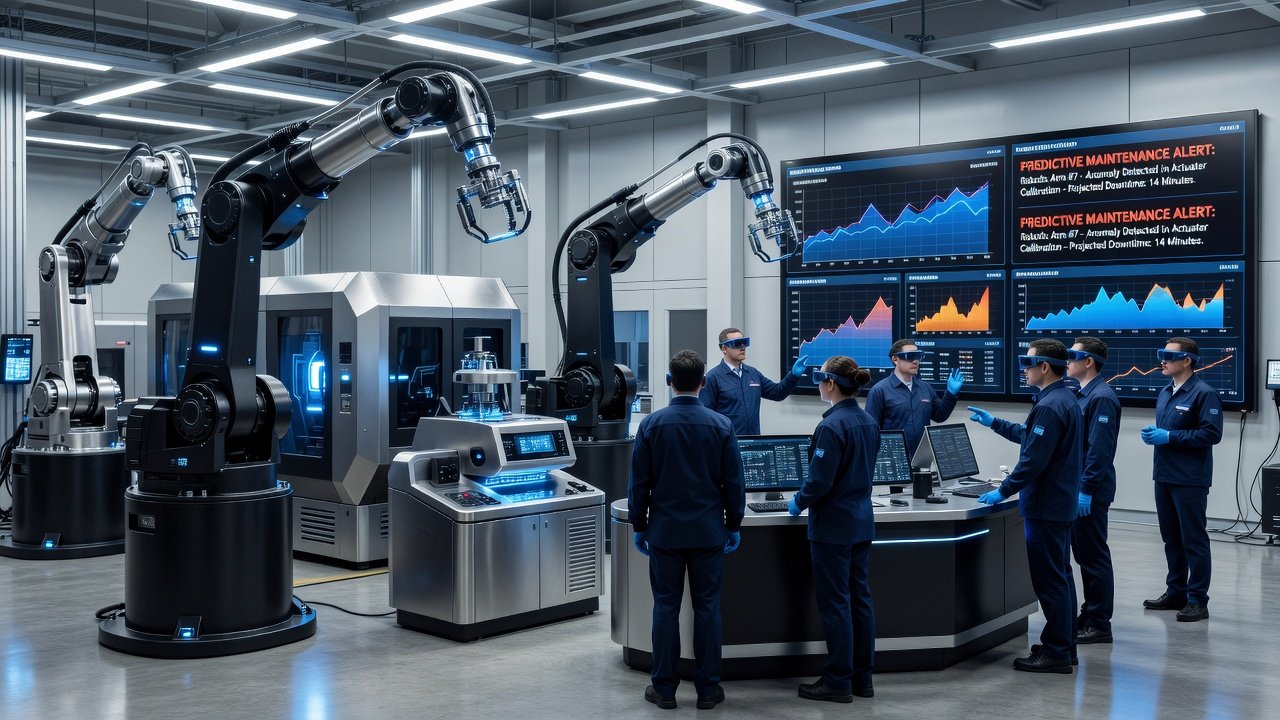
Manufacturing leaders in 2026 are leveraging machine learning (ML) for predictive maintenance to minimize unplanned downtime and extend equipment life. This approach uses real-time sensor data to forecast failures before they occur, delivering measurable ROI across industries like automotive, aerospace, and heavy machinery. Recent implementations show downtime reductions of 30-50% when AI tools are properly integrated with existing operations.
The shift from reactive to predictive strategies relies on robust data pipelines and trained models that adapt to factory conditions. This article examines fresh 2026 case studies, practical workflows, and tool evaluations to help teams scale these solutions effectively. Readers will find concrete examples of sensor integration, model development, and deployment strategies that have produced tangible results in real production environments.
Sensor Data Pipelines for Reliable ML Inputs
Effective ML maintenance starts with high-quality sensor data. Modern factories deploy IoT sensors measuring vibration, temperature, pressure, and acoustic signals at millisecond intervals. Data flows through edge gateways that filter noise before cloud or on-premise processing. In high-volume settings, pipelines must handle thousands of data points per second without latency spikes that could delay alerts.
In a 2026 automotive plant case study, vibration sensors on CNC machines streamed 500 GB daily. A pipeline using Apache Kafka and Spark processed streams in real time, enabling models to detect bearing wear 72 hours in advance. Key steps include calibration routines performed weekly, anomaly detection at the edge using lightweight algorithms, and secure encrypted transmission to central repositories. Additional considerations involve handling missing data through imputation techniques and ensuring compliance with data retention policies common in regulated industries.
Another example from a chemical processing facility involved acoustic sensors on pumps. The pipeline architecture incorporated redundant collection points to prevent single points of failure, resulting in 99.8% data availability over a 12-month period. Teams learned to prioritize sensor placement based on failure mode analysis rather than uniform distribution across assets.
Model Training Workflows Tailored for Manufacturing
Training ML models for predictive maintenance involves supervised and unsupervised techniques on historical failure data combined with live telemetry. Engineers typically use time-series forecasting models like LSTM or Transformer architectures fine-tuned on domain-specific datasets. Feature selection focuses on statistical measures such as mean, variance, and kurtosis derived from raw signals.
One aerospace manufacturer trained models on 18 months of sensor logs from turbine engines. The workflow included feature engineering for cyclical patterns, cross-validation with synthetic failure scenarios generated via physics-informed simulations, and continuous retraining every 30 days using new operational data. This produced models with 94% accuracy in predicting maintenance needs, cutting inspection costs and improving safety margins.
Best practices include splitting datasets into training, validation, and test sets while accounting for temporal dependencies to avoid data leakage. Hyperparameter tuning often employs Bayesian optimization to accelerate convergence. In practice, teams at a semiconductor fab incorporated transfer learning from similar equipment models, reducing training time from weeks to days.
NIST manufacturing standards emphasize data governance during training to ensure model reliability on the factory floor, including documentation of all preprocessing steps.
Integration Steps for Seamless Factory Deployment
Deploying AI tools requires careful integration with existing PLCs, SCADA systems, and ERP platforms. Start with pilot lines on non-critical assets, then scale using APIs and digital twins for simulation before full rollout. Change management plays a critical role, as operators must trust the new alerts.
Practical steps include: 1) Map sensor networks to data lakes with clear metadata schemas; 2) Validate models in shadow mode before activating live alerts; 3) Train maintenance teams on dashboard interfaces through structured workshops; 4) Establish feedback loops where technicians log outcomes to refine models. A steel mill example integrated an AI platform with legacy equipment in under eight weeks, achieving full rollout across 12 production lines by mid-2026 after iterative testing on two lines first.
Additional details involve network segmentation for cybersecurity and fallback procedures if connectivity drops. Integration success often hinges on involving cross-functional teams from the outset to align technical requirements with operational realities.
Side-by-Side Tool Comparisons: Accuracy and Downtime Reduction
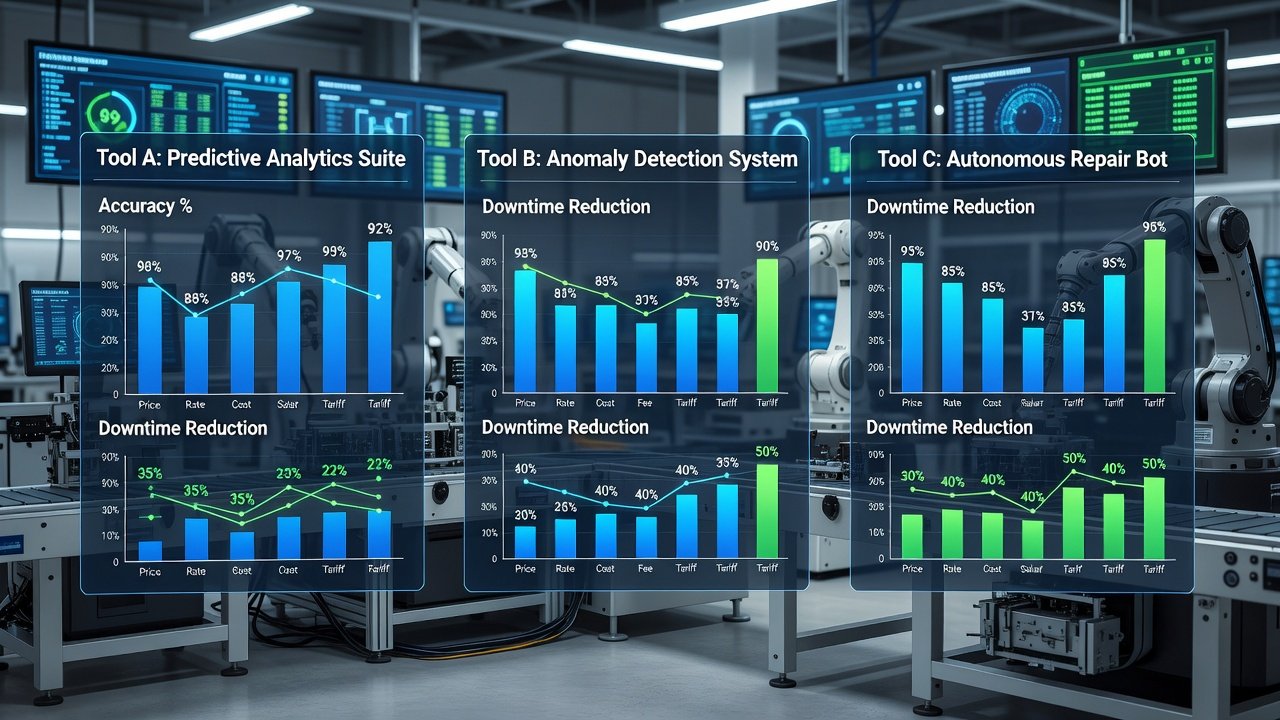
Choosing the right AI tool depends on accuracy metrics and proven downtime impact. Below is a comparison based on 2026 deployments across multiple sites:
- Tool A (sensor-focused platform): 92% accuracy, 42% downtime reduction in automotive assembly lines with strong visualization features
- Tool B (enterprise ML suite): 89% accuracy, 35% downtime reduction in chemical processing plants, excelling in multi-asset correlation analysis
- Tool C (edge AI solution): 95% accuracy, 48% downtime reduction in semiconductor fabs due to low-latency inference capabilities
Tool C excelled in low-latency environments where decisions must occur within seconds, while Tool A offered easier integration for mid-sized plants with limited IT resources. Always benchmark against your specific machinery types and environmental conditions before committing to a vendor.
Real 2026 Deployment Examples and ROI
A European heavy equipment maker deployed AI maintenance across 200 assets. After six months, unplanned stops fell 37%, yielding substantial savings through avoided production losses. Another North American food processing facility used ML models to predict pump failures, improving overall equipment effectiveness by 22% and extending mean time between repairs.
These cases highlight the importance of starting small, measuring baseline metrics accurately, and iterating based on operator feedback. A third example from an automotive supplier showed how combining vibration and temperature data streams led to early detection of gearbox issues, preventing three major line stoppages in the first quarter of deployment.
IEEE resources on industrial IoT provide further guidance on scaling such projects successfully.
Mistakes to Avoid in Implementation
Common pitfalls include neglecting sensor calibration schedules, which leads to degraded model performance over time. Another frequent error is insufficient involvement of frontline maintenance staff during the design phase, resulting in low adoption rates. Teams should also avoid over-reliance on a single data source and instead build redundancy into pipelines from day one.
FAQ: Scaling Challenges and Adoption Tips
How do teams overcome data quality issues when scaling?
Implement rigorous sensor validation protocols and use synthetic data augmentation to fill gaps in failure records. Regular audits prevent drift in model performance and maintain high prediction reliability across varying production volumes.
What training helps maintenance staff adopt AI tools?
Hands-on workshops focused on interpreting AI alerts combined with change management programs increase adoption rates dramatically. Pair new dashboards with familiar maintenance routines to build confidence gradually.
Which common pitfalls delay ROI realization?
Overlooking integration with legacy systems and insufficient pilot testing often cause delays. Address these early through cross-functional teams including IT, operations, and data scientists to align expectations.
How can factories handle cybersecurity concerns with connected sensors?
Segment networks, apply encryption standards, and conduct regular vulnerability assessments. Many successful 2026 deployments used zero-trust architectures tailored for industrial control systems.
Conclusion
2026 case studies confirm that AI tools for ML-based predictive maintenance deliver strong returns when supported by solid data pipelines and thoughtful integration. Manufacturers investing in these capabilities position themselves for sustained efficiency gains and competitive advantage on the factory floor. Continued refinement through real-world feedback loops will drive even greater improvements in the years ahead.


No comments yet. Be the first!