 NeoBit Daily
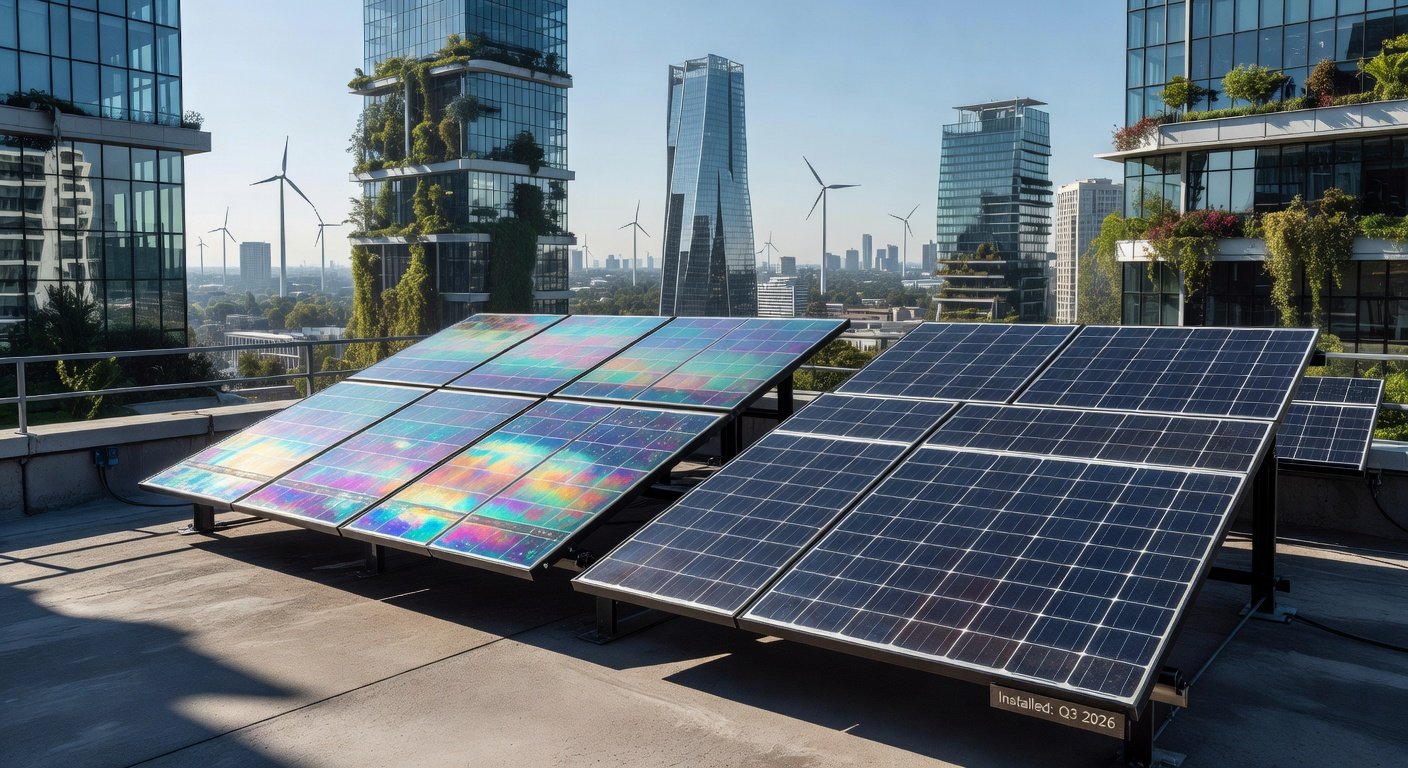
Introduction to Perovskite Solar Technology in 2026
The solar energy sector is witnessing transformative changes in 2026 as perovskite solar cells emerge as a compelling alternative to traditional silicon panels. These thin-film photovoltaic materials, composed of organic-inorganic hybrid compounds, offer potential for higher efficiencies, flexible applications, and lower production costs, positioning them as a key innovation in sustainable energy. This article examines the latest breakthroughs, direct comparisons with silicon technology, industry updates, real-world examples, and practical guidance for readers interested in sustainable energy innovations. With global demand for clean power rising, understanding these developments helps stakeholders make informed decisions about future energy investments.
Efficiency Records: Perovskite vs Silicon Panels
Perovskite cells have achieved laboratory efficiencies exceeding those of many commercial silicon modules. While silicon panels typically reach 22-25% efficiency in real-world conditions, tandem perovskite-silicon configurations have pushed boundaries further by combining the strengths of both materials in layered structures. Manufacturers like Oxford PV and Microquanta Semiconductor report ongoing improvements in stability and output, making perovskites increasingly viable for widespread use. The tandem approach allows perovskites to capture a broader spectrum of sunlight, including wavelengths that silicon alone misses, leading to overall system efficiencies that can surpass standalone silicon by several percentage points in controlled tests.
Key advantages include better performance in low-light and high-temperature environments, which silicon struggles with due to its temperature coefficient limitations. In urban settings with partial shading or variable weather, perovskites maintain steadier output. However, silicon maintains an edge in proven long-term reliability and established supply chains that have been refined over decades. Comparisons often highlight that while silicon excels in large-scale ground-mounted farms, perovskites shine in building-integrated photovoltaics where weight and form factor matter.
Durability and Longevity Comparisons
Durability remains a critical focus area. Early perovskite versions faced rapid degradation from moisture, heat, and UV exposure, but 2026 formulations incorporate advanced encapsulation techniques using barrier films and compositional engineering. Leading developers now claim operational lifespans approaching 20-25 years under standard testing protocols, narrowing the gap with silicon's 25-30 year warranties. Accelerated aging tests simulate decades of exposure in months, revealing improvements in ion migration control and interface stability that were major hurdles just a few years ago.
Independent testing by organizations such as the National Renewable Energy Laboratory continues to validate these enhancements through rigorous protocols including damp heat, thermal cycling, and light soaking. Silicon's crystalline structure provides inherent robustness, yet perovskites are closing the reliability gap through innovative additives and protective coatings. For applications like portable devices or curved surfaces, the flexibility of perovskites adds durability benefits silicon cannot match without specialized mounting.
Industry Updates from Leading Manufacturers
Companies including First Solar, Hanwha Qcells, and emerging perovskite specialists are scaling production facilities. Partnerships with automotive and construction firms signal integration into building materials and vehicle surfaces. These developments accelerate commercialization timelines as pilot lines transition to full manufacturing. Recent announcements focus on improving yield rates and module uniformity, critical for cost-effective mass production. Research collaborations with universities are yielding new absorber materials that enhance both efficiency and environmental stability.
" alt="Perovskite solar cell structure diagram">
Real-World Deployment Examples in Urban Settings
Cities worldwide are piloting perovskite installations on rooftops, facades, and public infrastructure. In Europe and Asia, projects demonstrate seamless integration into existing buildings, generating power without extensive retrofits. For instance, flexible perovskite films applied to windows and walls provide dual functionality as energy harvesters and shading elements, reducing cooling loads while producing electricity. One notable case in a dense Asian metropolis involved retrofitting a commercial high-rise with perovskite-integrated cladding, achieving measurable reductions in grid dependence during peak hours.
Another example from European urban renewal initiatives showcases perovskite panels on bus shelters and noise barriers along highways, turning underutilized surfaces into power generators. These deployments highlight how perovskites enable creative installations impossible with rigid silicon modules. Monitoring data from these sites shows consistent performance despite pollution and variable urban microclimates, informing larger-scale rollouts planned for the coming years.
Cost Reduction Projections and Economic Impact
Production costs for perovskites continue to decline due to solution-based manufacturing processes that avoid energy-intensive silicon purification. Qualitative forecasts indicate perovskites could achieve cost parity or better with silicon within the next few years, driven by scalable roll-to-roll printing methods. This shift supports broader adoption in emerging markets where upfront capital is a barrier. Economic analyses suggest the technology could lower levelized cost of energy in distributed generation scenarios, benefiting homeowners and businesses alike through reduced electricity bills over time.
Integration Challenges with Existing Power Grids
Grid integration poses hurdles such as variable output and the need for updated inverters capable of handling rapid fluctuations. Utilities are addressing these through smart grid technologies and hybrid systems that combine perovskites with battery storage for smoother power delivery. Policy support from governments helps mitigate these challenges by funding demonstration projects and updating interconnection standards. Practical solutions include advanced maximum power point tracking algorithms and predictive analytics to forecast generation based on weather data.
Beginner-Friendly Guide to Adoption Timelines
For those new to the technology, adoption is expected to unfold in phases. Start by assessing your property's solar potential using online tools or professional audits. Next, review local permitting requirements and available incentives for renewable installations. In 2026-2027, focus remains on pilot projects and premium niche applications such as off-grid systems or architectural features. By 2028-2030, broader commercial availability is anticipated in residential and commercial sectors as supply chains mature. Post-2030 promises mass market penetration with standardized products and widespread installer expertise. Always consult certified professionals to evaluate site-specific factors like orientation, shading, and structural compatibility before committing.
Mistakes to Avoid When Considering Perovskite Solar
Common pitfalls include overlooking long-term warranty details or assuming all perovskite products perform identically. Avoid rushing into installations without verifying third-party certifications for durability. Another mistake is ignoring grid interconnection rules, which can delay projects. Homeowners should also compare total system costs including inverters and mounting rather than focusing solely on panel efficiency. Researching manufacturer track records prevents selecting unproven suppliers that may struggle with support or replacements.
FAQ: Environmental Benefits and Scalability
What environmental benefits do perovskites offer? They enable higher energy yields per square meter, reducing land use for solar farms, and use abundant materials that lower mining impacts compared to some silicon processes. Lifecycle assessments show potential for lower carbon footprints during manufacturing.
Is the technology scalable? Yes, with continued R&D from bodies like the International Energy Agency, perovskites are on track for gigawatt-scale manufacturing. Supply chain expansions are already underway in multiple regions.
How do they compare in recyclability? Perovskite modules show promising recycling pathways through chemical recovery methods, though infrastructure is still developing alongside silicon standards established by industry groups.
Are there any health or safety concerns? Current formulations minimize use of hazardous elements, and proper encapsulation ensures safe operation. Regulatory bodies continue to evaluate and update guidelines as deployment grows.
What role might perovskites play in developing regions? Their lightweight and flexible nature suits areas with limited infrastructure, enabling rapid deployment on temporary structures or in disaster relief scenarios.
Conclusion
2026 marks a pivotal year for perovskite solar cells, offering strong efficiency gains and practical deployment pathways alongside silicon. As durability improves and integration barriers fall, these innovations promise to accelerate the global transition to renewable energy. Stakeholders should monitor manufacturer announcements and policy developments for timely adoption decisions that align with both environmental goals and economic realities.


No comments yet. Be the first!